

Let us directly address several indicators that are beginning to shift concurrently. Energy volatility is affecting fertilizer production. Principal shipping routes are experiencing pressure due to geopolitical issues. Agricultural input costs are rising across multiple regions simultaneously. While these signals may appear manageable individually, their collective presence reveals a more profound concern that is increasingly acknowledged by discerning families.
The global food system is tightening.
Modern agriculture operates on an intricate network of fuel, fertilizers, shipping routes, and industrial processing infrastructure. When any of those elements becomes unstable, the effects ripple outward across the entire system. Prices adjust first. Availability tightens later.
Families responsible for preserving wealth across generations understand a fundamental principle of stewardship. The systems that sustain daily life deserve the same level of strategic planning as financial portfolios.
Why Modern Food Systems Are More Fragile Than They Appear
Agricultural productivity today depends heavily on energy, logistics, and global trade. Nitrogen fertilizer production relies on natural gas. Grain exports move through a limited number of maritime corridors. Livestock feed markets depend on uninterrupted transportation networks. Food processing relies on stable electricity and industrial inputs.
When geopolitical tensions restrict trade routes or energy markets fluctuate sharply, the consequences cascade through agriculture. Fertilizer costs rise. Feed prices follow. Farmers adjust planting decisions. Food processors face tighter margins. Eventually, the pressure manifests as higher prices and reduced availability.
These shifts rarely happen overnight. Instead, they unfold gradually as supply chains become less flexible. What begins as a regional disruption can quietly influence global food markets months later.
Families with the foresight to observe these dynamics early are increasingly asking a practical question.
How resilient is the food system that supports our household?
The Strategic Shift Toward Nutritional Sovereignty
Within many family offices and private advisory circles, the concept of nutritional sovereignty is gaining renewed attention. Nutritional sovereignty does not require complete self-sufficiency. Instead, it means ensuring that a meaningful portion of essential food can be produced directly from land under the family’s stewardship.
When approached thoughtfully, this shift transforms agricultural capability into a strategic asset. Land becomes more than a financial holding. It becomes a resilient platform that supports lifestyle, health, and generational continuity.
Historically, large estates naturally incorporated food production through orchards, livestock, gardens, and managed woodlands. Modern infrastructure allows families to revive these traditions while combining them with advanced agricultural technology.
How Legacy Estates Are Quietly Strengthening Food Security
Across North America and Europe, an increasing number of private estates are integrating agricultural systems designed to enhance resilience while preserving elegance and privacy.
A mountain estate in Wyoming maintains high-altitude pastureland that supports regenerative cattle grazing. The land produces premium grass-fed beef while improving soil health each year. In California, several coastal properties have incorporated architect-designed greenhouses capable of producing vegetables, herbs, and specialty crops year-round. In parts of the Northeast, historic estates are restoring heritage orchards and constructing traditional stone root cellars to store fruit naturally through the winter.
In Texas and the Rocky Mountain West, some properties now include controlled environment agriculture facilities that combine hydroponic vegetable production with recirculating aquaculture systems that raise fish alongside leafy greens. These structures often sit quietly behind vineyards or equestrian facilities, blending into the landscape while producing remarkable quantities of fresh food.
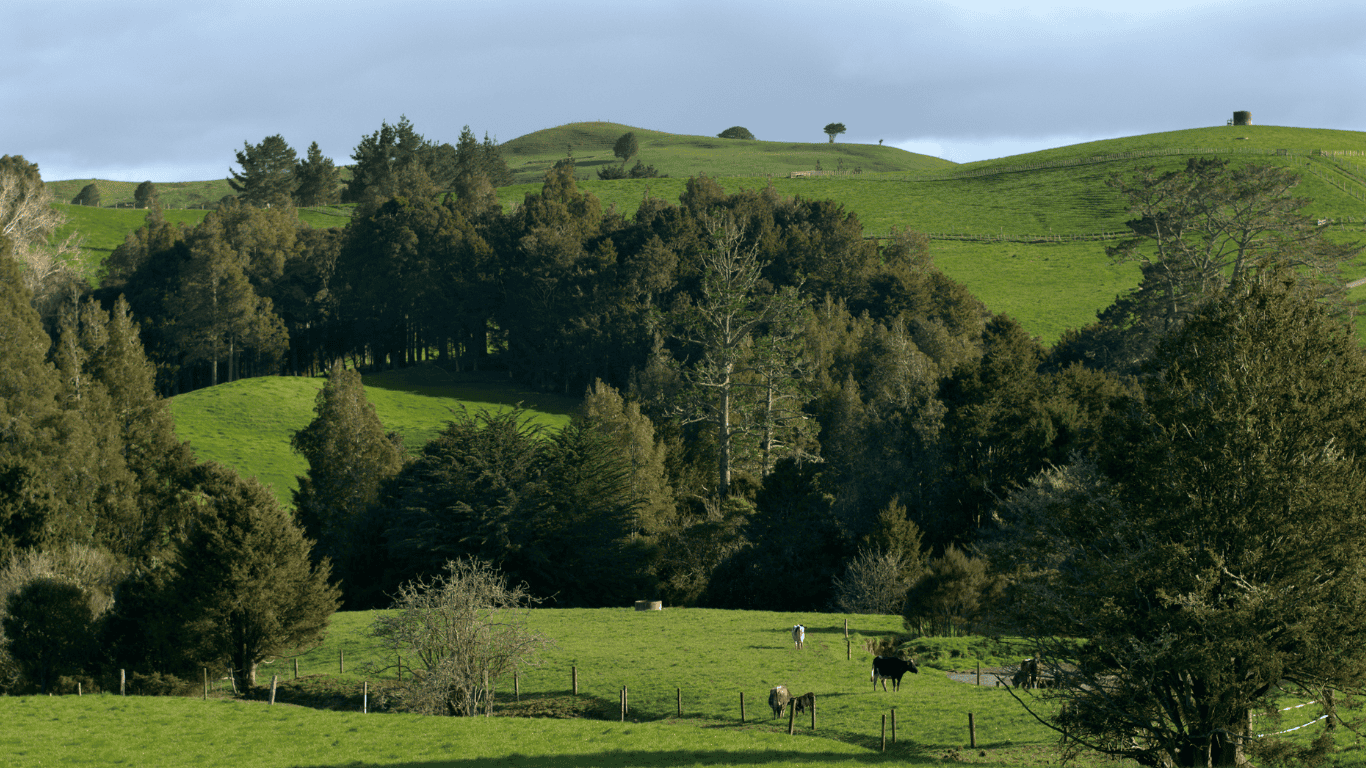
Countries with strong agricultural foundations, such as New Zealand, illustrate how fertile land, stable water supplies, and efficient food production systems can provide a powerful buffer against global supply disruptions.
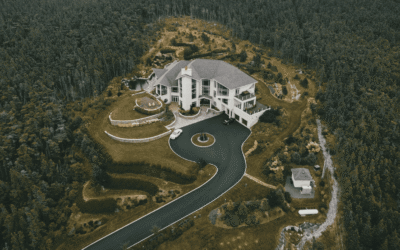
The estate’s visual character remains unchanged. Yet beneath the surface, the property now contains infrastructure capable of sustaining food production regardless of disruptions beyond the gates.
Agricultural Systems That Strengthen Estate Resilience
Several agricultural approaches are particularly well-suited to legacy estates.
Regenerative Agriculture
Regenerative farming restores soil health through cover crops, crop rotation, composting, and minimal soil disturbance. Over time, the soil becomes richer in organic matter, improving both productivity and drought resilience. Estates that use regenerative practices often produce nutrient-dense vegetables, grains, and pasture products while steadily increasing the land’s value.
Food Forests and Orchard Systems
Food forests replicate natural ecosystems by layering fruit, nut, berry, and vine trees, along with perennial crops. Once established, these systems produce reliable harvests for decades with relatively low maintenance. Mature orchards often become defining landscape features while supplying apples, pears, cherries, plums, and nuts each season.
Estate Gardens and Controlled Environment Agriculture
Kitchen gardens and greenhouse systems allow families to grow vegetables and herbs close to the residence. Modern greenhouses equipped with automated climate controls can produce food year-round regardless of weather conditions.
Livestock Integration
Pasture-raised cattle, sheep, goats, and poultry provide a reliable source of meat, eggs, and dairy products. Rotational grazing improves grassland health while naturally fertilizing the soil.
Aquaculture and Aquaponics
Fish production can be integrated through ponds or recirculating tank systems. Aquaponics expands this concept by combining fish cultivation with hydroponic vegetable production in a closed-loop ecosystem where fish nutrients support plant growth while plants filter the water.
These systems can produce substantial amounts of food while using less water and land than traditional agriculture.
Permaculture: Designing the Estate as a Living System
Permaculture offers a framework for integrating these elements into a coherent landscape. The philosophy rests on three core ethics: care for the earth, care for people, and responsible sharing of surplus.
Land is organized into functional zones based on how frequently each area requires attention. Gardens and frequently harvested crops are located closest to the residence. Orchards and poultry systems occupy the next zone. Larger fields and grazing land extend outward, followed by managed forests and preserved natural areas.
Water management is central to this design approach. Contour swales, ponds, and natural drainage patterns allow rainfall to move slowly through the landscape, increasing soil moisture while reducing erosion. Plant guilds combine species that support one another through nutrient exchange, pollination, and natural pest management.
The result is an ecosystem that becomes more productive and resilient with each passing year.
Water Independence as the Foundation of Food Security
Reliable water access underpins every agricultural system. For this reason, many resilient estates implement multiple water sources that operate independently of municipal infrastructure.
Rainwater harvesting systems collect precipitation and store it in underground cisterns for irrigation and household use. Greywater recycling allows treated household water to be used to support orchards and landscaping. Advanced filtration technologies ensure the purity of drinking water.
Some estates also integrate atmospheric water generators that extract potable water directly from the air humidity. Intelligent monitoring systems track water reserves and distribution in real time, ensuring a reliable supply even during drought conditions.
Together, these systems create a level of water independence that supports both agriculture and daily life.
Resilience Is Becoming a Form of Quiet Luxury
Families who pursue these strategies often discover that resilience enhances the character of the estate itself. Orchards in bloom transform landscapes into living gardens. Fresh produce harvested directly from estate greenhouses carries exceptional flavor and nutritional value. Children grow up understanding the natural systems that sustain life.
The estate evolves into something greater than a residence. It becomes a functioning ecological platform that supports health, independence, and generational continuity.
In an increasingly uncertain world, that capability provides a form of confidence that financial assets alone cannot deliver.
The Generational Advantage of Acting Early
Across generations, the families who endure are rarely those who react the fastest, but those who prepare the earliest. If your family is considering how resilient land, food, and infrastructure systems may fit into your long-term plans, we welcome a confidential conversation to understand your vision and priorities.
Secure a confidential consultation.
Important Disclosure.
This publication is for general informational purposes only and reflects the author’s perspective. It is not financial, investment, tax, legal, or professional advice of any kind, nor an offer or solicitation. Calculated Risk Advisors disclaims all liability for actions taken or not taken based on this content. Readers should consult their own qualified advisors before making decisions.
© 2026 Calculated Risk Advisors. All rights reserved.


0 Comments