

The Dangerous Lie Successful People Still Believe
Most people spend their lives building success inside systems they do not control. The individuals who preserve freedom across generations build their own systems.
Many accomplished people quietly assume the systems around them will continue to function as they always have. Markets will stabilize. Institutions will maintain order. The rules will remain predictable enough to protect prosperity. History shows something different. Every generation eventually learns the same uncomfortable lesson. No system exists primarily to protect your future.
Governments preserve stability. Corporations pursue profit. Institutions protect themselves. Security, freedom, and long-term prosperity ultimately belong to individuals who build their own systems. The people best positioned to do that are those who already possess the resources, networks, and capital to act.
Today, those assumptions are being tested simultaneously across multiple fronts. Geopolitical tensions across the Middle East, instability in parts of South America, strategic realignments throughout Europe, and increasing political polarization within the United States are contributing to a global environment in which long-term stability can no longer be taken for granted. At the same time, sovereign debt in the United States has now surpassed $40 trillion, raising serious long-term questions about fiscal sustainability, currency stability, and the purchasing power of capital over time.
History shows that when fiscal pressures intensify, governments often respond through monetary expansion, currency debasement, or policies that quietly transfer economic strain onto the public. In extreme circumstances, this can lead to prolonged inflationary cycles, the erosion of real asset values, or even hyperinflation that dramatically reprices wealth. For individuals who have spent decades building prosperity, these macroeconomic realities reinforce a critical point: systems designed to maintain stability are not necessarily designed to preserve individual wealth or autonomy.
The greatest risk is assuming the systems that created your success will continue to protect it.
The Myth of Institutional Security
Success often creates the illusion of permanence. Many people believe wealth, professional status, or influence naturally produce security. In reality, those advantages frequently depend on the very systems people assume will remain stable.
Policies shift. Industries transform. Markets reprice risk with little warning, and entire business models disappear. The individuals who endure these cycles are rarely the ones who trusted the environment to remain favorable. They are the ones who prepared for the possibility that it would not.
Security is not a static condition. It is something that must be intentionally constructed and continuously maintained.
This reality becomes even more relevant as global economic pressures converge. Persistent deficits, large sovereign debt obligations, and monetary expansion increase the likelihood of long-term inflationary pressure. In such environments, the real value of traditional assets can fluctuate dramatically while the cost of basic goods and services continues to rise. Families who assume that institutional systems will always provide stability may discover that the systems themselves are adapting to pressures beyond any individual’s control.
Wealth Is Only the Starting Point
Possessing capital is not the same as possessing control. True resilience comes from how individuals structure the systems that support their lives and families. Ownership matters. Direct ownership of assets, ownership of intellectual capital, and ownership of networks and relationships that create opportunity regardless of economic conditions.
Individuals who maintain influence across decades understand that wealth alone is not the objective. What matters is how the structures surrounding that wealth are designed. Security is architected. They build systems around their lives that create leverage, optionality, and independence.
This is the difference between prosperity that lasts a moment and resilience that extends across generations.
Agency as the Ultimate Advantage
There is one principle that consistently separates enduring builders from passive beneficiaries of favorable conditions. Agency.
Agency is the willingness to accept responsibility for outcomes rather than waiting for external forces to shape them. It reflects the belief that the future is something you influence rather than something you experience.
The agency transforms resources into a force multiplier. Without it, even substantial wealth drifts toward complacency. With it, relatively small advantages compound into extraordinary results over time. Those who operate with agency do not simply respond to change. They position themselves to benefit from it.
Freedom Is a Designed System
Freedom is often discussed in political terms, but at the individual level, freedom is structural. It depends on how much control you maintain over the key inputs to your life, including time, decision-making authority, geographic mobility, and the network of individuals you trust and collaborate with.
When these elements depend heavily on a single institution, employer, or regulatory framework, freedom becomes fragile. When they are diversified and intentionally structured, freedom becomes durable. This is why resilient individuals prioritize ownership and optionality. They build enterprises rather than relying solely on careers, cultivate networks that transcend industries and geographic regions, and design their environments to expand long-term independence.
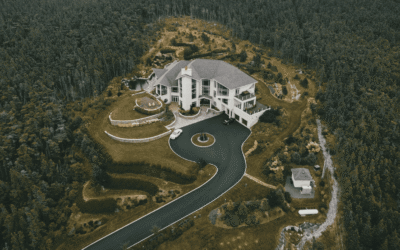
For many families and investors, this philosophy increasingly extends into the physical world through the creation of autonomous rural platforms and multi-generational family compounds. These environments are intentionally designed to provide resilience, independence, and continuity across generations by controlling key systems, including water, energy, food production, communications, and security infrastructure.
This consideration has become increasingly relevant as energy volatility and geopolitical conflict affect global supply chains. Modern societies depend heavily on energy infrastructure, particularly oil, for transportation, food production, agricultural inputs, logistics, and basic economic activity. When energy prices rise sharply or supply chains become disrupted, the consequences extend far beyond fuel costs.
Higher energy prices increase the cost of transporting food, operating farms, producing fertilizer, and maintaining modern infrastructure. As those costs cascade through the economy, the price of food and essential goods rises. When these increases become severe enough to strain household budgets across large populations, social pressures can begin to surface in the form of civil unrest, rising crime, and broader instability.
For individuals and families thinking generationally, these dynamics highlight the importance of controlling key elements of life infrastructure rather than depending entirely on large, complex systems that may be vulnerable to disruption.
When thoughtfully planned, autonomous rural platforms and family compounds become more than properties. They become strategic systems of autonomy, reducing reliance on external institutions while strengthening long-term resilience.
Optionality Is the Real Luxury
Luxury is often associated with visible consumption, yet the most valuable form of luxury remains largely invisible. It is the ability to make decisions without coercion, the freedom to walk away from environments that compromise your values, and the capacity to pursue opportunities others cannot afford to consider.
Optionality allows individuals and families to move early, experiment intelligently, and make long-term decisions with greater independence. It provides insulation from the shocks that inevitably disrupt established systems.
In a world where energy costs, food prices, mobility, and geopolitical tensions can change rapidly, optionality is among the most valuable forms of security. Families who can relocate, adapt their environments, and operate independently have advantages that are difficult to replicate once instability accelerates.
Optionality, however, does not appear automatically with financial success. It must be deliberately built.
The Danger of Passive Prosperity
Wealth carries an unusual paradox. The same comfort that success provides can slowly reduce urgency. Stability discourages experimentation and gradually reinforces the belief that the systems supporting prosperity will remain unchanged.
Over time, this produces a subtle but dangerous outcome. Individuals with the greatest capacity to shape their environment sometimes become the most reluctant to engage with it—meanwhile, those with less to lose often become the innovators who reshape industries and create entirely new markets.
History repeatedly shows that fortunes built during stable periods can erode quickly when their owners assume the environment will remain predictable. Prosperity is sustained through continued engagement with the forces shaping the future.
Strategic Reality
Most fortunes are not destroyed by catastrophe. They erode slowly through complacency, through the assumption that tomorrow will resemble yesterday, and through the belief that success itself provides protection.
History rarely rewards those assumptions.
Building Personal Sovereignty
When institutional stability cannot be guaranteed, the rational response is not fear. It is a construction—the construction of personal sovereignty.
This requires deliberate strategy and consistent discipline. Intellectual capital should evolve continuously. Trusted networks should span sectors and geographies. Flexibility should remain central to decision-making as technological, political, and economic environments evolve.
Physical infrastructure increasingly plays a role in this strategy. Estates designed as autonomous rural platforms allow families to integrate resilient water systems, independent energy generation, food production, and secure communications into a unified environment.
When paired with thoughtful governance structures and long-term planning, family compounds can become powerful anchors of generational stability, collaboration, and continuity. These environments allow families to maintain operational independence even during periods when broader economic or infrastructure systems experience strain.
These structures do not eliminate risk. They significantly increase the ability to navigate it.
The Responsibility of the Wealthy
Those who possess resources and influence have a distinct advantage. They have the ability not only to adapt to change but to shape their environment.
Resources allow experimentation, the development of resilient infrastructure, and the creation of systems that support families, enterprises, and communities even when broader systems become strained.
This potential only becomes meaningful when it is exercised. Wealth reaches its highest utility when it is used to create systems that strengthen independence, resilience, and opportunity across generations.
The End of Passive Optimism
The modern world increasingly rewards individuals who understand that stability cannot be assumed.
The future will not be delivered fully formed by policymakers, corporations, or market forces. It will be shaped by people willing to invest their time, resources, and attention into building environments that support independence and continuity.
This is the agency dividend — the return earned by individuals who choose responsibility over dependence.
For those willing to claim it, the rewards extend far beyond financial outcomes. They include autonomy, influence, and the ability to shape the conditions future generations inherit.
It begins with a simple realization. No one else is coming to build the future for you. The individuals who thrive will be the ones who decide to build it themselves.
A Final Thought from Calculated Risk Advisors
At Calculated Risk Advisors, we believe the most consequential decisions rarely occur when certainty is obvious. They occur earlier, when thoughtful individuals recognize emerging change and begin designing the systems that will support their families and enterprises in the years ahead.
Our work focuses specifically on helping families and founders translate this philosophy into practical physical environments. This includes the strategic planning and development of autonomous rural platforms, multi-generational family compounds, and resilient estate infrastructure designed to support long-term independence, continuity, and self-reliance.
Because in an uncertain world, the greatest advantage is not predicting the future. It is positioning your family so that, whatever the future brings, you have the systems, infrastructure, and environments necessary to navigate it with confidence.
If we can assist you in thoughtfully designing an autonomous rural platform or family compound aligned with your family’s long-term vision, independence, and legacy objectives, we would welcome the opportunity to speak with you.
Secure a confidential consultation.
Disclaimer for this brief: This intelligence brief is for informational purposes only and represents analytical opinions based on public sources and hypothetical scenarios. It does not constitute financial, legal, or investment advice. You can consult qualified professionals for personalized guidance. All future events described are speculative and not predictions. References to the Great Reset’s goals reflect common criticisms and are not official WEF positions.
© 2026 Calculated Risk Advisors. All rights reserved.
0 Comments