


Executive Summary
Traditional safe havens such as the UAE and Mexico are faltering under direct conflict spillover: missile and drone barrages in the Gulf and cartel retaliation waves domestically. This exposes high-net-worth individuals (HNWIs) to unprecedented risks in supply chains, mobility, and asset stability.
The shift toward autonomous rural compounds and family platforms offers superior self-sufficiency, privacy, and resilience. Yet an often underestimated vulnerability persists: the rapid proliferation of drone technology among both state and non-state actors. These systems effectively neutralize geographic remoteness and require layered defensive countermeasures.
Proactive integration of detection, electronic countermeasures, kinetic defenses, and intelligence partnerships is essential to transform these estates into truly secure generational strongholds in an era of escalating asymmetric threats.
In an era where geopolitical tensions and internal instability are reshaping global landscapes, traditional safe havens for high-net-worth individuals (HNWIs) are under unprecedented strain. Places once synonymous with stability and discretion, such as Abu Dhabi and Dubai in the UAE or expatriate-friendly enclaves in Mexico, are now facing direct threats from ongoing wars and escalating violence.
As advisors at Calculated Risk Advisors, we specialize in guiding HNW families through complex and evolving risk environments. This analysis explores why these former bastions of stability are faltering and why many families are now pivoting toward autonomous rural platforms and multi-generational family compounds.
More importantly, we highlight several vulnerabilities that are often overlooked. Even highly remote estates face exposure to modern asymmetric warfare tactics, particularly the widespread use of drones. In parallel, the rapid expansion of interconnected smart-estate technologies has introduced a growing cybersecurity threat surface. Without proper mitigation, these risks can render even the most isolated retreat vulnerable.
True resilience requires more than technological sophistication. It requires layered redundancy and the deliberate integration of analog fail-safe systems capable of operating during EMP events, cyber intrusions, signal jamming, or grid failures.
In the modern threat landscape, isolation alone is no longer security. Resilience now depends on layered autonomy.
The Erosion of Traditional Safe Havens
For decades, the UAE marketed itself as a neutral oasis amid Middle Eastern volatility, attracting global capital with tax advantages, luxury infrastructure, and perceived geopolitical insulation. However, the US–Israel–Iran conflict that escalated in early 2026 has challenged this perception.
Iranian missile and drone strikes, totaling hundreds of ballistic missiles, cruise missiles, and more than 1,000 drones in initial waves, targeted critical infrastructure across Dubai and Abu Dhabi. Impacts included airports, ports, luxury hotels, residential zones, and high-profile developments such as Palm Jumeirah.
Although UAE air defenses intercepted the vast majority of incoming threats, with interception rates frequently exceeding 90 percent, falling debris still caused fires, infrastructure damage, and civilian casualties. Reported incidents at the time of this writing included at least six fatalities and more than 120 injuries, alongside airspace closures, temporary flight suspensions, and bans on civilian drone operations.
The psychological and economic impact has been significant. Even limited physical damage can undermine the perception of absolute safety that historically drove global capital into these markets.
Property markets in Dubai and Abu Dhabi now face renewed volatility. While long-term fundamentals remain strong in some sectors, foreign demand, which has historically sustained premium valuations, may soften as geopolitical risk is reassessed.
A similar dynamic is unfolding in Mexico. The country hosts more than 1.6 million American expatriates and has become a growing destination for HNWI seeking lifestyle advantages and comparatively affordable luxury.
However, escalating cartel violence has begun to challenge this appeal.
In February 2026, a Mexican military operation supported by US intelligence eliminated Jalisco New Generation Cartel leader Nemesio “El Mencho” Oseguera Cervantes. The operation triggered widespread cartel retaliation across the country.
The response included coordinated shootouts, mass vehicle burnings, road blockades across more than twenty states, attacks on security forces that killed at least twenty-five National Guard personnel, and widespread disruptions affecting transportation and commerce.
Authorities deployed thousands of troops to stabilize affected regions, highlighting how rapidly asymmetric criminal conflict can destabilize previously tranquil areas.
These developments illustrate a broader pattern: global conflicts are increasingly spilling into regions once insulated by wealth and geography. Supply chains, aviation networks, tourism economies, and real estate markets that underpin HNWI mobility and lifestyle are now exposed to new forms of disruption.
Safe havens rarely disappear overnight. They erode gradually until one event exposes the illusion of permanence.
The Case for Autonomous Rural Platforms and Family Compounds
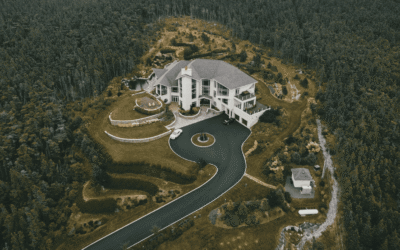
As urban and semi-urban safe havens lose their perceived stability, many HN families are turning toward autonomous rural platforms: highly self-sufficient estates designed to operate independently from fragile global systems.
These platforms typically incorporate renewable energy generation, water sovereignty systems, on-site agriculture, private security infrastructure, and medical facilities, often structured as multi-generational family compounds.
Such estates are increasingly developed in stable jurisdictions with strong property rights and low geopolitical exposure, including select regions in North America and internationally.
Key advantages include
Self-Sufficiency
Integrated solar microgrids, advanced water purification, and on-site food production reduce reliance on vulnerable external supply chains.
Privacy and Security
Layered perimeter security, controlled entry points, and private access infrastructure offer discretion and protection against civil unrest or targeted threats.
Long-Term Resilience
As conflicts disrupt shipping lanes, aviation networks, and energy distribution systems, locally resilient platforms maintain operational independence.
At Calculated Risk Advisors, we assist families in designing estates built for multi-generational continuity and systemic resilience.
Strategic Risk Matrix for Modern Safe Haven Planning
Below is a breakdown of the core risks affecting modern haven strategies and how traditional urban havens compare to autonomous rural platforms.
Geopolitical Spillover
Traditional Safe Havens
Urban hubs located near geopolitical flashpoints can experience direct spillover from regional conflicts.
Autonomous Rural Platforms
Remote jurisdictions with lower strategic value typically experience far lower exposure.
Mitigation Strategy
Strategic geographic diversification and jurisdictional analysis.
Drone Warfare
Traditional Safe Havens
Dense urban environments present visible, high-value targets.
Autonomous Rural Platforms
Remote estates may still be vulnerable to drone reconnaissance or attack.
Mitigation Strategy
Layered counter-drone defenses, including detection radar, RF scanners, and electronic countermeasures.
Cyber Intrusion
Traditional Safe Havens
Heavy reliance on centralized networks and shared infrastructure increases exposure.
Autonomous Rural Platforms
Smart estate systems create new vulnerabilities if poorly segmented.
Mitigation Strategy
Zero-trust architecture, network segmentation, and continuous monitoring.
Supply Chain Disruption
Traditional Safe Havens
Urban environments rely heavily on global logistics networks.
Autonomous Rural Platforms
Self-sufficient estates reduce dependence on external supply systems.
Mitigation Strategy
Food production, water sovereignty, and energy independence.
Civil Unrest
Traditional Safe Havens
Population density increases exposure to unrest and social instability.
Autonomous Rural Platforms
Lower population density significantly reduces this exposure.
Mitigation Strategy
Controlled access infrastructure and layered perimeter security.
Infrastructure Failure
Traditional Safe Havens
Urban properties depend heavily on centralized power grids and municipal services.
Autonomous Rural Platforms
Off-grid systems provide independence during infrastructure disruptions.
Mitigation Strategy
Microgrids, redundant energy systems, and analog backups.
The Overlooked Factor: Drone Vulnerabilities in Modern Warfare
While many HNWI prioritize isolation and conventional security measures when building rural compounds, one risk is frequently underestimated: the rapid proliferation of drone technology.
Drones have fundamentally transformed modern conflict. They are relatively inexpensive, precise, difficult to detect, and capable of operating over long distances.
Drone swarms numbering in the hundreds have been deployed in coordinated saturation attacks designed to overwhelm even advanced defense systems.
Despite sophisticated defensive platforms, the scale of modern drone warfare demonstrates that no location is completely insulated from airborne asymmetric threats.
Cartel organizations and other non-state actors have also adopted drone technology for surveillance, smuggling, explosive delivery, and tactical coordination.
Many HNWI underestimate this risk for several reasons.
Assumption of Remoteness
Modern drones effectively eliminate geographic distance as a barrier to protection.
Technological Overconfidence
Conventional estate security, such as fences, gates, and cameras, offers limited protection against airborne reconnaissance or attack.
Rapidly Evolving Capabilities
Drone technology is advancing rapidly among both state and non-state actors.
Mitigation requires layered counter-drone architecture, including detection radar, RF scanners, electronic jamming capabilities, hardened structures, and intelligence partnerships capable of monitoring evolving threats.
The defining advantage of autonomous estates is not luxury or remoteness. It is the ability to operate when external systems fail.
Cybersecurity and Analog Resilience
Modern autonomous estates rely on interconnected digital systems for energy management, surveillance, access control, agriculture monitoring, communications, and medical diagnostics.
While these technologies enhance efficiency, they also introduce significant cybersecurity exposure.
Cybercriminals increasingly target HNWI families and private estates for financial extortion, data theft, and espionage.
For this reason, autonomous estates must implement zero-trust cybersecurity architecture, segmented networks, multi-factor authentication, endpoint protection, continuous monitoring, and secure backup systems.
Equally important is the integration of analog redundancies that can operate during EMP events, cyber intrusions, signal interference, or systemic grid disruptions.
Examples include manual generators, hand-pump wells, shortwave radios, mechanical locks, manual medical equipment, and non-electric lighting systems.
These systems provide durable operational continuity when digital systems fail.

For forward-thinking families, autonomous rural platforms and multi-generational compounds represent a strategic evolution in resilience planning.
When designed correctly, these estates integrate energy sovereignty, water independence, food production, layered security architecture, cyber protection, and analog redundancy.
The result is not merely a retreat, but a long-term continuity platform capable of sustaining families through systemic disruption.
At Calculated Risk Advisors, we work with select families and family offices to design comprehensive resilience strategies that integrate location intelligence, infrastructure autonomy, and multi-layered risk mitigation.
For families focused on generational continuity rather than short-term market cycles, the most valuable advantage is time, and the families who begin building resilient platforms before instability accelerates will ultimately hold that advantage.
Secure a confidential consultation.
Important Disclosure.
This publication is for general informational purposes only and reflects the author’s perspective. It is not financial, investment, tax, legal, or professional advice of any kind, nor an offer or solicitation. Calculated Risk Advisors disclaims all liability for actions taken or not taken based on this content. Readers should consult their own qualified advisors before making decisions.
© 2026 Calculated Risk Advisors. All rights reserved.


0 Comments