
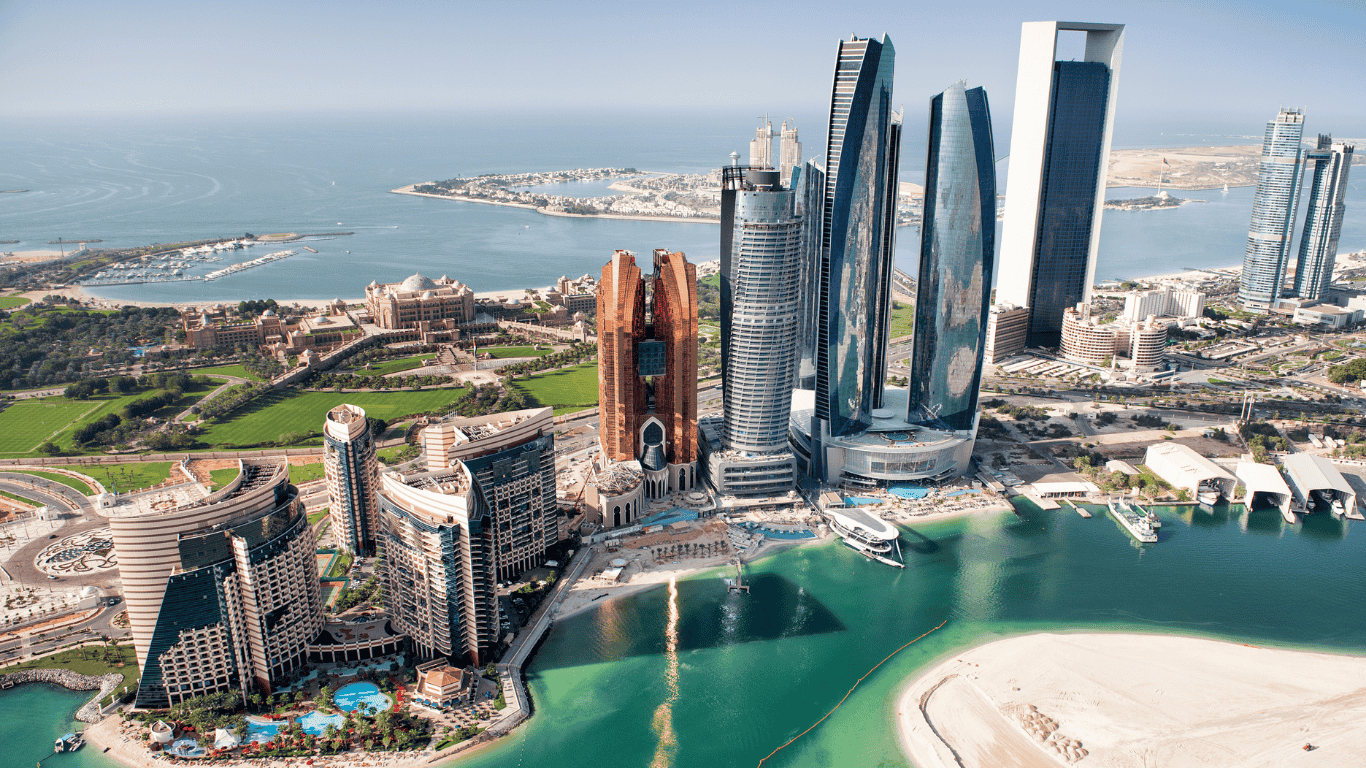

The recent escalation in the Middle East has drawn renewed attention to a structural reality: even the most sophisticated safe havens operate within larger global systems that can shift rapidly. Cities such as Dubai and Abu Dhabi have long stood as symbols of stability, order, and capital efficiency, attracting families of significant means with their combination of security, infrastructure, and global access. They remain among the most operationally competent jurisdictions in their region, supported by substantial sovereign capital reserves and advanced logistics networks. Yet modern prosperity is interdependent. When geopolitical dynamics intensify, disruption patterns extend beyond borders, influencing mobility, supply chains, insurance markets, and capital flows.
Abu Dhabi has positioned itself as a secure jurisdiction amid broader geopolitical realignment, emphasizing regulatory clarity, robust sovereign wealth, and infrastructure reliability. That positioning remains credible. However, metropolitan concentration, by design, depends on continuous resource throughput and unrestricted movement. Mobility is a function of airspace coordination, insurance underwriting, and geopolitical posture. Each of those variables can recalibrate without notice. Even limited regional escalation has demonstrated how aviation constraints, maritime insurance repricing, and shipping route adjustments can influence operational continuity.
Stability in peacetime can mask fragility in transition.

Resource structure is central to this analysis. The UAE imports approximately 80 to 90 percent of its food supply, relying on diversified but globally extended logistics networks. Fresh water production is dominated by desalination, an engineering achievement executed at scale and supported by substantial energy infrastructure. These systems are sophisticated and well-managed. At the same time, they remain energy dependent and externally supplied. Agriculture at scale is constrained by climate realities, meaning uninterrupted maritime access and stable energy pricing remain foundational variables.
Certain global cities exhibit similar structural characteristics. Las Vegas represents a desert-based metropolitan success story sustained through engineered water access, national supply integration, and stable energy distribution. The comparison is structural rather than institutional. Highly concentrated urban prosperity functions optimally when broader supply networks remain stable, insured, and economically efficient. In a multipolar environment where trade routes and alliances are increasingly politicized, exposure to chokepoints becomes a strategic consideration rather than a theoretical one.

Photo Credit: Wikipedia
The Strait of Hormuz illustrates this dynamic clearly. Roughly one-fifth of global petroleum liquids transit this narrow corridor, alongside significant volumes of liquefied natural gas and commercial freight. During periods of tension, war risk insurance premiums have historically increased sharply. Shipping rates adjust accordingly. Rerouting, delays, and repricing cascade into energy markets, construction materials, imported goods, and ultimately the operating costs of urban centers dependent on maritime throughput.
Globalization concentrates efficiency. It also concentrates vulnerability.
Mobility represents another structural variable. Commercial aviation depends on coordinated airspace agreements, insurance markets, and stable security conditions. When those inputs shift, even temporarily, scheduled operations can be suspended. Private aviation markets respond through price discovery under constrained availability. During past disruptions, charter costs have risen substantially for long-haul repositioning flights, reflecting a supply-and-demand imbalance rather than an anomaly. Mobility in this context is governed by access to infrastructure and geopolitical alignment, not convenience.
Broader regional complexity adds additional layers. The Middle East contains overlapping tribal, religious, political, and strategic alignments that interact with global power competition. Many Gulf jurisdictions maintain strong internal security and administrative competence. However, regional escalation can influence perceptions, insurance markets, cross-border flows, and policy posture. The issue is not imminent instability. It is exposure to variables that originate beyond domestic control.
Geography moves slowly. Political alignment can change overnight.
For families operating on generational time horizons, the implication is structural rather than reactive. Concentration in any single jurisdiction, regardless of institutional strength, creates correlated exposure to logistics, energy, insurance, and mobility variables. The appropriate response is not withdrawal from global centers of commerce. It is a layered positioning implemented in advance of disruption cycles.
Several predictable stress categories recur across geopolitical environments. Supply chain decoupling can restrict access to imported essentials. Utility systems can experience strain under energy or distribution shocks. Dense metropolitan environments intensify competition for finite resources during disruption. Mobility constraints can emerge during rapid escalation phases. These categories are historically observable across multiple regions and decades.
At Calculated Risk Advisors, these variables are treated as design inputs rather than contingencies. A growing number of globally oriented families are addressing structural exposure through geographic and infrastructure diversification alongside financial allocation. Autonomous rural platforms situated in low-density jurisdictions, away from major population centers and concentrated infrastructure nodes, provide strategic depth. The objective is not isolation. It is optionality supported by independent capability.
These platforms emphasize integrated energy systems combining solar generation, wind supplementation where appropriate, and advanced storage architecture. Water sovereignty is addressed through aquifer analysis, well redundancy, purification systems, and conservation design. Regenerative agricultural frameworks strengthen soil health while producing a reliable, high-quality food supply. Controlled environment cultivation, aquaponics, and climate-moderated greenhouse systems allow adaptation to seasonal variability. Modular development enables phased expansion aligned with capital deployment and generational planning.
Infrastructure capability alone does not determine resilience. Terrain determines performance. For this reason, a comprehensive Site Specific Intelligence Survey is foundational before converting any property into an autonomous rural platform or multi-generational family compound.
A property that appears visually compelling may contain structural limitations that only manifest under stress. Aquifer recharge rates may not support extended independence. Soil composition may constrain agricultural scalability. Wildfire corridors, floodplain exposure, seismic zones, infrastructure adjacency, demographic migration patterns, and regulatory shifts can introduce secondary variables that materially affect long-term performance.
A disciplined Site Specific Intelligence Survey integrates geospatial analytics, hydrological modeling, climate projection analysis, infrastructure mapping, regulatory assessment, and geopolitical adjacency evaluation into a unified decision framework. Stress-testing a property against grid disruption scenarios, prolonged isolation, supply chain interruptions, and regional instability enables capital deployment decisions to be made with clarity rather than assumption. Only after terrain validation should architectural design, energy systems, water infrastructure, and agricultural integration be finalized. Location is not a backdrop. It is the foundation upon which every resilience strategy rests.
Governance architecture further reinforces durability. Clear succession structures, defined operational protocols, and remote systems monitoring enable continuity across generations. Geographic diversification across hemispheres and political spheres preserves engagement with global commerce while anchoring long-term autonomy. Urban residences can continue to serve as centers of influence and opportunity. Rural platforms provide structural depth when systemic volatility accelerates.
Families who endure across cycles rarely react at the moment of disruption. They position themselves deliberately while conditions remain stable. In a multipolar environment where trade routes, alliances, insurance markets, and energy corridors are increasingly politicized, optionality supported by validated terrain and independent infrastructure becomes a strategic asset in its own right.
For those evaluating land holdings or considering developing an autonomous rural platform, the first step is disciplined clarity. A comprehensive Site Specific Intelligence Survey determines whether a given location meets the threshold for long-duration resilience and generational continuity. When terrain is validated through structured analysis, infrastructure can be engineered with precision and confidence.
Calculated Risk Advisors works discreetly with families who value foresight over reaction and structure over assumption. When appropriate, a confidential evaluation of your intended location can determine whether it has the characteristics necessary to support a true multi-generational resilience platform. Preparation is rarely visible. Its advantages become evident only when volatility arrives.
Secure a confidential consultation.
Important Disclosure.
This publication is for general informational purposes only and reflects the author’s perspective. It is not financial, investment, tax, legal, or professional advice of any kind, nor an offer or solicitation. Calculated Risk Advisors disclaims all liability for actions taken or not taken based on this content. Readers should consult their own qualified advisors before making decisions.
© 2026 Calculated Risk Advisors. All rights reserved.


0 Comments