
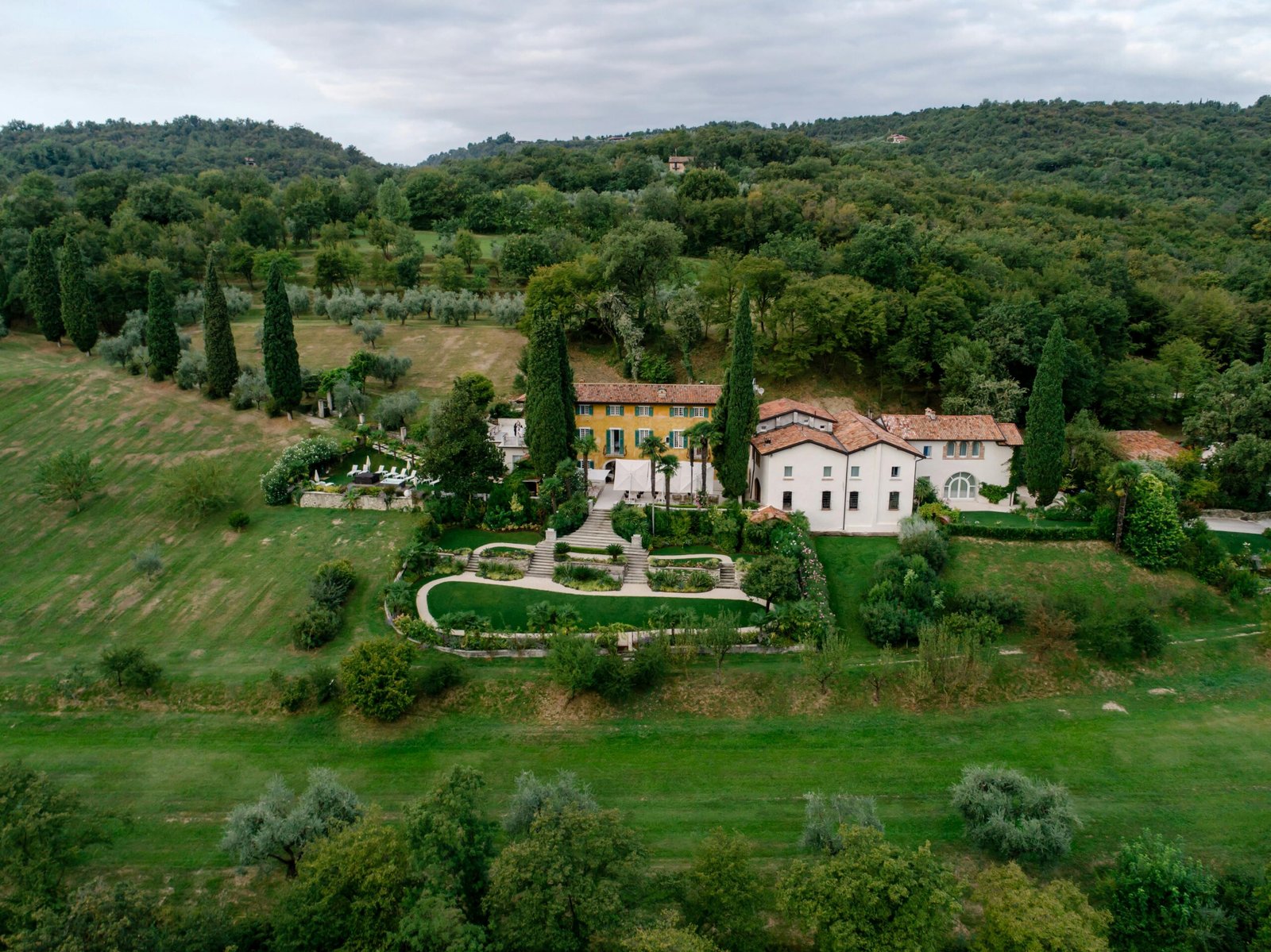

A Strategic Briefing for Family Offices and Long-Horizon Investors
In an increasingly uncertain world, the location of a family’s physical infrastructure may prove as important as the location of its financial capital.
Executive Summary
Over the past several years, a quiet but measurable shift has taken place within global high-net-worth circles. What was once a market defined largely by luxury estates, trophy ranches, and remote second homes is evolving into something far more strategic.
For a growing number of high-net-worth and ultra-high-net-worth families, rural property is no longer viewed primarily as a lifestyle asset. It is increasingly being evaluated as strategic infrastructure capable of supporting multi-generational resilience.
Escalating geopolitical tensions, financial instability, resource scarcity, and the growing fragility of complex global systems are reshaping how affluent families think about location, security, and long-term legacy planning. The question is no longer simply where to invest or vacation. Increasingly, family offices are asking a different question: where a family could live securely, autonomously, and sustainably if global systems were disrupted.
Across North America, parts of Europe, Oceania, and select regions internationally, demand is rising for self-reliant estates, rural compounds, and what analysts increasingly describe as Autonomous Rural Platforms or Family Compounds. These environments are not traditional luxury estates. They are integrated resilience systems designed to support continuity of life, capital, and family governance during periods of uncertainty.
Before examining the structural features of these environments, it is important to understand the broader forces influencing this shift.
Over the coming decade, the risks influencing estate planning may not emerge from a single event but from the convergence of multiple pressures. A regional conflict could disrupt energy markets, while financial instability could restrict capital mobility. Climate volatility may affect agricultural output in key producing regions, while population displacement may strain migration corridors. In such an environment, the physical location of a family’s infrastructure becomes a strategic decision rather than a lifestyle preference.
The Psychological Shift: From Comfort to Contingency Planning
Historically, the ultra-wealthy have insulated themselves from instability through geographic mobility. If economic or political conditions deteriorated in one country, they could relocate capital, staff, and family to another jurisdiction with relative ease. Mobility itself functioned as a form of protection.
Recent global developments, however, have forced many families to reconsider whether mobility alone is sufficient. Multiple wars are now active or escalating across several regions, while strategic maritime routes that underpin global commerce are increasingly contested. Energy supply chains have demonstrated vulnerability, and water scarcity is emerging in areas once considered stable. At the same time, climate volatility is beginning to affect agricultural productivity in ways previously viewed as distant or theoretical risks.
Technological transformation is also reshaping financial systems, communications networks, and the nature of state authority. As governments experiment with new regulatory and digital financial structures, some investors are recognizing that systemic changes could occur faster than previously anticipated.
The result has been a subtle but powerful shift in mindset among global elites. Location security is beginning to matter as much as financial security.
According to several international real estate intelligence firms and private advisors, family offices are increasingly conducting geographic resilience assessments, or what we at Calculated Risk Advisors refer to as Site-Specific Intelligence, when evaluating land acquisitions. These assessments examine factors rarely considered in traditional luxury real estate transactions.
They include regional geopolitical stability, agricultural productivity, water rights, aquifer sustainability, potential for energy independence, defensibility of terrain, proximity to medical infrastructure, population density, and migration corridors that could place pressure on regions during instability. For many families, these considerations were once theoretical. Today, they are becoming operational components of estate planning.
A Moment of Realization: When Safe Havens Prove Vulnerable
One illustration of this shift occurred among wealthy residents across the Gulf region, particularly within high-end enclaves of Abu Dhabi.
For decades, the Gulf’s financial centers were widely perceived as insulated from geopolitical disruption. They offered financial sophistication, modern infrastructure, and a perception of long-term stability supported by significant energy wealth. However, rising regional tensions and expanding military confrontations across parts of the Middle East have caused some affluent residents to reassess those assumptions.
According to international media reporting and commentary from regional advisors, escalating conflict in surrounding areas prompted a wave of contingency planning among wealthy Gulf families who began exploring relocation options abroad. Private wealth advisors reported an increase in inquiries regarding remote estates, agricultural land, and geographically isolated residences capable of supporting long-term habitation outside dense metropolitan environments.
For many clients, the realization was sobering. Concentrating wealth inside dense urban enclaves, regardless of how advanced or luxurious the infrastructure may be, does not necessarily translate into strategic resilience, particularly when those environments rely almost entirely on centralized infrastructure systems.
The Surge in Demand for Private Protective Infrastructure
Parallel to this geographic shift has been a noticeable increase in demand for private protective infrastructure, particularly hardened safe rooms and underground shelters.
Manufacturers specializing in blast-resistant structures report rising inquiries from wealthy clients across multiple regions. According to several industry executives interviewed by international publications, requests increasingly come from individuals who had never previously considered private protective facilities, including entrepreneurs, hedge fund managers, political figures, and senior government officials.
Modern private shelters differ substantially from the civil defense bunkers of previous generations. Contemporary installations may include blast-resistant underground living quarters, medical treatment areas, independent power systems, advanced air filtration capable of protecting against chemical or radiological threats, and secure communications networks designed to operate independently of public systems.
In many cases, these installations are designed to support families and essential staff for extended periods without outside assistance. Manufacturers also report that shelters are increasingly integrated into broader estate planning projects rather than added as afterthoughts, with protective infrastructure incorporated directly into architectural design.
In other words, shelters are becoming structural components of resilient estates rather than emergency structures beneath them.
Resilience is rarely created by wealth alone. It is created by the systems that sustain life when complexity fails.
The Emergence of Autonomous Rural Platforms
This evolving mindset has contributed to the emergence of a concept gaining traction among resilience planners and family office advisors: Autonomous Rural Platforms.
An Autonomous Rural Platform is not simply a large rural property. It is an integrated system designed to operate with limited reliance on external infrastructure for extended periods. These environments combine multiple layers of resilience into a unified ecosystem capable of supporting daily life even if surrounding systems become disrupted.

Energy independence is often a foundational pillar, with estates increasingly designed around solar arrays, micro-hydroelectric installations, geothermal heating systems, and large-scale battery storage capable of sustaining property operations. Redundant generators are typically maintained as secondary backup systems to ensure continuity under adverse conditions.
Water sovereignty is another critical element. Resilient properties frequently rely on combinations of deep wells, spring access, aquifer rights, rainwater harvesting systems, and advanced filtration technologies. Among sophisticated buyers, water rights are increasingly viewed as one of the most valuable long-term components of rural land ownership.
Agricultural capability also plays a central role. Many estates incorporate orchards, livestock programs, greenhouse cultivation systems, and controlled-environment agriculture, capable of producing food year-round. At the same time, terrain, elevation, natural choke points, and geographic isolation are evaluated during property selection to determine how defensible and controllable a site may be during periods of instability.
Equally important is the concept of analog redundancy. Manual pumps, mechanical agricultural equipment, and non-digital communication systems are often integrated into estate design so that essential operations can continue even if advanced technological systems fail.
Jurisdictional Stability and Legal Risk
Beyond geography and infrastructure, sophisticated buyers increasingly evaluate jurisdictional stability before committing to large land acquisitions.
Property rights, taxation frameworks, regulatory environments, and the long-term predictability of governance structures can significantly influence the viability of a resilience estate. Families thinking in generational terms must consider not only the region’s natural attributes but also the legal architecture governing land ownership.
Questions surrounding capital controls, land ownership restrictions, political stability, and the enforceability of property rights can ultimately determine whether a location remains secure over time. For this reason, many family offices evaluate jurisdictions with the same level of scrutiny traditionally applied to sovereign investment risk.
In uncertain periods, legal and regulatory stability may prove just as important as geographic advantages.
The Importance of Human Capital and Community Design
Another dimension that differentiates successful Autonomous Rural Platforms from isolated luxury estates is human capital planning.
Self-reliant environments cannot operate indefinitely without skilled individuals capable of maintaining infrastructure, agricultural systems, and medical readiness. As a result, many family offices are beginning to think beyond single residences toward compound-style environments that can support trusted staff, extended family members, and specialized professionals.
These environments may include staff housing, agricultural managers, mechanical technicians, security personnel, and medical professionals who collectively form the operational backbone of the estate. In some cases, families are designing properties as small private communities capable of supporting a network of individuals whose combined skills create a resilient ecosystem.
This community architecture often becomes one of the most important and frequently overlooked elements of long-term resilience planning.
The Quiet Rise of Private Infrastructure Sovereignty
Perhaps the most profound shift underlying the rise of Autonomous Rural Platforms is the recognition that modern societies depend on extraordinarily complex infrastructure networks.
Electric grids, digital communications, water treatment plants, global shipping routes, and financial systems form an interconnected architecture that functions efficiently most of the time. When disruptions occur, however, the effects can cascade rapidly.
For families seeking long-term stability, the concept of private infrastructure sovereignty is gaining attention. Instead of relying entirely on public infrastructure systems, these estates attempt to replicate essential life-supporting capabilities at the private level.
Water purification, food production, energy generation, waste management, communications infrastructure, and medical readiness become integrated elements of the estate itself. This approach does not represent a retreat from society but rather a recognition that redundancy and self-sufficiency can provide stability during periods of systemic volatility.
The Quiet Transformation of Wealth Geography
Over the coming decade, the geography of wealth may undergo a subtle but meaningful transformation.
Global cities will remain centers of finance and culture. Yet, an increasing share of strategic family assets may migrate toward low-density regions capable of supporting autonomy, resource security, and long-term stability. The estates emerging from this shift are not retreats from the modern world. They are forward-looking infrastructure designed for uncertain decades ahead.
Closing Perspective
For families thinking in generations rather than quarters, the true measure of wealth may ultimately be the ability to sustain security, stability, and continuity regardless of the volatility of the world around them.
Increasingly, that continuity may depend not only on financial capital but also on the resilience of the physical environments in which families choose to anchor their futures.
Secure a confidential consultation.
Disclaimer for this brief: This intelligence brief is for informational purposes only and represents analytical opinions based on public sources and hypothetical scenarios. It does not constitute financial, legal, or investment advice. You can consult qualified professionals for personalized guidance. All future events described are speculative and not predictions. References to the Great Reset’s goals reflect common criticisms and are not official WEF positions.
© 2026 Calculated Risk Advisors. All rights reserved.

0 Comments