

Executive Summary
Water availability and quality are increasingly recognized as critical strategic considerations in rural estate development. Families establishing autonomous rural platforms are moving beyond reliance on municipal infrastructure and instead designing diversified, estate-controlled water systems capable of sustaining residential, agricultural, and operational demands.
This report outlines the key components of water sovereignty architecture, including primary sourcing options, layered purification strategies, strategic storage infrastructure, and modern monitoring systems. When integrated correctly, these elements form a resilient water platform that supports long-term estate independence while protecting health, agricultural productivity, and generational continuity.
For family offices and estate principals planning rural property development, water sovereignty should be evaluated with the same rigor applied to capital allocation and infrastructure investment.
In an environment of increasing resource variability, forward-thinking families are strategically incorporating diversified water sourcing and advanced purification into their autonomous rural platforms to maintain operational continuity, health standards, and long-term estate value.
High-net-worth individuals and family offices managing substantial rural holdings increasingly view water sovereignty as a foundational element of infrastructure independence. This deliberate emphasis ensures reliable, high-quality water free from reliance on municipal grids or external dependencies. The strategy integrates natural sourcing methods with precision-engineered treatment systems, delivering consistent volumes and purity for household, agricultural, and operational needs while upholding the rigorous standards expected in multi-generational wealth stewardship. These infrastructure decisions are evaluated with the same portfolio-construction rigor applied to other balance-sheet allocations, ensuring water systems enhance rather than compete with broader legacy objectives.
Water sovereignty encompasses the secure acquisition, treatment, and distribution of potable and utility-grade water directly on the estate. Families pursue this capability for three strategic reasons: to reduce exposure to regional supply disruptions, to exercise full oversight of water quality amid shifting environmental and regulatory landscapes, and to strengthen the resilience and intrinsic value of rural platforms as dynastic assets. Execution generally aligns with estate development cycles or major infrastructure enhancements, beginning with thorough site-specific evaluations by hydrogeologists, water engineers, and continuity specialists to align solutions with geology, climate, and projected demand. Water rights, well permits, spring capture entitlements, rainwater harvesting regulations, and desalination discharge rules vary significantly by jurisdiction and often require coordination with legal and environmental counsel to ensure full compliance and protect long-term access.
For sophisticated estate platforms, water is no longer treated as a simple utility. It is a strategic asset — sourced, protected, and engineered with the same discipline applied to capital allocation.
Primary Water Sourcing Options for Rural Estates
Drilled Wells
Drilled wells reach deep, stable aquifers, typically 100 to 1,000+ feet, via rotary drilling, accessing groundwater with minimal surface influence. These systems provide dependable, high-volume supply suitable for full estate requirements and offer exceptional longevity, often exceeding 50 years with appropriate care.
Non-Drilled Wells
Non-drilled wells (shallow dug or driven) tap nearer water tables under 100 feet through straightforward excavation or pounding techniques. They offer lower initial costs and simpler servicing, but demand ongoing vigilance due to greater sensitivity to seasonal changes and to adjacent land activities.
Natural Mountain Springs
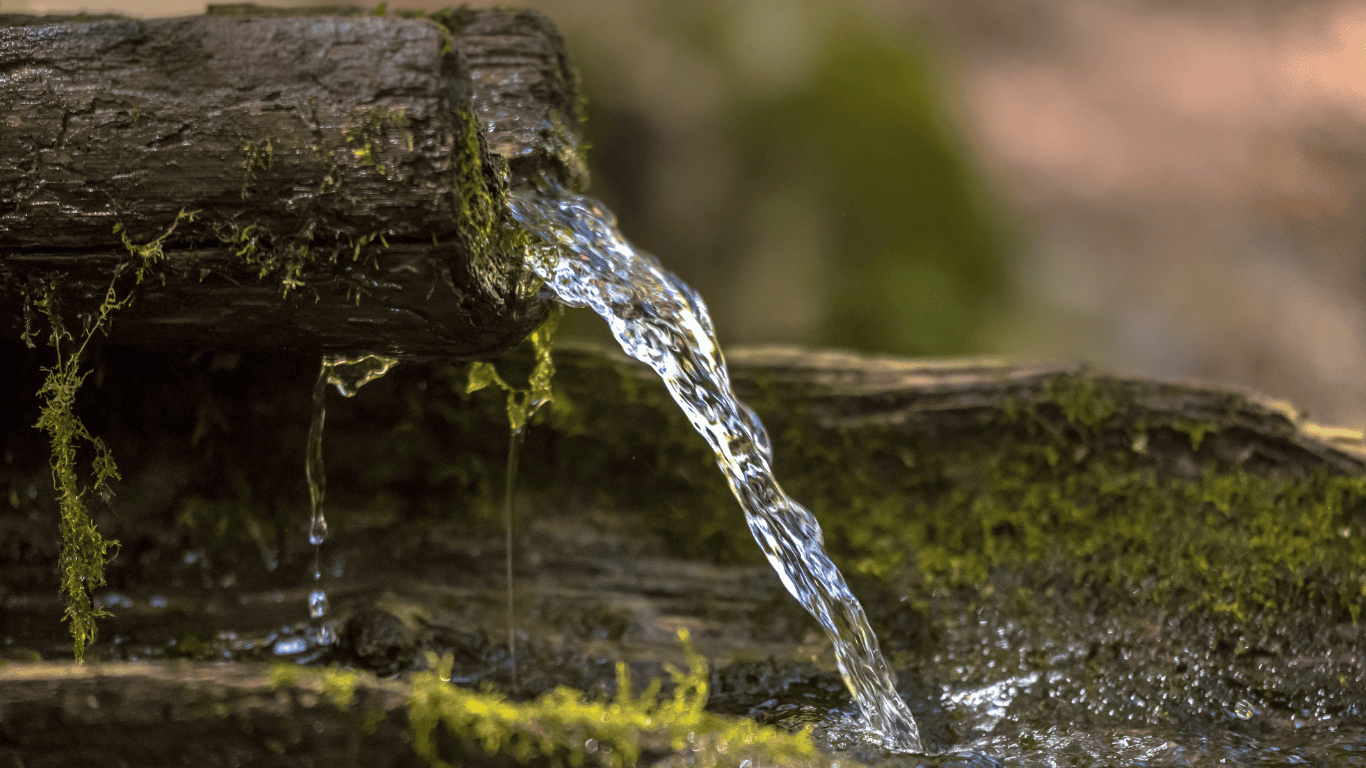
Natural mountain springs deliver naturally filtered, mineral-enriched water from protected underground origins. When water rights are secured and flow remains steady, springs provide outstanding quality and sustainability, though consistent microbial monitoring and protective infrastructure are essential. I personally use this system often with a sampling provided by a member of the Army Corps of Engineers, and it has been tested as superior to municipal water without the fluoride additives.
Rainwater Catchment Systems
Rainwater catchment systems harvest precipitation from rooftops or dedicated surfaces and store it in storage tanks. These deliver naturally soft, low-mineral water ideal for numerous applications, scale readily with modular storage, and reduce groundwater draw during favorable weather. However, performance depends on regional precipitation patterns and requires effective first-flush diversion and pre-filtration.
Atmospheric Water Generators
Atmospheric water generators condense moisture directly from ambient air, generating potable water even in lower-humidity conditions. These units produce thousands of liters daily, depending on scale and climate, serving as a valuable supplemental source for arid or remote properties. They offer advantages in mobility and independence from ground or surface supplies. However, energy consumption and capital outlay should be weighed against the integration of renewable power.
Surface Water Sources
Surface water sources (rivers, streams, lakes) draw from adjacent bodies of water through permitted intakes, providing abundant volumes for irrigation or utility purposes when appropriately treated. Ideal for estates with reliable proximity to flows, they provide cost-effective scalability while requiring robust treatment to manage sediments, pathogens, and seasonal quality variations.
Desalination Systems
Desalination systems transform brackish or seawater into fresh water via reverse osmosis or thermal distillation, particularly advantageous for coastal holdings. These deliver high-purity output with low mineral content, supporting complete sovereignty in saline environments. However, they require higher energy inputs and maintenance, often mitigated through solar hybridization for sustainable performance. These, you see in use in the Middle East, are currently being targeted in the ongoing war, which may place large populations at risk of a potable water supply. They are also available in consumer-scale desalination systems for residential use.
Estate Water Architecture Framework
A Strategic Model for Autonomous Rural Estate Infrastructure
For families developing autonomous rural estates, achieving water sovereignty rarely occurs through a single technology or source. Instead, the most resilient estates follow a layered architecture approach, combining multiple sourcing, treatment, and storage strategies into an integrated system designed for reliability and operational continuity.
Estate Water Architecture Model
Layer: Primary Source
Purpose: Core long-term supply ensuring reliability
Examples / Notes: Deep drilled wells, protected springs, surface water intakes, desalination systems
Layer: Supplemental Source
Purpose: Redundancy and seasonal flexibility
Examples / Notes: Rainwater catchment, atmospheric water generation, shallow backup wells
Layer: Purification & Treatment
Purpose: Ensures water safety and quality for all uses
Examples / Notes: Sediment filtration, carbon filtration, UV sterilization, distillation, gravity-fed filtration systems
Layer: Storage & Distribution
Purpose: Maintains supply during disruptions
Examples / Notes: Underground cisterns (10,000–100,000+ gallons), pressure tanks, gravity-fed backup distribution
Protective wellhead infrastructure is a standard component of high-end installations. Sanitary well caps, grouted steel casings, concrete diversion berms, and regulatory-compliant setbacks from septic systems, fuel storage, or agricultural runoff prevent long-term ingress contamination and preserve source integrity.
Dedicated storage provides critical buffer capacity. Large-scale food-grade underground cisterns constructed from concrete, fiberglass, or polyethylene holding 10,000 to 100,000+ gallons, supplemented by flexible bladder tanks for indoor or outdoor placement, create multi-week to multi-month reserves. Rotational turnover protocols and periodic quality re-testing maintain freshness while ensuring emergency availability without compromising daily operations.
Purification & Final-Stage Treatment Solutions
Advanced Purification Systems: Waterwise 4000 vs. Crown Berkey
To achieve the elevated purity standards required for drinking, culinary use, and sensitive applications, many families incorporate countertop or gravity-fed final-stage treatment systems.
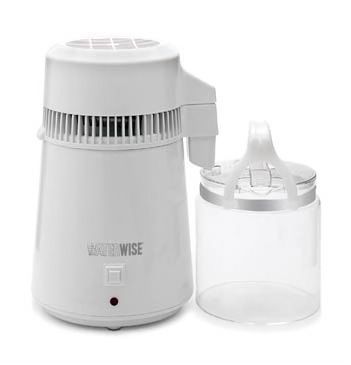
The Waterwise 4000 tabletop distiller employs steam distillation: water is vaporized, contaminants are left behind, and pure distillate condenses into a glass carafe. It eliminates over 99% of heavy metals, chemicals, pharmaceuticals, bacteria, viruses, and dissolved solids, yielding approximately one gallon every four hours.
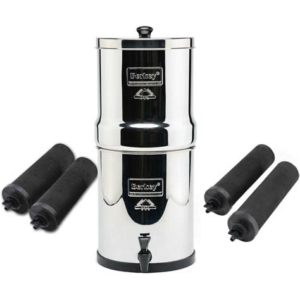
The Crown Berkey gravity-fed system utilizes six Black Berkey elements in a 6-gallon stainless-steel chamber. Water flows through the elements by gravity (no electricity required), achieving 99.999% virus removal and 99.9999999% reduction in pathogenic bacteria.
Redundancy defines resilience. The most secure estates design water systems with multiple sources, layered purification, and independent storage so that no single failure can interrupt continuity.
Personal Operational Experience
Waterwise 4000
For over a decade, I have personally relied on the Waterwise 4000 tabletop distiller in my own estate’s daily operations, and it has consistently delivered exceptionally fresh, pure water by removing virtually all contaminants from diverse source waters. We have distilled thousands of gallons for everything from routine family hydration to culinary preparations.
Over many years, I have personally overseen the deployment and daily operation of the Crown Berkey system across tens of thousands of gallons, providing consistently high-purity water to both family members and estate animals with unwavering reliability.
Ultraviolet (UV) Water Treatment Systems
Ultraviolet water treatment systems provide a powerful, chemical-free disinfection method using high-intensity UV-C light to inactivate microorganisms by disrupting their DNA.
Installed inline after filtration, UV systems treat entire water flows for drinking lines or whole-house systems while requiring minimal maintenance.
Whole-House Distillation Systems for Comprehensive Estate Coverage
For families requiring purification at scale, whole-house distillation systems centralize purification and can produce hundreds of gallons daily.
These installations typically require an upfront investment of $10,000 to $50,000 but deliver estate-wide water purity and infrastructure independence.
Continuous Monitoring & Smart Integration
Modern water quality platforms provide real-time monitoring of pH, turbidity, total dissolved solids, temperature, and microbial indicators, feeding data into centralized estate management dashboards for proactive oversight.
Scenario Planning for Estate Water Resilience
Families designing autonomous estates increasingly evaluate water infrastructure through scenario planning, ensuring systems remain functional across a range of environmental and systemic conditions.
Scenario 1: Regional Drought
Extended droughts can place severe pressure on groundwater and surface water supplies. Estates that diversify their water sources, such as by combining wells with rainwater catchment and storage, are far more likely to maintain a reliable supply as regional availability declines.
Scenario 2: Infrastructure or Grid Disruption
Natural disasters, infrastructure failures, or geopolitical disruptions can interrupt municipal water systems. Estates operating independent water-sourcing and purification platforms remain fully functional without external dependencies.
Scenario 3: Regulatory or Resource Restrictions
Water access regulations may evolve in response to environmental pressures. Estates with legally secured water rights, protected sources, and diversified infrastructure retain greater operational flexibility under changing policy environments.
Key Takeaways for Estate Principals
Water sovereignty is a strategic infrastructure decision, not simply a utility consideration
Diversified sourcing strengthens resilience, reducing exposure to environmental variability
Layered purification ensures health security across microbial and chemical contaminants
Strategic storage capacity supports operational continuity during disruptions
Integrated water architecture enhances long-term estate value and generational resilience
Strategic Perspectives from Family Office Advisors
“Water sovereignty is no longer a luxury; it is a fiduciary responsibility for families committed to multi-generational continuity in an era of resource uncertainty.”
“The most resilient estates treat water as a strategic asset, sourced, purified, and managed with the same rigor applied to financial portfolios.”
“Precision-engineered water systems transform potential vulnerabilities into enduring advantages, ensuring every generation inherits both abundance and agency.”
Designing the Water-Independent Foundation of Your Legacy
Water infrastructure decisions made today will influence the resilience, autonomy, and operational continuity of an estate for generations. Families who approach water with the same strategic discipline applied to capital allocation consistently achieve the highest levels of security, independence, and long-term value preservation.
Calculated Risk Advisors works closely with families, family offices, and private estate developers to design integrated water sovereignty strategies that align with broader legacy objectives.
If you are currently evaluating rural estate development, resource independence, or infrastructure resilience, we would like to invite you to begin a conversation.
Share your estate’s vision, location parameters, and long-term objectives with Calculated Risk Advisors, and we will work with you to design a water sovereignty strategy worthy of the legacy you intend to build.
Confidential consultations are available for families and family offices seeking guidance on autonomous rural estate development and long-term infrastructure resilience.
Secure a confidential consultation.
Important Disclosure.
This publication is for general informational purposes only and reflects the author’s perspective. It is not financial, investment, tax, legal, or professional advice of any kind, nor an offer or solicitation. Calculated Risk Advisors disclaims all liability for actions taken or not taken based on this content. Readers should consult their own qualified advisors before making decisions.
© 2026 Calculated Risk Advisors. All rights reserved.


0 Comments