
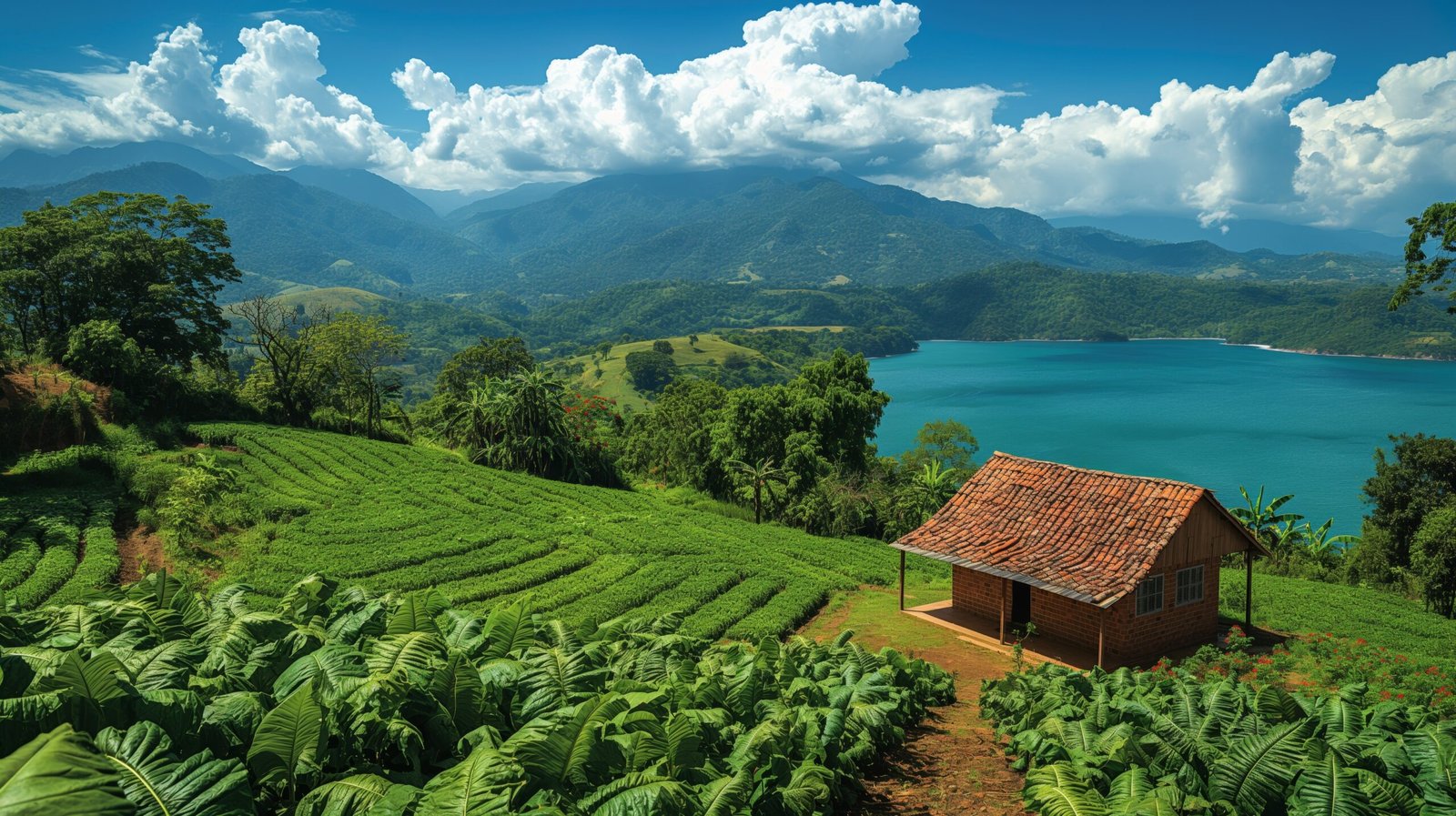

As a consultant specializing in private resilience estates and family compounds, I have spent years researching what the mainstream narrative consistently underreports to advise high-net-worth individuals on building resilient lifestyles. What strikes me most these days is how the basics, food, heat, and electricity, have shifted from rights to privileges. And right now, the global food crisis is underscoring that shift in ways that can no longer be ignored.
The Global Food Crisis Is Not a Headline. It Is Already Here.
In 2026, we are staring down a perfect storm: skyrocketing inflation, fierce competition for resources across continents, and the looming threat of conflicts that can shatter supply chains overnight. The UN’s Food and Agriculture Organization documents the reality plainly: the FAO Food Price Index averaged 127.2 points in 2025, representing an increase of more than 4 percent over the prior year, with vegetable oils alone surging 23.6 percent (FAO, 2025). Places like sub-Saharan Africa and parts of Asia are already facing acute shortages, with the WFP projecting 52.9 million people acutely food insecure in West and Central Africa during the 2026 lean season alone. Here in the West, it is subtler but no less real: grocery bills climbing month after month, forcing even affluent families to reconsider habits they once took entirely for granted.
The WFP’s 2026 Global Outlook confirms 318 million people are currently facing crisis-level hunger or worse. Two simultaneous famines have been confirmed, in Gaza and Sudan, the first time this century that two countries have been in confirmed famine at the same time. The margin between stability and catastrophe in the global food system has never been thinner.
What Is Actually on Those Shelves
Much of the “food” in modern supermarkets is not what our grandparents would recognize. It is bioengineered, genetically modified, optimized for yield and shelf life rather than nutrition. Take corn or soy, the staples in everything from cereals to snacks: over 90 percent of U.S. production is GMO, engineered to resist pests or herbicides. But that engineering often strips away natural benefits, replacing them with ultra-processed versions loaded with additives, seed oils, high-fructose corn syrup, artificial dyes, that function as inflammatory agents, quietly eroding health over time.
The research is no longer ambiguous. A landmark 2025 study published in The Lancet, analyzing 428,728 participants across nine European countries, found that ultra-processed foods are positively associated with all-cause mortality, circulatory disease, ischemic heart disease, and Parkinson’s disease (The Lancet, 2025). A 2024 BMJ umbrella review found that individuals in the highest quarter of ultra-processed food consumption had a 4 percent higher all-cause mortality rate, with elevated risks of type 2 diabetes, cancer, and anxiety disorders. This is not real food. It is a product optimized for corporate profit margins, not human longevity.
The artisan alternative, the food your ancestors ate, was seasonal, local, preserved through salt, smoke, fermentation, and cold storage. It contained no seed oils, no high-fructose corn syrup, and no dyes. Seasonal eating is not a wellness trend. It is the original food security model, and it is the one that actually sustained populations across centuries.
The Input Crisis: What Actually Gets Food from Soil to Shelf
The global food supply chain is not disrupted by the absence of food. It is disrupted by the absence of the inputs required to grow, transport, and preserve it. Most people have never considered that the tomato on their plate requires petroleum-derived pesticides, natural gas-derived fertilizers, diesel-powered farm equipment, diesel-powered refrigerated trucks, and lubricants for every piece of machinery in the chain. Remove any one of those inputs and the food does not move.
Fertilizers
The IFPRI and FAO documented in 2026 that urea fertilizer prices surged from $450 per ton on February 27 to over $700 per ton by mid-March, an increase of approximately 55 percent in under three weeks, driven by the disruption of the Strait of Hormuz (IFPRI, 2026). Approximately 30 percent of global fertilizer trade passes through that corridor. The FAO estimates that a disruption lasting three months or longer would affect global planting decisions for 2026 and beyond, with downstream food price increases materializing six to twelve months later. Recovery of fertilizer production capacity after a significant supply disruption takes months to years, not days or weeks.
Pesticides and Crop Protection
Modern pesticides are almost entirely petroleum-derived. When oil prices spike or supply chains fracture, pesticide availability collapses alongside fuel. The crops planted without adequate pest protection in one season become the food shortage two seasons later. This is the delayed consequence that never makes headlines until the shelves are empty.
Diesel, Fuel Oil, and Lubricants
Every tractor that turns soil, every harvester that cuts grain, every refrigerated truck that moves produce, and every cold storage facility that holds it requires diesel and lubricants. A 30 percent spike in diesel prices does not merely raise transportation costs; it raises the cost of every input in the agricultural chain simultaneously. And lubricant oil, the unglamorous fluid in every gear and pump, is the silent dependency that stops every machine when it runs out. Agricultural operations can grind to a complete halt in days when lubricant supply is disrupted, and restoring supply chains for specialized agricultural lubricants can take weeks.
The Seafood Problem: Asian Waters and the Oil Equation
Thailand was once the world’s premier shrimp exporter, supplying seafood to kitchens across North America, Europe, and Asia. That era is in structural decline. Thai shrimp export volumes have fallen from more than 211,000 tonnes in 2016 to approximately 129,000 tonnes in 2025, a 39 percent decline in under a decade. The causes are multiple: disease pressures, rising production costs, competition from lower-cost producers, and the persistent pressure of fuel costs on fishing and aquaculture operations that run on diesel around the clock.
Across the broader Asian seafood industry, high oil prices function as a direct tax on every fishing vessel, every cold chain, and every processing facility. When oil prices spike, smaller fishing operations become unprofitable and exit the market. When shipping costs surge, the premium on getting fresh or frozen seafood from Asian processing facilities to Western markets becomes prohibitive. The result is reduced supply, elevated prices, and increasingly unreliable delivery timelines for a protein source that tens of millions of families depend on. The gap between what Asian waters can theoretically supply and what actually arrives in Western markets is measured in fuel prices and geopolitical stability.
Regional Fault Lines: Where the Next Food Crises Are Forming
Food insecurity is not a monolithic global condition. It is a collection of regional crises with different causes, different timelines, and different consequences for the families caught inside each one.
- United States. The U.S. is a net food exporter, which creates a false sense of immunity. In reality, American food security is held together by just-in-time logistics, cheap diesel, and a grocery distribution system that carries approximately three days of inventory on shelves at any given time. A regional weather event, a fuel price spike, a port disruption, or a cyberattack on logistics infrastructure is sufficient to produce visible shortages within 72 hours. The Texas freeze of 2021, where empty shelves appeared within 24 hours of a grid failure, is not an outlier. It is a preview.
- Europe. European agriculture is heavily dependent on imported natural gas for fertilizer production and on Eastern European grain supplies that were structurally disrupted by the Ukraine conflict. Many European countries are simultaneously reducing domestic agricultural capacity through regulatory land restrictions while increasing dependence on imports. The combination creates a narrowing margin that any additional disruption can close entirely.
- Asia. The WFP projects 9.1 million additional people pushed into acute food insecurity across ten Asian countries in 2026, a 24 percent increase. South and Southeast Asia are particularly exposed: high population density, strong dependence on imported fertilizers, and agricultural systems vulnerable to monsoon irregularity and El Nino cycles. Bangladesh, Pakistan, and Indonesia face compounding pressures of inflation, fuel costs, and climate disruption on agricultural output simultaneously.
- Central and South America. Brazil is a global agricultural powerhouse whose food exports depend on diesel for its vast interior transport network and on fertilizer imports through corridors now under geopolitical pressure. Venezuela has already experienced the full cycle of political-economic collapse into genuine food scarcity. Central American nations, already food-import-dependent, face acute exposure to any disruption in the U.S.-Central America trade relationship or in regional weather patterns.
Ukraine: The Grain Deficit That Will Reshape Global Food Markets for Years
Ukraine before Russia’s full-scale invasion accounted for 46 percent of global sunflower oil exports, 9 percent of global wheat trade, and 12 percent of global maize. That productive capacity has been systematically dismantled. Ukraine’s exports of corn, barley, wheat, and meslin in 2025 were 35 percent lower than in 2020, the last pre-invasion harvest year (CSIS, 2026). The Black Sea port blockades that brought Ukrainian exports to a virtual standstill early in the war have forced reliance on alternative overland routes at significantly higher cost and lower volume. The countries most directly impacted are those that built their food import architecture around Ukrainian and Russian supply: Egypt, which historically imported more than 80 percent of its wheat from Russia and Ukraine; Lebanon, where bread subsidies are priced against Black Sea grain benchmarks; Tunisia and Libya, both heavily import-dependent; Pakistan and Bangladesh, which relied on affordable Black Sea grain to feed large urban populations on limited fiscal capacity. A persistent 35 percent export reduction from one of the world’s most productive agricultural regions does not resolve in a single season. It restructures global grain markets for years, and every country downstream of that restructuring faces elevated food prices for as long as the deficit persists.
Expat Food Security: The Hidden Vulnerability of Low-Cost-of-Living Destinations
For high-net-worth families who have established expat lifestyles in Southeast Asia, the assumption that low living costs provide inherent resilience deserves direct examination. Cambodia, Thailand, Vietnam, Indonesia, and the Philippines are among the most popular expat destinations in the world, sought for their affordability, culture, and relative stability. Cambodia in particular attracts tens of thousands of Western expats to Phnom Penh and Siem Reap, where comfortable lifestyles are available at a fraction of Western costs. But each of these nations is structurally dependent on imported fuel for every agricultural input that matters: the diesel that runs rice paddies and fishing fleets, the fertilizer derived from natural gas, and the cold chain logistics that keep urban food supply functional.
When regional oil prices spike, as they have throughout 2025 and 2026 driven by the Hormuz disruption, food prices in these markets move proportionally. An expat family operating on dollar-denominated assets in a local food market re-pricing in response to fuel costs faces compound exposure: currency exchange dynamics, local inflation, and supply chain disruption from the same global inputs under pressure everywhere else. The low-cost-of-living assumption holds in stable times. The expat families most at risk are precisely those who chose their location for its affordability rather than its food production self-sufficiency: no productive land, no local farming relationships, no stored reserves, and full dependence on commercial food channels that are subject to the same global supply disruptions as anywhere else. Affordable is not the same as resilient.
Why Food Storage Is No Longer Optional
The Ukrainian conflict of 2022 produced a grain price shock that drove wheat 30 to 40 percent higher within weeks and affected bread prices on six continents. Families with stored staples were insulated. Those without them paid the premium without choice. The COVID-19 pandemic produced visible grocery shortages across every Western nation within days of demand spikes, not because the food did not exist, but because the just-in-time supply chain had no buffer. Families who held a meaningful pantry reserve experienced those events as inconvenience. Those without held experienced them as a crisis.
The pioneer model was not romantic. It was rational. A family on the 1800s frontier did not have a subscription service delivering food on a predetermined schedule. They laid in provisions before winter because the alternative was starvation. They stored salt-cured meats, dried beans, root vegetables in cool cellars, and preserved fruit in sealed jars. The methodology is available today, scaled to modern needs, and it functions identically. A two-year pantry reserve of grains, legumes, dried meats, preserved fats, and sealed dry goods is not a survivalist eccentricity. It is the original insurance policy, the one that actually paid out every time the environment turned hostile.
Local access to beef and dairy from known producers is not a luxury preference; it is a protein security strategy. When commercial supply chains are disrupted, the family with an established relationship with a local rancher and a working knowledge of seasonal vegetable harvest windows eats. The family whose food security depends entirely on a national grocery chain and a credit card does not.
The Permission Problem
Think back to the 1800s. A family on the frontier did not have a monthly bill from ConAgra for their corn or a terms of service from the local utility dictating when they could light a fire. They woke up, milked the cow, split firewood, and drew water from the well. Their survival never depended on a faceless conglomerate’s quarterly profits or a grid operator’s discretion.
Fast-forward to today. Miss two payments and the power company flips a switch. Your heat dies in a Texas freeze. The grocery store shelves are stocked with ultra-processed products engineered in a laboratory with seed oils, corn syrup, and dyes that inflame the body for decades. Your refrigerator hums on electricity you do not control, keeping perishables you did not grow. One supply-chain hiccup, one rate hike, one outage for maintenance, and the modern homestead becomes a cold, dark box.
We have outsourced the three essentials, food, heat, and electricity, to corporations that can cut access with a click. The homesteaders of the 1800s did not need permission to live. We do. And that permission can be revoked.
Becoming Your Own Grocer: Farm Animals, Kitchen Gardens, and Food Forests
The most direct response to every dependency described in this brief is also the most ancient: produce your own food, on your own land, in relationship with your own community. This is not nostalgia. It is the only food security system that has never failed when implemented correctly.
Farm Animals
Farm animals are not a lifestyle statement for families with sufficient land. They are food security infrastructure. A small herd of cattle provides beef, tallow for cooking and preservation, and hides. A dairy cow or small goat operation delivers fresh milk, butter, and hard cheeses that store for months without refrigeration. Chickens provide eggs year-round on minimal input and process kitchen waste into protein simultaneously. A small pig operation converts food scraps and garden surplus into the most calorie-dense meat per square foot of any commonly raised animal. These are not romantic notions. They are the protein security system that sustained populations for centuries before refrigerated shipping made dependence on distant supply chains seem permanent and safe.
Kitchen Gardens
A kitchen garden is a productive planting bed or series of beds positioned immediately outside the kitchen door, close enough that herbs, salad greens, and seasonal vegetables can be harvested minutes before reaching the table. A kitchen garden of as little as 200 square feet, intensively planted and seasonally rotated through spring greens, summer tomatoes and squash, autumn root vegetables, and winter hardy crops under simple frost protection, can supply a household with fresh vegetables for a significant portion of the year at near-zero ongoing cost. The proximity is the point. When food is growing within arm’s reach of your kitchen, the distance between harvest and plate collapses entirely. No truck, no cold chain, no retailer markup, and no supply chain vulnerability between the soil and the meal.
Food Forests
A food forest is a designed ecosystem that mirrors the layered structure of a natural woodland while producing food at every level simultaneously. The canopy layer holds full-size fruit and nut trees: apples, pears, walnuts, chestnuts, and persimmons. The sub-canopy holds dwarf fruit trees, elderberry, and multi-purpose shrubs. Below that, a shrub layer of currants, gooseberries, and medicinal herbs. Ground cover of strawberries, thyme, and nitrogen-fixing plants. Root vegetables and tubers in the soil layer. Climbing vines on natural trellises. Fungi in the shaded understory. A mature food forest is extraordinarily productive, in some documented designs generating several times the caloric output of equivalent farmland with a fraction of the ongoing labor once established. It is also, by deliberate design, difficult to identify as a food production system from outside the property boundary. A food forest looks like a dense, mature, naturally grown woodland. The productive abundance is invisible until you walk inside it. For families who value discretion on a private resilience estate, that visual camouflage is not incidental. It is a strategic design feature built into the landscape from the first planting.
Woodland, Fireplaces, and Wood-Burning Stoves
Fireplaces and wood-burning stoves represent the original decoupling from industrial energy for heat and cooking, and they remain among the most reliable backup systems available. A well-designed wood-burning installation integrated into a private compound provides primary or supplemental heating that requires no utility connection, no monthly payment, and no service agreement of any kind. A sustainable woodlot of five to ten acres, properly managed through selective harvest and replanting on a rolling cycle, can supply a household with fuel wood indefinitely without depleting the stand. Hardwoods such as oak, hickory, and maple produce the highest heat output per cord; a single mature oak harvested and split produces enough heat to carry a well-insulated home through months of cold weather. When the industrial grid fails, as it does in ice storms, hurricanes, cyberattacks, and economic crises, the family with a seasoned wood supply and a working stove experiences that event as a minor inconvenience. The family whose heat is entirely grid-dependent experiences it as a life-threatening emergency. Cooking over wood is also a practical skill. A wood-burning stove or outdoor stone hearth functions as a full cooking platform entirely independent of gas lines and electric ranges. The ability to cook without the grid is not a backup capability. It is the original capability, and in a disruption scenario, it is the one that actually works.
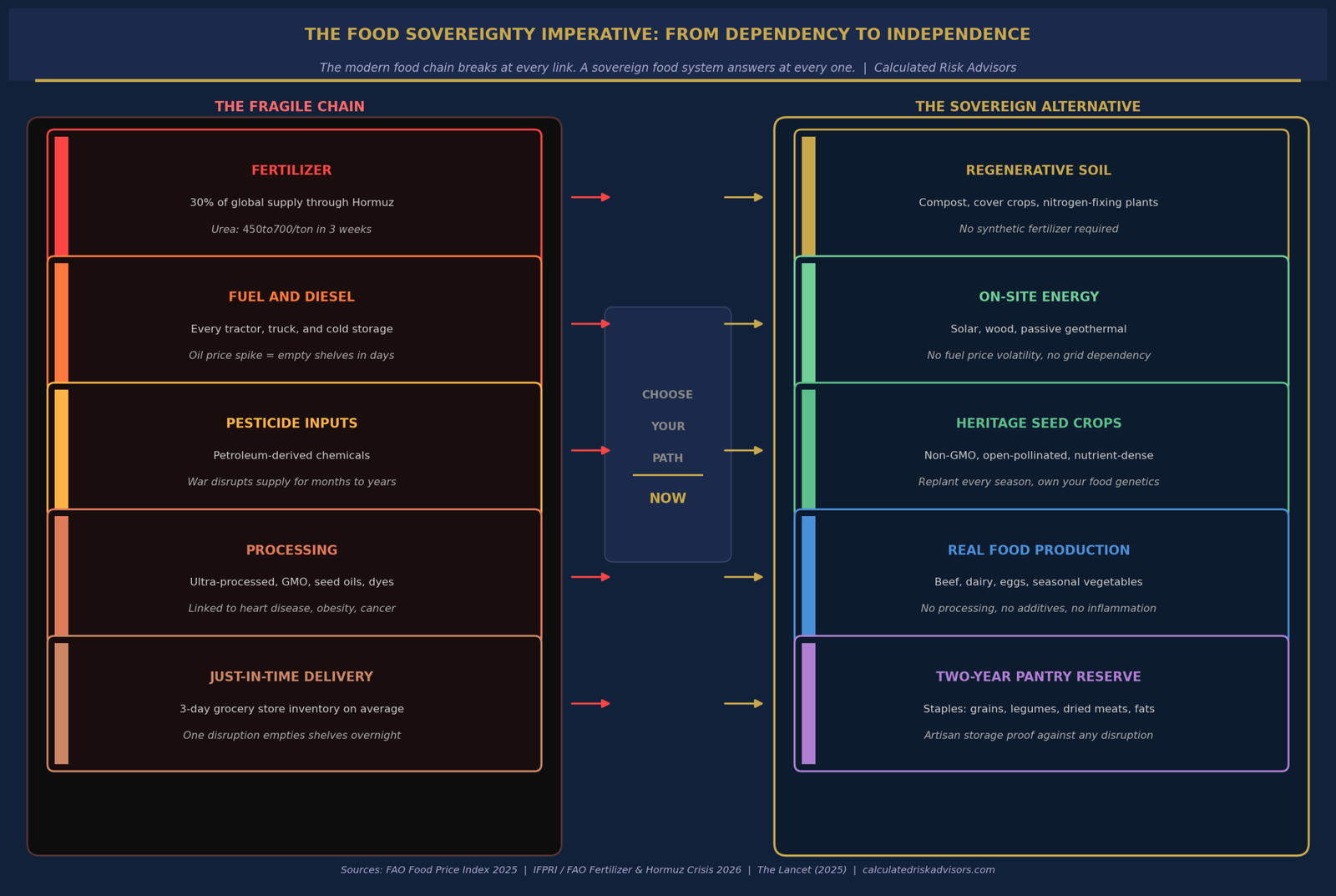
Figure 1. The Food Sovereignty Imperative: From Dependency to Independence | Calculated Risk Advisors
True Wealth and the Sovereign Solution
True wealth is not a seven-figure portfolio. It is a pantry you filled yourself, a woodlot you planted, a solar array you wired, a well you drilled. It is the ability to tell every utility, grocery chain, and grid operator: I do not need you today.
Self-reliance is no longer a quaint hobby for those seeking to return to the land. It is the only insurance policy that cannot be canceled when the algorithms decide you are no longer profitable. The pioneers did not have much, but what they had was theirs. We have everything except the one thing that matters: the guaranteed right to keep ourselves alive without corporate approval. That guarantee is now the rarest luxury on earth.
In my work designing private resilience estates and family compounds, I see high-net-worth families waking up to this reality. They are not chasing doomsday scenarios; they are investing in practical resilience. A family compound with integrated hydroponics for year-round, non-GMO produce. Solar and wind setups that generate power independently of the commercial grid, backed by battery storage. Wood-fired systems tied into sustainable forestry on your land. These are not fantasies. They are blueprints being implemented right now, by tech executives, by legacy families, by anyone who has done the math on dependency and decided the calculation does not work in their favor.
“The food crisis is not some distant headline. It is here, reshaping how we live. Inflation is not easing; it is compounding with global rivalries. A self-sustaining private resilience estate is not about fear. It is about freedom. The pioneers knew it instinctively. We can reclaim it deliberately.”
What Calculated Risk Advisors Delivers
Calculated Risk Advisors specializes in designing private resilience estates and family compounds within stable jurisdictions, integrating food production, water sovereignty, energy independence, and long-term pantry infrastructure from the ground up. Each engagement begins with a confidential assessment of your family’s current vulnerabilities and maps a practical, phased path to genuine independence.
As your consultant, let us start with an honest evaluation: assess your current food, water, and energy dependencies, and map a compound plan that addresses them systematically. It is not about fear. It is about freedom. Confidential consultations are available exclusively for qualified principals and family offices, by private introduction.
Legacy is not inherited; it is defended.
What Calculated Risk Advisors Delivers
Calculated Risk Advisors specializes in designing private family compounds, private resilience estates, and resilient estate infrastructure within stable, low-surveillance jurisdictions including Switzerland, New Zealand, Panama, and other thoroughly vetted locations. We also provide guidance for North America following a comprehensive threat-modeling discussion.
Each engagement delivers a confidential assessment structured around the specific dimensions that determine whether a sovereign estate performs as intended under real-world conditions: jurisdictional stability, legal environment, infrastructure independence, climate and resource considerations, privacy architecture, long-term geopolitical position, energy independence, food security, communications resilience, and multi-generational habitation design.
Confidential consultations are available exclusively for qualified principals and family offices, by private introduction.
About the Author
Brent Michael Hardin is the founder of Calculated Risk Advisors, a private advisory firm serving ultra-high-net-worth individuals and multi-generational family offices. CRA specializes in sovereign estate development, jurisdictional intelligence, and strategic relocation advisory for families navigating an era of accelerating geopolitical, financial, and technological change. Engagements are by private introduction only.
Limited Availability
Calculated Risk Advisors accepts a limited number of new families each quarter. Each engagement is tailored, confidential, and managed directly by our principals. There is no public intake. All relationships begin by private introduction.
A Note on This Publication
The observations, analysis, and commentary published on this site are produced for general informational and educational purposes only. They represent the research and independent perspective of the author and do not constitute financial, investment, legal, tax, real estate, or any other form of professional advice.
Nothing published here represents a solicitation, recommendation, or offer to acquire or dispose of any security, asset, property, or service. Access to this content does not establish an advisory, fiduciary, or client relationship of any kind between the reader and Calculated Risk Advisors LLC or any of its affiliated entities.
The decisions explored on this site — jurisdictional positioning, estate design, infrastructure strategy, and multi-generational wealth planning — are among the most consequential a family can make. They require qualified legal counsel, licensed tax professionals, credentialed financial advisors, and specialist practitioners who have direct knowledge of your specific circumstances, objectives, and risk profile. No publication, regardless of its depth or specificity, is a substitute for that counsel.
Calculated Risk Advisors LLC and its affiliates expressly disclaim responsibility for any decision made, action taken, or action not taken in reliance on content published here.
If you are seriously evaluating any of the strategies, jurisdictions, or approaches discussed in this publication, engage qualified independent advisors before proceeding. If you would like to explore whether a private advisory relationship with Calculated Risk Advisors is appropriate for your situation, you are welcome to request an introduction.
“The intelligence that protects generational wealth doesn’t make headlines; it circulates quietly among those who know where to look. Subscribe to the Calculated Risk Advisors Daily Brief. No noise. No mass-market advice. Just the signal.”
References
Food and Agriculture Organization of the United Nations. (2025). FAO food price index. FAO Markets and Trade. https://www.fao.org/worldfoodsituation/foodpricesindex/en/
Food and Agriculture Organization of the United Nations, & World Food Programme. (2026). Hunger hotspots: FAO-WFP early warnings on acute food insecurity. WFP. https://www.wfp.org/publications/hunger-hotspots-fao-wfp-early-warnings-acute-food-insecurity
International Food Policy Research Institute. (2026). The Iran war’s impacts on global fertilizer markets and food production. IFPRI Blog. https://www.ifpri.org/blog/the-iran-wars-impacts-on-global-fertilizer-markets-and-food-production/
Lane, M. M., et al. (2025). Ultra-processed food exposure and risk of all-cause and cause-specific mortality. The Lancet. https://www.thelancet.com/journals/lancet/article/PIIS0140-6736(25)01565-X/abstract
World Food Programme. (2026). WFP global outlook 2026. WFP. https://www.wfp.org/publications/wfp-global-outlook
Center for Strategic and International Studies. (2026). The Russia-Ukraine war and global food security: Impacts four years later. CSIS. https://www.csis.org/analysis/war-ukraine-and-global-food-security-impacts-four-years-later
CNBC. (2026, May 1). Strait of Hormuz: A base oils shortage threatens luxury auto giants. CNBC. https://www.cnbc.com/2026/05/01/strait-of-hormuz-base-oils-luxury-autos.html
Dave Manuel. (2026). US strategic petroleum reserve storage and history 2026. DaveManuel.com. https://www.davemanuel.com/us-oil-reserves.php
South Dakota State University Extension. (2026). Winter wheat and nitrogen: Decisions for 2026 growing season. SDSU Extension. https://extension.sdstate.edu/winter-wheat-and-nitrogen-decisions-2026-growing-season
© 2026 Calculated Risk Advisors. All rights reserved. This content is provided for informational purposes only and does not constitute legal, financial, or investment advice.


0 Comments