
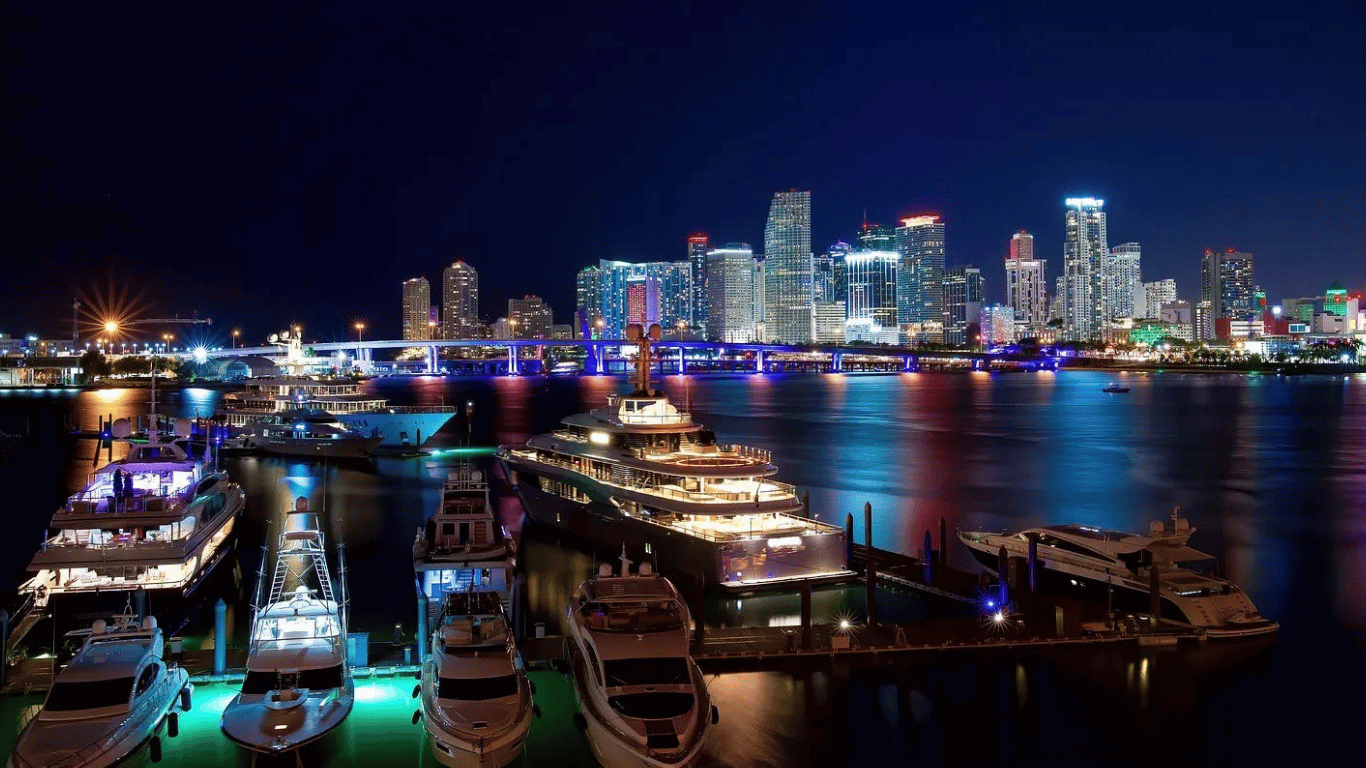

Florida remains one of the current destination hotspots for UHNWI and HNWI within the continental United States. Miami’s skyline offers ocean views and a vibrant nightlife. Many are calling the metropolitan area the new Wall Street South, as much of New York’s financial operations are establishing or expanding in Brickell and the Greater Miami Area.
Within the tri-county area of Palm Beach estates, this region commands a premium price for ocean frontage that pulses economic energy and continues to attract retirees, investors, and global tycoons looking for high-priced real estate from across the globe.
Underneath the surface appeal, however, lies a concentration of risks few recognize. Unless residents have discerning eyes and continuous intelligence of the dynamic factors affecting their local region, most fail to realize the dangers until it is too late.
The same population surge and infrastructure density that made the Gold Coast a magnet for the wealthy has made South Florida one of the most exposed regions in the continental United States for legacy-minded families.
“The same population surge and infrastructure density that made the Gold Coast a magnet for the wealthy has made South Florida one of the most exposed regions in the continental United States for legacy-minded families.”
Population Density and Infrastructure at the Breaking Point
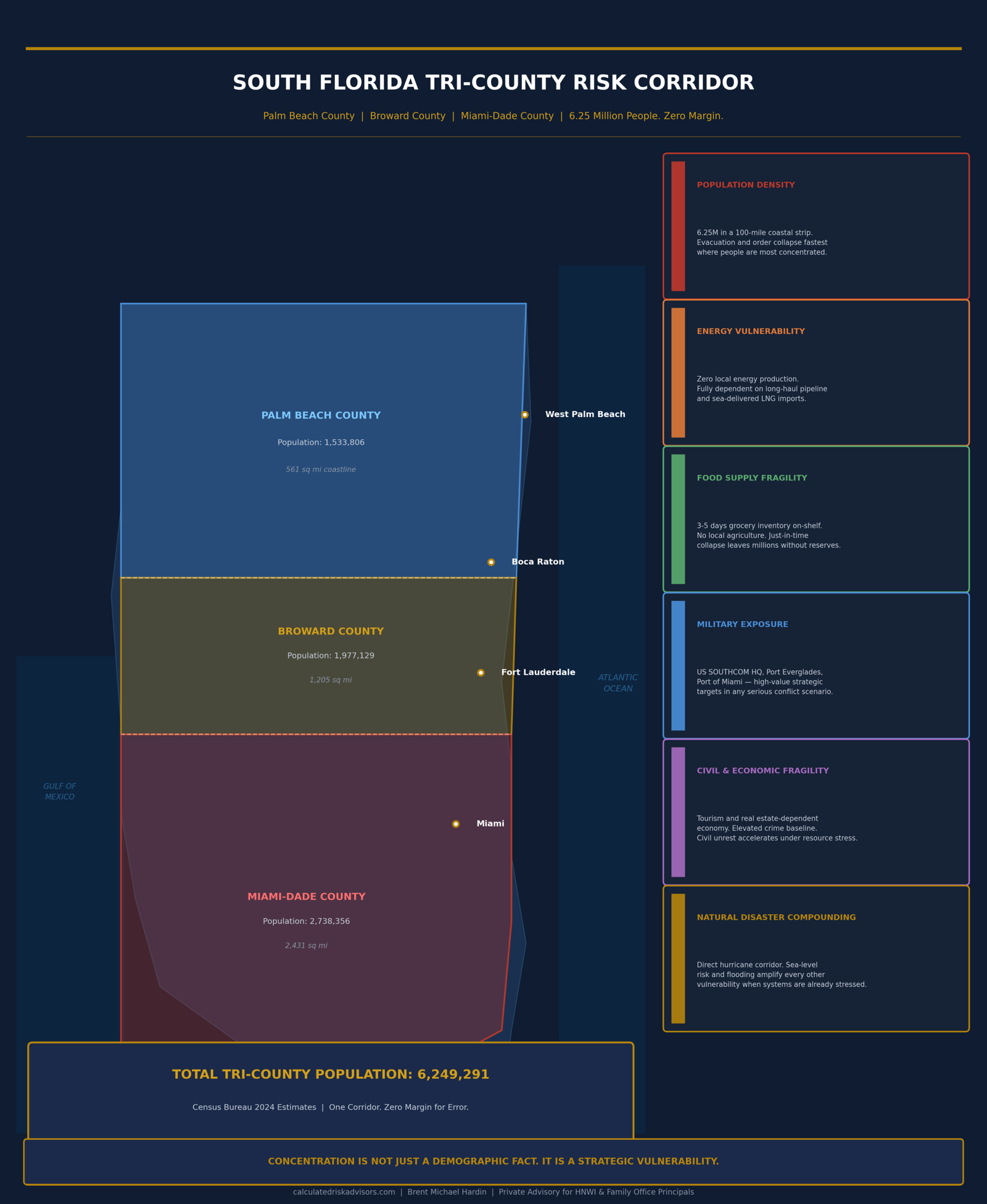
Focusing on the tri-county area of South Florida, according to the 2024 Census, the population currently exceeds 6.25 million — nearly twenty-eight percent of Florida’s entire population. In 2026, Miami-Dade’s estimated population of 2.74 million residents represents the highest concentration in the tri-county area, followed by Broward at 2.0
million and Palm Beach County at 1.5 million. International inflows are driving much of this expansion, with Miami-Dade alone recording an average of more than 155 net international arrivals per day — the highest of any county in the nation — while domestic migration from high-tax states like New York and California adds further pressure.
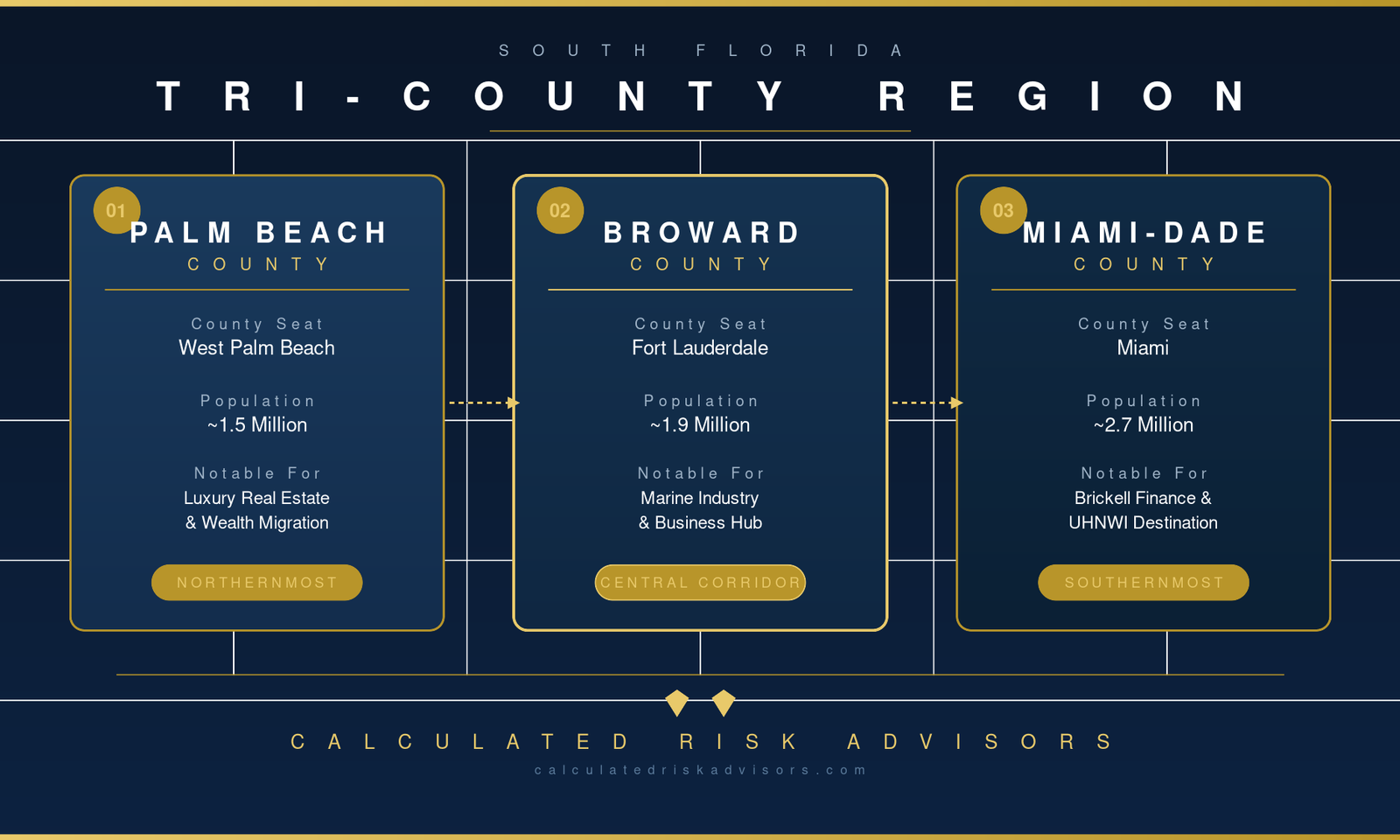
Florida Tri-County Region | calculatedriskadvisors.com
Current projections indicate Miami-Dade is approaching 3.1 million, Broward 2.3 million, and Palm Beach 1.8 million by 2045.
It is worth noting that the infrastructure of schools, hospitals, highways, and emergency services is at or beyond capacity for the existing population density. This is creating a thin margin for safety that any significant disruption can erase overnight.
While South Florida remains the envy of the nation for many, Miami’s skyline of glistening towers and Palm Beach’s many estates commanding pristine ocean frontage have fueled a luxury real estate boom expanded by legal foreign investment. Yet the region also carries a large undocumented population that plays an outsized role in construction, hospitality, and agriculture. Many of these residents live outside formal safety nets and remain uninsured because Florida chose not to expand Medicaid.
In prolonged crises — whether hurricanes, extended blackouts, food shortages, or economic collapse — the absence of that support can quickly translate into desperation that overrides social norms and turns socioeconomic proximity into a direct security concern for affluent enclaves.
Crime, Civil Fragility, and the Proximity Risk
Crime statistics have improved overall, yet concentrated hotspots persist in lower-income corridors immediately adjacent to some of the wealthiest neighborhoods in America. Property crime remains elevated, and during disasters, the distinction between affluent and struggling areas often collapses as shared infrastructure fails simultaneously.
History demonstrates that when basic services disappear for more than a few days, the primary threat is rarely the storm itself — it is the human reaction that follows. In Palm Beach County, for instance, hotspots like Riviera Beach and Lake Park see violent crime rates that dwarf the county average, with property thefts spilling into gated communities during peak tourist seasons or storm evacuations, where affluent residents are often targeted for quick gains amid chaos.
Extreme traffic congestion restricts movement during emergencies. Competition for resources worsens as everyone in need of supplies converges on central grocery distribution centers and supply hubs. Florida’s three-day just-in-time delivery system puts residents at risk, and the population density competing for resources that must be trucked
Flooding, Infrastructure Decay, and Real Estate Exposure
A significant concern is flooding that reaches miles inland, while drainage systems designed decades ago struggle to cope with routine king tides. Luxury waterfront holdings that command premium prices today carry increasing exposure to depreciation, uninsurability, and eventual loss of habitable elevation. Palm Beach County, with its low-lying barrier islands and canal systems, has seen repeated inundation — as during the 2024 Milton event that closed sections of A1A for weeks and flooded hundreds of homes in Jupiter and Tequesta.
Compounding the flood risk is a threat that few residents consider until it is too late: the Biscayne Aquifer, the primary drinking water source for over four million residents across Miami-Dade, Broward, and Palm Beach counties, is actively being compromised by saltwater intrusion (Kaplan, 2025). Sea levels have already risen approximately one foot since 1992 and are projected to rise another two feet by 2060 (Southeast Florida Regional Climate Compact, 2020). As saltwater pushes inland and upward into the aquifer, well fields are progressively lost. Hallandale Beach has lost over a mile of freshwater buffer since 2019, while the city of Davie has recorded a staggering four-mile inland shift in the saltwater interface (Kaplan, 2025; South Florida Water Management District, 2024). The U.S. Geological Survey has confirmed that chloride levels in southern aquifer zones are reaching critical thresholds, with wells in Hallandale Beach and West Palm Beach exceeding 10,000 mg/L (Kaplan, 2025). A region of 6.25 million people whose surface infrastructure is flooding and whose underground freshwater source is being salinated simultaneously is not a region with meaningful resilience margins.
Energy dependence compounds every other vulnerability. The regional grid, while modern in parts, has repeatedly failed under stress. Prolonged outages during recent storms left millions without power for days or weeks, and the growing concentration of data centers only heightens demand on an already strained system. A single successful cyber or physical attack on critical nodes could cascade across the entire corridor.
What makes South Florida’s energy exposure uniquely severe is the concentration of its supply infrastructure at a single point. Port Everglades, located in Fort Lauderdale, delivers more than 15 million gallons of petroleum products — gasoline, diesel, and jet fuel — every single day, supplying one-third of Florida’s entire energy requirements and serving 12 counties. Nearly all of South Florida’s liquid petroleum supply moves through this one port. A disruption to Port Everglades does not strain the region’s energy supply. It ends it.
The Energy Supply Crisis and the Strait of Hormuz
The vulnerabilities outlined above exist in peacetime. What the current geopolitical environment introduces is the acceleration of every single one of them simultaneously.
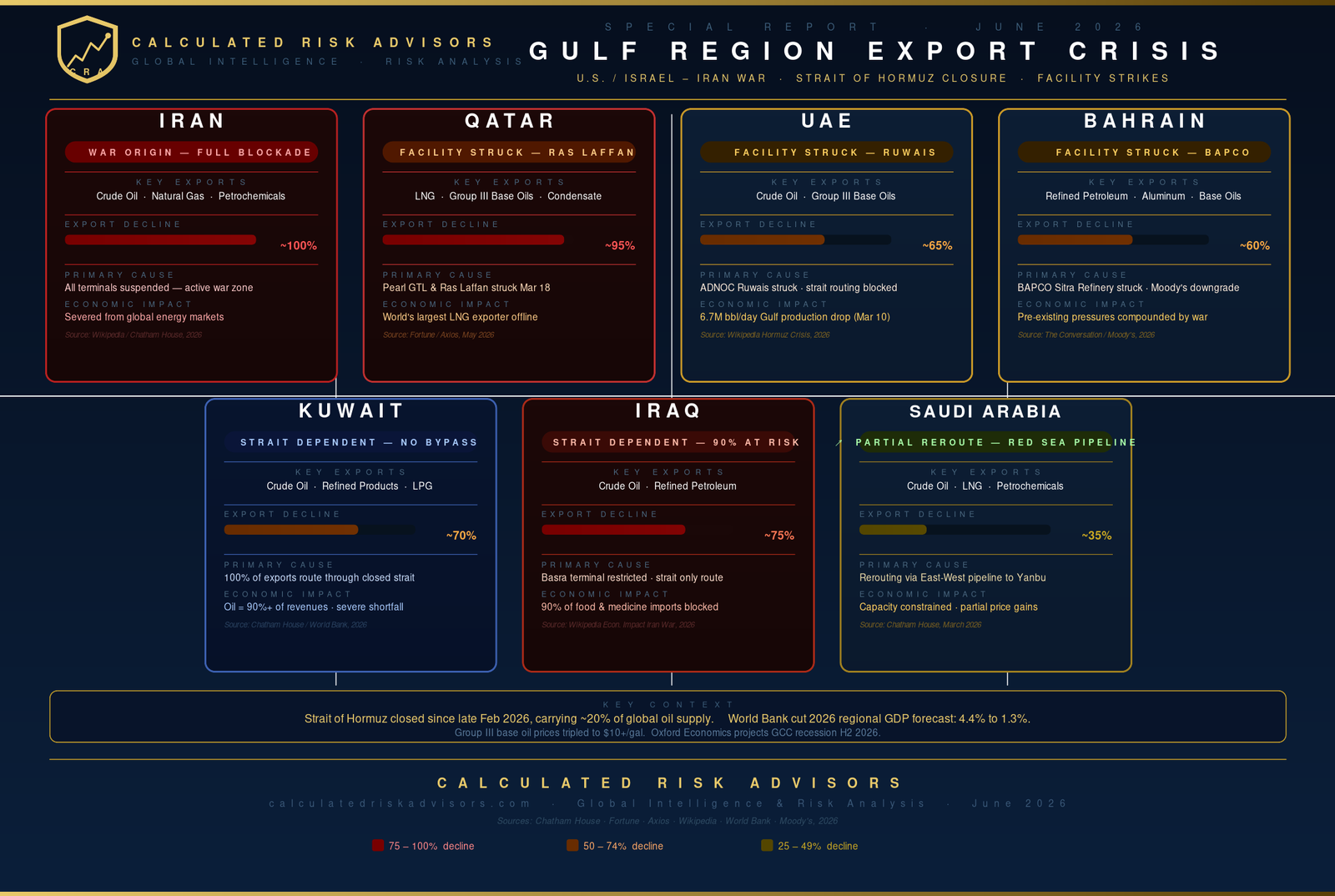
Our assessment highlights that the current U.S./Israel war with Iran is causing significant energy supply fluctuation and continued market volatility.
The Strait of Hormuz carries roughly a fifth of the world’s oil supply. Should the price per barrel of oil increase to $150 to $200 a barrel, supply lines will falter as the transportation and trucking delivery system is not prepared to absorb the high costs of diesel and fuel. Lubricant oils are currently in danger, as the production facilities that produce motor oils have been attacked and are under threat of additional strikes while under repair.
As reported by Jordan Blum at Fortune Magazine:
“The Independent Lubricant Manufacturers Association has warned of a ‘global base oil supply crisis’ and an ‘imminent shortage’ of low-viscosity motor oils — the most common grades used in newer vehicles today.”
The bottom line is the U.S. faces the largest lubricating oil supply shortage in modern American history, with no meaningful relief expected before 2027.
These conditions will continue to deteriorate as both sides use time to assemble additional resources and supplies, moving this conflict into a greater threat to a great many nations. A temporary ceasefire may be declared, if only for manipulation of the markets. The conditions of this war will place additional global stress across the world. One should anticipate a potential U.S. boots-on-the-ground presence in key areas in an attempt to leverage control of critical transportation corridors and cut off the supply routes providing resources for war.
Food Security and the American Farmer Under Pressure
For farmers in the U.S., conditions are increasingly dire. As reported by CNBC on April 15, nearly 60% of U.S. farmers report worsening finances. In the South, 78% say they cannot afford all the fertilizer they need this season. In the Midwest, 48%. In the Northeast and West, 66 to 69%.
The Strait matters to farms because 20 to 30% of global fertilizer exports — urea, ammonia, phosphates, and sulfur — move through the Strait of Hormuz. Shipping through it has fallen more than 70% since the conflict began, as reported by Darragh and Bhanu of Kpler. Add petrochemical feedstocks used in pesticide manufacturing, which are driving up crop production costs alongside fertilizer, and the conditions become deeply concerning. For South Florida, a region that produces virtually none of its own food and depends entirely on a just-in-time supply chain already operating at the margins, the collapse of American agricultural output is not an abstract national problem. It arrives on empty shelves within days.
The Window Is Open. It Will Not Remain Open Indefinitely.
For families whose primary operating base remains in South Florida, these converging pressures transform what was once an asset into a growing liability. Add a real estate market that may see conditions far worse than the housing crisis of 2008, and the calculus becomes undeniable.
Geographic diversification through an autonomous rural platform in a stable, low-density jurisdiction is no longer a theoretical hedge. It has become a practical imperative for preserving agency, protecting wealth, and ensuring multi-generational continuity when urban systems can no longer be relied upon.
The window to establish that independence thoughtfully, privately, and at reasonable cost remains open. But it will not stay open indefinitely.
About the Author
Brent Michael Hardin is the founder of Calculated Risk Advisors, a private advisory firm serving ultra-high-net-worth individuals and multi-generational family offices. CRA specializes in autonomous rural estate development, jurisdictional intelligence, and strategic relocation advisory for families navigating an era of accelerating geopolitical, financial, and technological change. Engagements are by invitation and private introduction only.
A Note on This Publication
The observations, analysis, and commentary published on this site are produced for general informational and educational purposes only. They represent the research and independent perspective of the author and do not constitute financial, investment, legal, tax, real estate, or any other form of professional advice.
Nothing published here represents a solicitation, recommendation, or offer to acquire or dispose of any security, asset, property, or service. Access to this content does not establish an advisory, fiduciary, or client relationship of any kind between the reader and Calculated Risk Advisors LLC or any of its affiliated entities.
The decisions explored on this site — jurisdictional positioning, estate design, infrastructure strategy, and multi-generational wealth planning — are among the most consequential a family can make. They require qualified legal counsel, licensed tax professionals, credentialed financial advisors, and specialist practitioners who have direct knowledge of your specific circumstances, objectives, and risk profile. No publication, regardless of its depth or specificity, is a substitute for that counsel.
Calculated Risk Advisors LLC and its affiliates expressly disclaim responsibility for any decision made, action taken, or action not taken in reliance on content published here.
If you are seriously evaluating any of the strategies, jurisdictions, or approaches discussed in this publication, engage qualified independent advisors before proceeding. If you would like to explore whether a private advisory relationship with Calculated Risk Advisors is appropriate for your situation, you are welcome to request an introduction.
References
Blum, J. (2026, May 29). The ‘imminent’ oil crisis isn’t at the pump — it’s under your hood. Fortune. https://fortune.com/2026/05/29/imminent-oil-crisis-isnt-pump-its-under-your-hood/
CNBC. (2026, April 15). Nearly 60% of U.S. farmers say their finances are getting worse as fertilizer, fuel costs rise: Survey. CNBC. https://www.cnbc.com/2026/04/15/us-farmers-struggling-to-afford-fertilizer-amid-iran-war.html
Darragh, M., & Bhanu, I. (2026, March 27). The Strait of Hormuz blockade: What it means for grain and food security. Kpler. https://www.kpler.com/blog/the-strait-of-hormuz-blockade-what-it-means-for-grain-and-food-security
Kaplan, J. (2025, March 14). Report finds that as sea levels rise, underground saltwater surges inland in South Florida. The Invading Sea. https://www.theinvadingsea.com/2025/03/13/saltwater-intrusion-groundwater-sea-level-rise-drinking-water-south-florida-wellfields/
Southeast Florida Regional Climate Compact. (2020). Sea level rise projections for Southeast Florida. https://southeastfloridaclimatecompact.org/wp-content/uploads/2020/04/Sea-Level-Rise-Projection-Guidance-Report_FINAL_02212020.pdf
South Florida Water Management District. (2024, December). Saltwater interface monitoring and mapping program report. https://www.sfwmd.gov/sites/default/files/documents/ws-58_swi_mapping_report_final.pdf
© 2026 Calculated Risk Advisors. All rights reserved. This content is provided for informational purposes only and does not constitute legal, financial, or investment advice.


0 Comments