


In the world of high-net-worth individuals, wealth has long bought a buffer against everyday risks, from private jets and secure estates to diversified portfolios. Yet one fundamental vulnerability remains stubbornly exposed, the daily plate of food on the table. No amount of money can insulate you when the arteries of global agriculture seize up. According to emerging reports, that exact scenario is unfolding right now. The effective closure of the Strait of Hormuz has triggered immediate restrictions on the delivery of fertilizers, pesticides, and herbicides precisely as the Northern Hemisphere enters its critical spring planting season. What begins as a maritime crisis is rapidly becoming a food-security catastrophe that touches every income level, but it presents a unique pain point and an unprecedented opportunity for those with the resources to act.
The Hormuz Bottleneck
Fertilizer, Pesticides, and Herbicides in Limbo
Analyses indicate that roughly 30 to 50 percent of key global fertilizer trade, including urea, ammonia, nitrogen, phosphate, and sulfur-based products, normally moves through the narrow waterway linking the Persian Gulf to the Indian Ocean. With commercial shipping down more than 90 percent and major carriers rerouting around Africa, those inputs are simply not reaching farms on schedule. Spring planting windows do not wait for diplomacy, and farmers in North America, Europe, and key export regions are already scrambling, facing price spikes and outright shortages. Pesticides and herbicides, many of which share the same maritime logistics corridors, are experiencing the same bottlenecks.
The timing could not be worse. Without adequate nitrogen for grain filling or phosphate for root development, yields across staple crops will drop sharply this harvest cycle. Global energy prices have surged in tandem, inflating the cost of running farm machinery and processing facilities. The result is not abstract, it is measurable pressure on the entire food-production pipeline.
From Distant Famine to Western Inflation
The Cascading Crisis
The human cost begins in low-income nations and third-world regions where food imports and local production are already fragile. Famine warnings are flashing across parts of sub-Saharan Africa, South Asia, and the Middle East itself. Households that spend 60 to 80 percent of income on basic staples face immediate caloric shortfalls when wheat or rice prices double. Aid organizations report that emergency stockpiles are depleting faster than they can be replenished.
In the West, the picture is different but no less destabilizing. Inflation is already making food unaffordable for middle-class families and inaccessible for those on fixed incomes. Grocery bills that had finally begun to stabilize are climbing again, and analyses project sustained double-digit percentage increases in staple prices through 2027 if disruptions persist. The wealthy feel it too, not in hunger, but in the erosion of lifestyle predictability and the realization that even premium organic suppliers cannot guarantee consistent supply.
The Three Critical Food Pillars Under Threat
Wheat
The backbone of bread, pasta, cereals, and baked goods worldwide, wheat is fertilizer-intensive and highly sensitive to nitrogen shortages. Global yields are projected to fall 8 to 15 percent in the coming season, and export-dependent countries will prioritize domestic needs, tightening supplies and driving prices higher for everyone else.
Corn (Maize)
Essential for animal feed, ethanol, high-fructose corn syrup, and direct human consumption, corn depends heavily on both nitrogen and phosphate inputs. Current deficits will reduce both grain volume and quality, rippling into higher meat, dairy, and processed food costs. Livestock producers are already hedging by cutting herd sizes, further compressing supply.
Rice
The daily calorie source for more than half the world’s population, rice production in many regions relies on imported fertilizers routed through disrupted shipping lanes. Even modest yield declines can trigger massive price volatility and potential rationing in import-dependent markets.
These are not isolated commodities. They are the foundation of global diets and the feedstocks for thousands of downstream products. When their production falters, the entire food pyramid trembles.
A War Spiraling Beyond Borders
The underlying cause is no longer a contained regional dispute. What began with joint U.S.-Israeli strikes on Iranian targets on February 28, 2026 has escalated into a multi-front conflict that now touches more than a dozen nations. Iran has launched retaliatory barrages against Israel and every Gulf Cooperation Council member, including Bahrain, Kuwait, Oman, Qatar, Saudi Arabia, and the United Arab Emirates, as well as U.S. bases in Iraq and Jordan. Hezbollah’s involvement has triggered a full-scale ground and air war in Lebanon, with Israeli forces advancing into southern territories and heavy bombing of Beirut suburbs. Iranian drones have struck British facilities in Cyprus and reached as far as Azerbaijan.
The destabilization is total. Oil facilities in Saudi Arabia and the UAE have been hit, airports across the Gulf are operating under threat, Iraq has partially shut oil production, and civilian casualties continue to rise as millions are displaced. The conflict shows no sign of de-escalation and is instead drawing in more actors and widening its geographic footprint.
Particularly alarming is the emerging conundrum involving NATO and BRICS alignments. NATO assets, including systems supporting Turkey, have intercepted Iranian missiles heading toward Turkish airspace. Yet Turkey, a longstanding NATO member, has been actively pursuing full BRICS membership and positioning itself as a bridge between East and West. The spectacle of alliance partners’ defense systems effectively engaging in defensive actions against forces tied to broader BRICS-adjacent dynamics underscores how alliances are fracturing and realigning under pressure. No one planned for NATO countries to find themselves in operational crossfire linked to shifting global alignments, yet that is precisely the reality now unfolding. The globe is destabilizing at an accelerating pace, and the food-supply shock is merely the first visible economic fracture.
The HNWI Imperative
Build Autonomous Rural Platforms Now
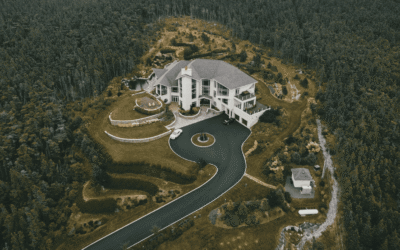
For high-net-worth individuals, the message is clear. Waiting for governments or markets to stabilize is no longer viable. The strategic response is to create self-contained, resilient food-production systems on private rural platforms or family compounds. This is not backyard gardening for amateurs, it is engineered, scalable, technology-augmented agriculture designed for long-term independence and organic integrity.
The model is straightforward. Secure 50 to 500 plus acres, depending on family size and long-term objectives, in politically stable and climate-resilient regions such as parts of the American Midwest, rural Canada, New Zealand, or select European countryside away from major conflict corridors. Develop an integrated, closed-loop estate that combines multiple agricultural systems into a single resilient platform.
Core Architecture of a Sovereign Estate
Regenerative Agriculture and Permaculture
Large-scale fields and orchards are managed with regenerative practices where no synthetic inputs are required once systems are established. Soil health is rebuilt through cover crops, composting, and rotational grazing, providing the bulk of caloric production while enhancing biodiversity. Permaculture design principles guide the entire layout, emphasizing observation of site conditions, capturing and storing energy, obtaining consistent yields, applying self-regulation, using renewable resources, producing no waste, integrating systems, stacking functions, valuing diversity, and leveraging natural edges to create resilient, self-sustaining ecosystems.
Hydroponic Systems
Hydroponic systems provide soil-less vertical or greenhouse-based cultivation using nutrient-film technique or deep-water culture. These systems deliver 10 to 20 times the yield per square foot of conventional farming, use up to 90 percent less water, and operate year-round under controlled lighting and climate conditions. Leafy greens, herbs, tomatoes, cucumbers, and strawberries become daily harvests, completely insulated from external weather disruptions or supply chain failures.
Aquaponic Platforms
Aquaponics represents the gold standard of closed-loop efficiency, integrating fish and plant systems into a symbiotic cycle where fish waste naturally fertilizes crops. This allows for simultaneous production of high-quality protein and vegetables without reliance on external fertilizers after initial setup. Benefits include up to 90 percent less water usage through recirculation, elimination of synthetic fertilizers and pesticides, accelerated plant growth due to constant nutrient availability, high yields in compact spaces, dual-output food systems, near-zero wastewater discharge, and enhanced sustainability with lower environmental impact. Commercial-scale aquaponic systems on private estates are already producing thousands of pounds of food annually with minimal ongoing inputs.
Aeroponics and Advanced Vertical Farming
Aeroponic systems utilize mist-based root feeding to achieve even higher density and faster growth cycles, making them ideal for root crops and specialty produce. When integrated into vertical farming modules powered by on-site solar and battery storage, these systems further increase production efficiency while maintaining full environmental control.
Supporting Infrastructure and Regenerative Livestock
A complete system includes on-site seed banks, rainwater harvesting, grey-water recycling, solar micro-grids, and dedicated regenerative livestock programs. These programs are specifically designed for high-net-worth estates and include non-vaccinated, pasture-raised cattle producing premium grass-fed beef, sheep integrated into multi-species grazing rotations for lamb, and free-range chickens housed in mobile coops for eggs and poultry. Animals are raised exclusively on natural forage without synthetic feeds, additives, or routine interventions.
Rotational grazing systems are carefully managed to regenerate soil health, distribute nutrients naturally, prevent over-grazing, improve pasture productivity, enhance biodiversity, increase soil organic matter, and improve water retention. These practices mirror natural herbivore cycles and are aligned with leading certification standards such as those of the American Grassfed Association and comparable international bodies.
Quantified ROI and Real-World Performance
Industry evaluations, including research from Purdue University extension programs and publications in Aquaculture Research, confirm that integrated aquaponic systems paired with on-site solar infrastructure typically achieve payback periods of 5 to 7 years. Solar installations alone often recover costs within 6 to 10 years, with regional incentives accelerating returns. These timelines reflect combined savings on food procurement, energy costs, and potential revenue from surplus organic production.
A documented real-world example includes a multi-generational commercial aquaponic farm in Northern Georgia, where a 3,300 square foot system installed in 2019 has achieved profitable year-round production of fish and vegetables supplied directly to regional markets. This demonstrates the practical scalability of these systems from private estate application to commercial-level output.
Risk Mitigation Framework
Implementation requires careful evaluation of regulatory considerations across target regions. These include agricultural zoning permissions, water rights frameworks, solar permitting processes, and livestock ordinances. While most rural jurisdictions support agricultural use, controlled environment systems may require additional approvals. Water access is governed by regional legal structures, and livestock operations must comply with environmental and welfare standards. Proactive planning ensures seamless integration and long-term operational security.
Physical Security Integration
High-value rural estates incorporate layered security measures to ensure continuity. These include perimeter fencing with electronic monitoring, controlled access gates, integration with private security providers, reinforced greenhouse construction, and redundant energy systems. These protections safeguard both infrastructure and production capacity in an increasingly unstable global environment.
Lifestyle and Strategic Advantages
For high-net-worth families, these systems deliver far more than resilience. They create a superior standard of living defined by hyper-fresh, pesticide-free produce harvested hours before consumption, alongside premium pasture-raised meats, eggs, and dairy produced directly on the estate. Families gain complete insulation from price volatility, supply shortages, and contamination risks, while also benefiting from improved health outcomes and meaningful engagement with land stewardship. This is not a compromise, it is an elevation of both lifestyle and control.
Implementation Strategy
Execution follows a structured, phased approach beginning with feasibility studies evaluating water, soil, and solar resources. Initial phases introduce gardens and pilot hydroponic systems, followed by expansion into full aquaponic infrastructure and field development. Final phases integrate automation, monitoring systems, and full off-grid redundancy. Collaboration with agricultural engineers, hydroponic specialists, and permaculture designers ensures professional-grade implementation aligned with estate-level expectations.
Many forward-thinking families are already moving in this direction. Rural compounds with integrated food systems are quietly becoming the new standard of preparedness, less visible than traditional defensive assets yet far more practical and valuable for everyday life.
From Vulnerability to Sovereignty
The war in the Middle East continues to escalate, and global food supply chains are fracturing under pressure. Fertilizer and chemical deliveries are stalled at the exact moment global agriculture depends on them most. For high-net-worth individuals, this is not merely a geopolitical headline, it is a direct threat to independence, stability, and quality of life.
The solution lies not in stockpiling or passive reliance on markets, but in owning the means of production. Autonomous rural platforms, anchored by diversified agriculture, hydroponics, aquaponics, and regenerative systems, represent the only reliable path to true food security in an uncertain world.
Final Position
The window to act is narrowing. Land in stable rural regions remains accessible, technology is proven, and expertise is available. Those who move decisively today will not only protect their families, they will redefine what wealth truly means in the decades ahead, the ability to produce, control, and secure essential resources regardless of external conditions.
The table is set. The question is whether it will be supplied by fragile global networks or by your own soil, water, and ingenuity.
Choose sovereignty. Build it now.
At Calculated Risk Advisors, this integrated autonomous rural platform strategy represents the gold standard for family office resilience and multi-generational wealth protection. Contact us today to schedule a confidential consultation and take the decisive first step toward true food sovereignty for your family.
Secure a confidential consultation.
Disclaimer for this brief: This intelligence brief is for informational purposes only and represents analytical opinions based on public sources and hypothetical scenarios. It does not constitute financial, legal, or investment advice. You can consult qualified professionals for personalized guidance. All future events described are speculative and not predictions. References to the Great Reset’s goals reflect common criticisms and are not official WEF positions.
© 2026 Calculated Risk Advisors. All rights reserved.


0 Comments