


As of early March, a convergence of structural forces is reshaping the global operating environment for capital preservation, mobility, and long-term wealth planning. Rapid expansion of digital financial infrastructure, intensifying geopolitical conflict, mounting resource scarcity, persistent banking system vulnerabilities, mass migration pressures, and widening societal polarization are accelerating simultaneously. While each of these forces has developed independently for years, their convergence is now unfolding at a pace that increasingly challenges traditional urban-centric models of wealth concentration, global mobility, and centralized infrastructure dependence.
The outbreak of large-scale hostilities on February 28, 2026, involving the United States, Israel, and Iran, represents one of the most significant geopolitical escalations in decades. Regional intelligence assessments and early reporting confirm missile and drone retaliation across multiple Gulf states and damage to desalination infrastructure, raising serious concerns about water security and the vulnerability of civilian infrastructure throughout the region. Displacement estimates vary across sources, yet projections indicate that millions of individuals may already be affected if hostilities persist and infrastructure damage continues to expand. Analysts increasingly assess that continued targeting of critical infrastructure remains highly likely should the conflict evolve into a prolonged regional confrontation.
These developments coincide with the rapid digitalization of financial systems, in which governments and private institutions are simultaneously building programmable monetary infrastructure, digital identity frameworks, and blockchain-based financial settlement networks. At the same time, pressure on global food systems, water supplies, and energy infrastructure is intensifying competition over essential resources.
For high-net-worth individuals and family offices, these intersecting dynamics reinforce the importance of structural resilience alongside traditional portfolio diversification. Increasingly, forward-looking families are exploring distributed infrastructure, land-based resource security, and autonomous rural platforms that operate independently of vulnerable centralized systems. Calculated Risk Advisors helps families design these strategies, enabling clients to transform systemic risk into long-term strategic resilience.
Digital Financial Infrastructure and Identity Systems
Global financial architecture is undergoing its most significant transformation since the digitization of banking in the late twentieth century. Governments, central banks, and private financial institutions are simultaneously advancing technologies that enable programmable payments, real-time settlement systems, blockchain verification networks, and digital identity authentication frameworks. Approximately 137 jurisdictions representing roughly 98 percent of global GDP are currently exploring or developing central bank digital currencies. Several countries have already launched pilot programs or early deployments, including China’s e-CNY ecosystem and India’s expanding e-rupee infrastructure. At the same time, cross-border initiatives such as mBridge aim to facilitate the development of new international settlement systems.
Although the United States has publicly resisted retail CBDC deployment through executive actions and legislative initiatives, global momentum toward digitized financial infrastructure continues to expand, particularly in emerging markets seeking more efficient settlement systems and alternative trade frameworks.
Parallel developments in the private sector are producing functional equivalents to CBDCs through stablecoins, tokenized financial instruments, and institutional integration of cryptocurrencies. Stablecoins such as Tether’s USDT have experienced rapid growth and now process transaction volumes comparable to those of traditional payment networks. Institutional investment vehicles, custody platforms, and regulated digital-asset banks continue integrating cryptocurrency infrastructure into conventional financial systems.
Several recent developments illustrate this convergence. Anchorage Digital, a federally chartered crypto bank, launched a regulated version of Tether’s stablecoin, USA₮, and secured a significant investment from Tether. Around the same time, the Federal Reserve authorized limited payment system access for Kraken Financial, a Wyoming-chartered digital asset bank, marking one of the earliest direct integrations between cryptocurrency institutions and Federal Reserve infrastructure, such as Fedwire.
Collectively, these parallel systems increasingly enable programmable transactions through smart contracts, blockchain traceability, searchable transaction histories, and automated regulatory compliance frameworks. While these technologies promise improved efficiency and settlement speed, they also introduce significant implications for financial privacy and regulatory oversight.
Digital identity infrastructure is expanding alongside these financial networks. The European Union plans to deploy its EU Digital Identity Wallet under eIDAS 2.0 by the end of 2026, while mobile driver’s licenses and digital credentials are gaining traction across the United States through TSA acceptance and expanding state adoption. CLEAR is being heavily promoted as a biometric travel service. While biometric confirmation is optional at TSA checkpoints right now, it’s likely to become effectively mandatory over time. Technology platforms, including Apple Wallet and Google Wallet, are accelerating global adoption of mobile identity credentials through biometric verification and encrypted authentication.
These systems allow individuals to access financial services, government systems, and travel credentials through unified digital identity frameworks. While introduced primarily as convenience and security enhancements, analysts increasingly note that programmable financial infrastructure combined with verified digital identity systems could enable conditional access mechanisms during periods of crisis governance, including financial emergencies, resource rationing, or large-scale civil disruptions.
Historically, governments rarely validate emerging systemic risks that conflict with prevailing policy narratives until those systems are fully operational. As a result, many analysts assess that the capabilities of programmable finance and digital identity infrastructure may evolve more rapidly than official public messaging suggests.
Geopolitical Conflict and Strategic Infrastructure Risk
Geopolitical risk has re-emerged as a dominant concern for institutional investors and family offices globally. In several recent macro-risk surveys, geopolitical instability now ranks above interest rates and inflation as the most significant threat to long-term capital preservation.
The United States–Israel–Iran conflict that began in February 2026 illustrates how rapidly regional tensions can escalate into a multi-state confrontation. Iranian retaliatory missile and drone strikes have reportedly targeted military installations, urban areas, and strategic infrastructure across multiple countries.
I want to point out that targeting desalination facilities and water distribution systems is of concern to you. Several installations in Iran and neighboring Gulf states have reportedly sustained damage, raising fears that water infrastructure may become a strategic target in modern warfare. Given that major cities across the Persian Gulf rely heavily on desalinated water supplies, sustained disruption could generate significant humanitarian pressure and regional instability.
Analysts increasingly assess that continued targeting of energy and water infrastructure remains highly likely if the conflict persists or expands geographically. Such developments would have substantial implications for global shipping routes, energy markets, and regional economic stability.
The absence of a clear diplomatic resolution pathway suggests that the conflict may transition into a prolonged geopolitical standoff rather than a short-term military engagement. This scenario increases the probability of secondary disruptions across energy markets, trade corridors, and migration flows.
Migration Dynamics and Urban Stability
Mass migration pressures continue rising due to conflict displacement, environmental stress, and widening economic disparities between regions. Global humanitarian assessments indicate that hundreds of millions of individuals currently require assistance due to conflict or environmental disruption. Long-range projections suggest that up to 216 million internal migrants could emerge globally by 2050.
Within the Middle East, the ongoing conflict has already generated substantial displacement and population movement. Estimates vary across sources, yet projections indicate that several million individuals may already be displaced across multiple countries. Continued damage to water infrastructure could significantly intensify migration pressures from water-stressed regions.
These dynamics intersect with political polarization across Europe, North America, and parts of Asia, where immigration policy debates increasingly shape national political landscapes. Civil unrest risks historically rise in densely populated urban environments where economic inequality, resource scarcity, and migration pressures converge.
Within the Gulf region, major international hubs such as Abu Dhabi and Dubai have experienced significant expatriate departures amid regional instability, aviation disruptions, and security concerns. The scale of expatriate movement suggests potential long-term impacts on tourism flows, corporate relocation strategies, and international investment patterns should geopolitical instability persist.
Banking System Vulnerabilities
The global banking system remains operationally stable but continues to face structural vulnerabilities. In the United States, regional banks maintain significant exposure to commercial real estate lending, particularly within the office sector, where remote-work trends have permanently altered demand patterns.
Approximately $875 billion in commercial property loans are approaching refinancing deadlines in the coming years. Should interest rates remain elevated, or property valuations decline further, refinancing pressure could intensify balance-sheet stress for certain lenders.
Banks are therefore expected to increase loan-loss reserves during 2026 and 2027 as a precautionary measure. While manageable under stable economic conditions, these vulnerabilities could become more pronounced if several macroeconomic shocks occur simultaneously, including economic slowdown, energy price volatility tied to geopolitical conflict, or sustained interest-rate pressure.
Energy, Food, and Water System Stress
Global resource systems are entering a period of mounting strain. Analysts increasingly describe freshwater availability as approaching “water bankruptcy,” a condition in which aquifer depletion and environmental degradation reduce long-term water supply to levels below sustainable demand.
Currently, approximately 4 billion people experience severe water scarcity for at least 1 month each year, while global drought-related economic losses exceed $300 billion annually.
Damage to desalination infrastructure in the Gulf region illustrates how geopolitical conflict can intersect with existing environmental vulnerabilities. Continued disruption could create humanitarian pressure affecting millions of residents in water-dependent regions.
Food systems face parallel challenges as climate volatility, geopolitical fragmentation, and supply chain disruptions put pressure on global agriculture. Maritime shipping disruptions through corridors such as the Red Sea and Strait of Hormuz threaten the flow of fertilizers, grain shipments, and agricultural inputs.
These pressures are accelerating research and investment into alternative protein technologies and synthetic food systems, including cellular agriculture and cultivated meat production. While regulatory hurdles and funding slowdowns delayed commercialization in recent years, many forecasts project renewed growth through 2028 as food security concerns intensify. This is not genuine, high-quality nourishment. To ensure long-term security and resilience, it is advisable to cultivate independent food sources by developing trusted relationships with reputable local farmers and by maintaining personal gardens that provide a reliable, self-sustaining supply of food.
Energy systems are undergoing a similar transformation as renewable power generation expands globally. Yet competition for critical minerals and fragmented supply chains continue to create localized energy security concerns despite the broader transition toward renewable infrastructure.
Strategic Implications for Family Offices (2026–2028)
These forces do not operate independently. Instead, they reinforce one another across financial, geopolitical, technological, and environmental systems.
Digital financial infrastructure may enable compliance mechanisms during resource shortages or economic emergencies. Geopolitical conflict can simultaneously disrupt energy markets and migration patterns. Resource scarcity can intensify social unrest, while banking-sector vulnerabilities could compound these pressures during economic downturns.
For family offices tasked with preserving wealth across generations, this environment increasingly favors structural resilience strategies alongside traditional financial diversification.
Strategic Positioning Considerations
Forward-looking family offices are increasingly exploring strategies designed to strengthen resilience across both financial and physical assets.
• Diversify away from concentrated geopolitical exposures and supply-chain vulnerabilities
• Hedge resource scarcity through investments in agriculture, water infrastructure, and distributed energy systems
• Maintain elevated liquidity buffers and conduct compound-shock scenario testing
• Monitor digital financial infrastructure developments where privacy-preserving technologies may present strategic opportunities
Autonomous Rural Platforms and Family Compounds
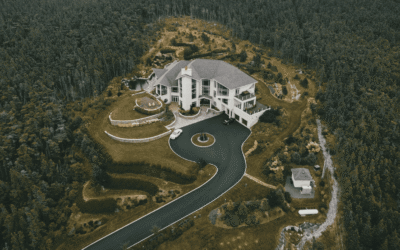
Calculated Risk Advisors specializes in helping families develop autonomous rural platforms and multi-generational compounds designed to function as resilient operational ecosystems. These platforms integrate energy generation, water independence, regenerative agriculture, secure communications systems, and layered physical security infrastructure.
Autonomous rural platforms typically involve large, strategically selected landholdings capable of sustaining long-term operations independent of fragile centralized systems. Family compounds integrated into these platforms function as secure, multi-generational hubs that support extended families, staff, and trusted operational networks.
Such platforms are generally located in resource-rich rural regions that offer abundant water access, productive agricultural land, renewable energy potential, and relatively stable governance. When designed properly, they can provide both operational resilience and long-term land appreciation.
Projects typically range from $10 million to more than $100 million, depending on scale and infrastructure complexity.
Comprehensive Solutions We Offer
Site Selection and Acquisition
• Geospatial analysis identifying regions with strong water resources, fertile soil, renewable energy potential, and lower migration pressure
• Legal structuring through trusts, LLCs, and international entities designed to enhance privacy and asset protection
Design and Infrastructure Development
• Energy independence through solar arrays, wind systems, and battery storage
• Water autonomy through wells, rainwater harvesting, and treatment systems
• Food production through regenerative agriculture, greenhouses, aquaponics, and vertical farming
• Security architecture incorporating layered perimeter defenses, drones, and hardened infrastructure
Operational Integration
• Self-contained ecosystems including medical facilities, educational pods, workshops, and diversified asset storage
• Community design focused on trusted networks and generational continuity planning
Risk Mitigation and Customization
Scenario modeling examining disruptions, including:
• war-driven migration
• banking crises
• food-system transitions
• infrastructure failures
Closing Perspective
The defining risks of the coming decade are unlikely to arise from a single catastrophic event. Rather, they will emerge through the convergence of geopolitical, technological, environmental, and financial pressures interacting simultaneously across multiple systems.
Preparedness, therefore, requires more than forecasting individual crises. It requires building adaptive platforms capable of operating across a wide range of potential futures.
Calculated Risk Advisors works with families to design those systems, transforming emerging global risks into long-term strategic advantages through distributed infrastructure, resilient land assets, and generational planning.
Families seeking a confidential strategic review are invited to contact us to explore how these insights may apply to their portfolio and long-term legacy planning.
Secure a confidential consultation.
Important Disclosure.
This publication is for general informational purposes only and reflects the author’s perspective. It is not financial, investment, tax, legal, or professional advice of any kind, nor an offer or solicitation. Calculated Risk Advisors disclaims all liability for actions taken or not taken based on this content. Readers should consult their own qualified advisors before making decisions.
© 2026 Calculated Risk Advisors. All rights reserved.


0 Comments