

A Changing Global Environment
For decades, global systems operated on the assumption of continuity. Energy moved through predictable trade corridors. Financial networks cleared transactions quietly in the background. Food and industrial goods arrived through global supply chains with almost mechanical reliability. That environment is beginning to change. Strategic families who study long economic cycles recognize that moments when geopolitics, monetary architecture, and resource security begin shifting simultaneously often signal the early stages of a broader systemic transition. As investor and economic historian Ray Dalio has noted in his research on long-term world order cycles, major structural change tends to emerge when rising geopolitical tension, unsustainable debt levels, and evolving financial systems intersect. These periods rarely appear dramatic at first. They develop gradually, often seeming manageable before their cumulative effects become visible across markets, politics, and global trade. The early signals of such a transition are now increasingly visible.
Energy Chokepoints and the Fragility of Global Trade
One of the most closely watched flashpoints remains the Strait of Hormuz, the narrow maritime corridor connecting the Persian Gulf to the Arabian Sea. Roughly one-fifth of global seaborne oil shipments pass through this channel, making it one of the most critical energy arteries in the world economy. Even limited disruption in this corridor can ripple across global markets through rising shipping insurance costs, constrained tanker traffic, and upward pressure on crude prices. Energy volatility spreads rapidly through the broader economy. Oil influences fertilizer production, agricultural harvesting, refrigeration logistics, aviation fuel, and global freight. When crude prices rise sharply, food prices and supply reliability tend to follow. This relationship between energy and food production means geopolitical instability in one region can affect grocery costs and supply stability across entire continents. At the same time, modern conflicts increasingly extend beyond traditional military objectives, and strategic infrastructure has become a critical pressure point.
Infrastructure as a Strategic Target
Energy facilities, ports, pipelines, transportation corridors, and water systems represent essential lifelines for civilian populations and national economies, making them increasingly strategic targets during modern conflict. Among the most vulnerable of these systems is water infrastructure. In several countries across the Middle East and parts of North Africa, desalination plants provide the majority of potable water for major metropolitan areas, converting seawater into freshwater through highly specialized filtration and chemical treatment processes. These facilities rely on continuous electricity, specialized membranes, chemical inputs, and functioning port logistics to deliver replacement components. When these systems are damaged or the power supply is interrupted during conflict, the consequences can be immediate. Large urban populations can lose their primary freshwater source within days. When desalination infrastructure fails, the situation can quickly escalate from technical disruption to humanitarian crisis. Hospitals, residential districts, and industrial zones depend on these facilities for daily water supply. Once emergency reserves are depleted, governments face the urgent challenge of transporting water into dense cities or relocating residents to regions where water remains available. Historically, such disruptions have triggered rapid population displacement, as migration flows driven by conflict and water scarcity extend well beyond national borders toward regions where food, water, and electricity remain reliable.
Migration Pressures and Social Strain
Large population movements place significant pressure on receiving regions. Housing demand rises quickly, infrastructure strains, and political and cultural tensions can emerge when migration outpaces communities’ ability to absorb new arrivals. Across Europe and parts of North America, migration driven by conflict and economic stress has already become one of the decade’s defining policy debates. At the same time, global trade networks face their own structural vulnerabilities. Modern commerce depends on a small number of maritime corridors that move enormous volumes of food, energy, and manufactured goods each day. In addition to the Strait of Hormuz, routes such as the Bab el Mandeb Strait and the Suez Canal carry critical freight linking Asia, Europe, and Africa. When instability threatens these passages, shipping costs increase rapidly. Insurance premiums rise, vessel traffic slows, and alternative routes add thousands of miles to transportation distances. The result is often higher consumer prices, delivery delays, and localized shortages that ripple across multiple economies.
The Quiet Transformation of the Financial System
While geopolitical pressures reshape physical infrastructure and trade routes, another transformation is unfolding within the financial system itself. Governments, central banks, and financial institutions are increasingly exploring digital monetary frameworks built on blockchain-based settlement networks. These frameworks include stablecoins, tokenized assets, and emerging forms of central bank digital currencies designed to enable instant cross-border settlement. The technological advantages are substantial. Digital systems can reduce transaction friction, accelerate payment clearing, and create transparent records of financial activity. At the same time, they introduce a new dimension of financial architecture in which transactions may be monitored, analyzed, and processed through automated regulatory frameworks. Digital identity systems, artificial intelligence compliance tools, and blockchain ledgers create environments in which financial activity can be permanently recorded and highly visible within regulatory systems. Artificial intelligence is also expanding its role within financial governance. AI-driven analytics already assist with fraud detection, credit evaluation, and compliance monitoring across large financial institutions. As computing capabilities expand, these tools are expected to play an even larger role in shaping regulatory oversight and financial infrastructure. Parallel to these developments is the expansion of the Internet of Things, a network of connected devices that continuously transmit operational data. Smart homes, connected vehicles, wearable health monitors, and intelligent energy systems generate constant streams of real-time information, delivering efficiency and predictive maintenance capabilities while contributing to an increasingly interconnected digital ecosystem. Another framework shaping global capital flows is Environmental, Social, and Governance standards, commonly known as ESG, which allow institutional investors to evaluate how businesses interact with environmental sustainability, social responsibility, and governance transparency. For large asset managers and lenders, ESG metrics increasingly influence capital allocation decisions and risk assessments across industries.
Historical Cycles and the Emergence of a New Order
Taken together, these developments suggest that the global system is entering a period of structural evolution. Historical precedent supports this interpretation. Over the past century alone, the global monetary framework has transitioned from the gold standard to the Bretton Woods system and eventually to the modern fiat currency era, and each transformation occurred during periods when geopolitical competition, economic pressure, and technological change converged. Ray Dalio’s research into long-term debt cycles suggests that such transitions often coincide with the rise of new economic power centers and the evolution of the financial architecture. While the precise shape of the next financial system remains uncertain, experimentation with digital settlement networks, tokenized assets, and programmable financial infrastructure is clearly underway, and periods of systemic transition historically produce volatility, policy experimentation, and institutional restructuring.
“By failing to prepare, you are preparing to fail.”
Benjamin Franklin
A Strategic Response: Autonomous Rural Platforms
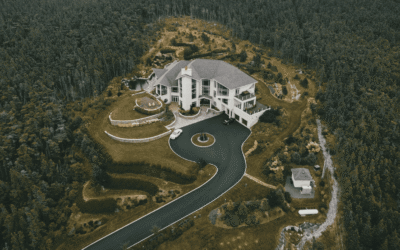
Calculated Risk Advisors studies these developments through the lens of infrastructure resilience, jurisdictional stability, and long-term resource security, and increasingly strategic families are responding by establishing autonomous rural estate platforms designed to operate independently of fragile centralized systems. These environments are not reactionary retreats but carefully engineered estates integrating energy independence, water security, and regenerative food production into a cohesive infrastructure platform capable of sustaining modern living standards. Energy resilience forms the foundation of this approach, with hybrid systems combining solar generation, advanced battery storage, and, in some regions, geothermal or hydroelectric support, allowing estates to maintain electricity even during prolonged grid disruptions. Water security is the second pillar, supported by rainwater harvesting systems, aquifer access (where available), and advanced filtration technology, ensuring a reliable freshwater supply. In certain coastal environments, private desalination capability can provide an additional layer of independence should regional infrastructure fail. Food production forms the third pillar, with regenerative agricultural practices allowing land to produce nutrient-dense food while improving soil health, biodiversity, and long-term property value. These systems reduce reliance on global supply chains that can become unstable during periods of geopolitical tension or rising transportation costs. Geographic positioning further strengthens resilience, as estates located in low-density rural regions far removed from major population centers benefit from natural buffers against crime spikes, civil unrest, and migration pressures that tend to concentrate around metropolitan areas during periods of instability.
“In the midst of chaos, there is also opportunity.”
Sun Tzu
The Value of Optionality
When integrated effectively, these elements create a sovereign infrastructure ecosystem capable of sustaining modern living standards even when centralized systems face prolonged strain. For many families, the goal is not permanent relocation but optionality. An autonomous rural estate provides a secure base of operations that preserves freedom of movement, privacy, and operational continuityregardless of how global conditions evolve.
“The greatest danger in times of turbulence is not the turbulence. It is to act with yesterday’s logic.”
Peter Drucker
Preparing for the Decade Ahead
As 2026 unfolds, geopolitical tension, technological transformation, and financial evolution will likely continue reshaping the global landscape. Energy corridors remain vulnerable, water infrastructure in conflict regions faces growing risks, and digital financial systems continue to expand across global banking networks. For families thinking in generational terms rather than quarterly cycles, these signals are not simply headlines. They are indicators that the world may be entering another period of structural transition. Calculated Risk Advisors provides confidential geopolitical assessment, jurisdictional intelligence, and estate infrastructure strategy for families seeking to navigate this environment with clarity and foresight. The objective is straightforward. Build environments that maintain security, independence, and operational continuity regardless of external disruptions. Because during periods of global system evolution, the most valuable asset is not simply capital. It is preparedness combined with sovereignty. Families who recognize this early often position themselves quietly and deliberately. By the time systemic change becomes visible to the broader public, the most resilient foundations have already been built. For those considering how to navigate the decade ahead, one question remains: Where will your family operate from if the world changes faster than expected?
Secure a confidential consultation.
Important Disclosure.
This publication is for general informational purposes only and reflects the author’s perspective. It is not financial, investment, tax, legal, or professional advice of any kind, nor an offer or solicitation. Calculated Risk Advisors disclaims all liability for actions taken or not taken based on this content. Readers should consult their own qualified advisors before making decisions.
© 2026 Calculated Risk Advisors. All rights reserved.


0 Comments