


When Strategic Autonomy Becomes a Foundational Success Discipline
Across generations of industrial dynasties, global entrepreneurs, and legacy families, one truth has consistently emerged. Long-term success rarely depends solely on wealth accumulation. It depends on the ability to preserve control, maintain continuity, and operate effectively regardless of external volatility. Napoleon Hill’s Law of Success Deluxe Edition explored this principle in remarkable depth, identifying patterns shared among families and leaders who built structures capable of sustaining influence and prosperity across decades and often centuries.
Today, ultra-high-net-worth families are rediscovering that Hill’s principles apply not only to business and personal development but also to the physical and operational environments that support multi-generational stability. Autonomous rural platforms are increasingly viewed as direct modern expressions of Hill’s core success doctrines because they transform abstract strategic planning into tangible, operational infrastructure that supports family continuity through economic, geopolitical, environmental, and societal transformation.
These platforms are not contingency holdings or lifestyle properties. They represent deliberate, structured success environments where autonomy, resilience, and continuity are designed into the foundation of long-term family strategy.
Definiteness of Purpose and the Physical Expression of Strategic Control
Hill repeatedly emphasized that enduring success begins with definiteness of purpose, a clear understanding of long-term objectives supported by structured action. Families who build autonomous rural platforms are often responding to this principle by translating continuity goals into operational environments that preserve agency across generations.
Modern global complexity has introduced layers of interdependence that can challenge family autonomy. Urban infrastructure concentration, centralized energy networks, globalized supply chains, and jurisdictional regulatory shifts can introduce external variables that influence long-term planning. Autonomous rural platforms provide families with geographic and operational clarity by establishing environments designed to function independently from external systemic pressures.
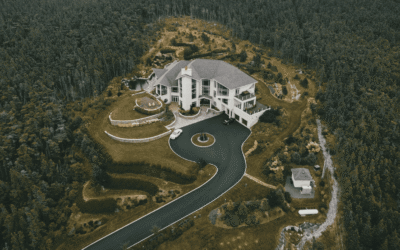
These platforms integrate independent power generation, secure water sovereignty, regenerative land stewardship, and resilient communications infrastructure into cohesive ecosystems that support continuous operation regardless of prolonged infrastructure disruption or extended utility sovereignty failure. By establishing environments where essential systems remain under family governance, families create physical embodiments of Hill’s principle that success requires clear direction supported by coordinated systems.
Autonomous platforms allow families to operate from positions of strength rather than reactive adaptation, reinforcing long-term strategic clarity.
Organized Planning and the Engineering of Self-Sustaining Ecosystems
Hill described organized planning as the transition from vision to execution, requiring structured systems that transform ambition into measurable continuity. Autonomous rural platforms represent one of the most sophisticated applications of organized planning within modern family strategy.
These platforms are designed as integrated operational ecosystems rather than isolated land holdings. Precision-engineered microgrid networks combine renewable energy generation with advanced storage platforms to provide predictable power continuity. Water sovereignty systems incorporate watershed protection, atmospheric water harvesting, and closed-loop recycling to maintain independent water resources. Agricultural ecosystems integrate regenerative farming, controlled-environment production, and biodiversity restoration to create sustainable nutritional security systems.
Each component operates as part of a coordinated framework designed to reinforce the entire platform. This integration reflects Hill’s observation that successful enterprises rely on interconnected systems that strengthen overall operational resilience. Families implementing autonomous rural platforms often discover that these estates evolve into income-capable operating environments that support research, agricultural production, specialized manufacturing, and environmental credit participation.
Organized planning within autonomous platforms transforms land into multi-functional continuity infrastructure that supports both wealth preservation and operational independence.
Self-Reliance and the Modern Interpretation of Sovereign Infrastructure
Self-reliance stands as one of Hill’s most defining principles, emphasizing that sustained success requires independence of thought, action, and capability. Autonomous rural platforms extend this philosophy into physical infrastructure by allowing families to maintain sovereign control over essential systems that traditionally depend on centralized networks.
Independent power generation provides predictable operational continuity during prolonged grid interruption scenarios. Decentralized communication infrastructure ensures uninterrupted global oversight of financial, philanthropic, and business operations. Estate-based manufacturing and fabrication capabilities provide localized production of critical components, reducing exposure to prolonged supply-chain decoupling and logistics volatility.
Secure water sovereignty systems reinforce this self-reliant structure by ensuring stable resource availability regardless of regional infrastructure limitations. These elements collectively form decentralized utility ecosystems that enable families to operate autonomously without sacrificing global connectivity or investment engagement.
Self-reliance within autonomous platforms does not represent isolation. It represents structured independence that preserves flexibility while maintaining access to global opportunity. Hill consistently emphasized that successful leaders cultivate independence as a foundation for confident decision-making, a principle that resonates strongly within modern continuity planning.
The Mastermind Principle and Collaborative Autonomy
Hill’s Mastermind Principle emphasized that extraordinary success emerges when individuals coordinate expertise, vision, and governance within structured collaborative environments. Autonomous rural platforms increasingly serve as physical environments where this collaborative continuity naturally unfolds.
Family compounds within these platforms provide environments designed for governance councils, succession planning, philanthropic coordination, and educational development. These estates create reflective settings where family members can address long-term strategic decisions away from the pressures of financial market cycles and urban concentration risk.
Leadership development programs located within autonomous platforms allow younger generations to engage with estate operations, agricultural stewardship, infrastructure management, and governance responsibilities. Entrepreneurial incubators and research partnerships often emerge within these environments, expanding estate functionality while strengthening family engagement.
When governance collaboration occurs within environments designed to reinforce shared purpose and long-term thinking, families often experience smoother generational transitions and stronger cultural continuity. Hill recognized that collaboration thrives within environments that support clear communication and aligned vision, conditions frequently cultivated within autonomous rural platforms.
Persistence and the Construction of Climate-Resilient Continuity
Hill described persistence as the ability to sustain strategic direction despite evolving external challenges. Autonomous rural platforms incorporate persistence through climate-resilient design that anticipates long-term environmental transformation.
Climate-resilient geographic diversification has become a central concern for family offices seeking durable asset preservation. Autonomous platforms incorporate flood-resistant architecture, wildfire-mitigation landscaping, biodiversity corridors, and regenerative forestry programs designed to maintain long-term ecological stability. Carbon-sequestering legacy agriculture enhances soil health while generating environmental credits and sustainable agricultural revenue.
These design strategies transform environmental volatility into structured opportunity, reinforcing estate resilience while strengthening asset appreciation. Hill emphasized that persistence requires foresight and disciplined system design that anticipates long-term cycles rather than reacting to immediate disruption.
Autonomous rural platforms embody this philosophy by creating continuity environments engineered to endure generational environmental and economic change.
Accurate Thinking and the Strategic Value of Decentralization
Hill emphasized accurate thinking as the foundation of effective decision-making, encouraging leaders to evaluate structural trends through objective observation. Autonomous rural platforms reflect this principle by responding to observable global decentralization trends influencing infrastructure, manufacturing, and resource management.
Recent global supply-chain restructuring has revealed vulnerabilities associated with centralized production and logistics networks. Autonomous platforms incorporate localized production capabilities, controlled-environment agriculture, and seed preservation programs that provide reliable estate-level sovereignty. Cooperative micro-trade networks with regional producers and neighboring estates further reinforce decentralized sourcing ecosystems that reduce reliance on global logistics dependencies.
Accurate thinking allows families to recognize decentralization not as a temporary disruption but as a structural shift influencing long-term continuity planning. Autonomous platforms transform decentralization into strategic advantage by integrating localized operational capacity with global investment and governance oversight.
Transmuting Success Philosophy Into Living Continuity Infrastructure
Napoleon Hill’s Law of Success consistently emphasized that enduring achievement requires transforming intellectual strategy into practical systems that sustain long-term stability. Autonomous rural platforms represent modern continuity frameworks that embody these principles through precision-engineered infrastructure, regenerative land stewardship, sovereign utility systems, and collaborative governance environments.
These platforms allow families to convert success philosophy into living operational ecosystems that preserve agency, reinforce governance cohesion, and protect legacy across generations. They serve as diversified geographic platforms that strengthen dynastic wealth preservation while maintaining global engagement and investment flexibility.
Calculated Risk Advisors works alongside families to translate strategic continuity goals into tailored autonomous rural platforms designed to support infrastructure independence, climate-resilient land stewardship, and intergenerational governance development. By aligning physical estate strategy with timeless success principles, families establish environments that support disciplined planning, collaborative leadership, and enduring operational autonomy.
Families who adopt autonomous rural platforms frequently discover that they become more than diversified assets. They evolve into institutional continuity environments that reinforce family identity, preserve decision-making independence, and sustain legacy across the centuries ahead.
Secure a confidential consultation.
Important Disclosure.
This publication is for general informational purposes only and reflects the author’s perspective. It is not financial, investment, tax, legal, or professional advice of any kind, nor an offer or solicitation. Calculated Risk Advisors disclaims all liability for actions taken or not taken based on this content. Readers should consult their own qualified advisors before making decisions.
© 2026 Calculated Risk Advisors. All rights reserved.

0 Comments