


How Our Next Move on Iran Could Quietly Reshape Life in America
Periods of global instability rarely announce themselves with clarity. They unfold gradually, often disguised as isolated geopolitical developments, until their cumulative weight begins reshaping domestic stability in ways few anticipate.
The growing friction between the United States and Iran is increasingly reflecting that pattern. While public attention remains focused on diplomatic tensions and military posturing, a quieter, more consequential shift is taking place among families whose responsibility extends beyond managing wealth to preserving generational continuity.
The families I advise are not responding to news cycles. They are responding to structural signals that suggest modern stability is becoming more fragile, more interconnected, and less predictable.
For generations, sophisticated estate planning focused on financial diversification, jurisdictional flexibility, and tax efficiency. Those pillars remain essential. However, an emerging fourth pillar is now taking form: control over the physical systems that sustain daily life. Energy reliability, food security, mobility flexibility, and communication continuity are increasingly being evaluated not as conveniences but as foundational components of long-term family stability.
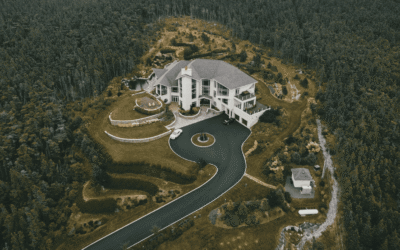
Over the past decade, I have witnessed a growing number of high-net-worth and ultra-high-net-worth families quietly incorporate autonomous rural platforms and multi-generational compounds into their legacy planning. These environments are not framed as contingency shelters or secondary residences. They are being designed as fully integrated extensions of family life; properties capable of supporting wellness, education, recreation, and operational continuity while maintaining the lifestyle expectations these families value. The increasing interest in this model is not driven by pessimism. It is driven by an understanding that complex global systems are entering a period of sustained volatility, and resilience increasingly favors those who build redundancy early.
One of the most overlooked domestic implications of escalating U.S.–Iran conflict involves the delicate equilibrium of energy stability. Modern American infrastructure operates with extraordinary precision, yet that precision leaves little margin for sustained disruption. Energy challenges rarely appear as abrupt blackouts or dramatic shortages. More often, they emerge as prolonged unpredictability in pricing, reliability, and infrastructure performance. The global petroleum ecosystem remains tightly linked to strategic maritime corridors, and tension affecting those corridors can introduce volatility that reverberates quietly through transportation networks, residential utilities, agricultural production, and aviation logistics.
Urban environments are particularly sensitive to these pressures. High-density population centers like New York, Chicago, and Miami are engineered around continuous service delivery, leaving minimal tolerance for sustained energy inconsistency. Even modest disruptions can produce cascading cost increases and service variability that gradually alter the predictability families rely upon for both personal and professional planning. Families establishing autonomous rural platforms are approaching energy with a fundamentally different philosophy. Rather than accepting external infrastructure as an uncontrollable variable, they are transforming energy into a managed, appreciating family asset.
These estates frequently incorporate multi-layered solar generation supported by advanced storage technologies designed for extended operational continuity. Where geography permits, supplementary renewable sources enhance production diversity, strengthening reliability during seasonal or environmental fluctuations. On-site fuel reserves support transportation, property operations, and agricultural infrastructure, providing logistical independence from retail distribution systems. Intelligent energy management integrates these resources seamlessly, allowing compounds to prioritize essential infrastructure automatically. The objective is not separation from modern convenience. It is the ability to maintain stability without disruption when external systems become inconsistent, allowing family life to continue with composure and certainty.
Food distribution represents another area where modern efficiency has unintentionally introduced vulnerability. The prevailing assumption among many affluent families is that food instability disproportionately affects lower-income communities. Contemporary supply architecture suggests otherwise. The American food network operates with remarkable speed and precision, relying on synchronized distribution chains designed for efficiency rather than redundancy. Retail environments typically maintain minimal on-site inventory, dependent on constant replenishment from centralized production and transportation hubs. When geopolitical conflict intersects with agricultural disruptions, fertilizer supply constraints, shipping interruptions, or climate variability, availability can shift with surprising speed. In such moments, supply reliability frequently supersedes purchasing power.
Families building sovereign rural platforms are redefining food production as both a stability strategy and a refinement of lifestyle quality. Multi-season greenhouse systems allow consistent cultivation of vegetables regardless of external growing cycles. Orchard cultivation and perennial agriculture provide long-term yield stability that matures naturally over time. Thoughtfully designed pasture management supports diversified livestock that contributes protein, dairy, and environmental sustainability through natural nutrient regeneration. Regenerative soil cultivation further enhances productivity while reducing chemical dependency, producing food that is not only nutrient-rich but aligned with long-term ecological stewardship.
What families often find most compelling is how naturally these systems enhance family culture. Participation in land stewardship frequently strengthens intergenerational relationships, introduces meaningful educational experiences for younger family members, and fosters a renewed appreciation for physical wellness and environmental awareness. These properties become environments where health, education, and family continuity intersect organically.
Mobility continuity represents a third dimension receiving limited attention within traditional wealth strategies.
Periods of international conflict often produce domestic ripple effects influencing transportation infrastructure, communication networks, and public stability. These disruptions rarely appear suddenly. They typically emerge through administrative congestion, infrastructure prioritization, or localized unrest that gradually restricts logistical flexibility. Families whose contingency planning relies entirely on commercial travel systems or centralized communication networks may discover that mobility remains technically available yet increasingly constrained in practice.
Families implementing distributed rural compounds are quietly building geographic optionality into their legacy planning. These estates frequently incorporate private or cooperative aviation access, allowing families to control relocation timing independently of commercial infrastructure. Independent communication networks preserve coordination during digital service interruptions. Low-density geographic positioning reduces exposure to civil volatility while redundant access routes allow flexible transportation planning. Rather than withdrawing from modern life, these environments preserve decision-making autonomy during periods when external systems may become temporarily restrictive.
An advantage that consistently emerges, yet remains profoundly underestimated, is the psychological stability autonomous family platforms create. Families who spend meaningful time within these environments often describe a subtle yet transformative shift in daily life. Reduced reliance on external infrastructure tends to decrease background stress associated with uncertainty.
Access to fresh, self-produced food enhances physical wellness in ways that become quickly noticeable. Shared stewardship of land, animals, and property infrastructure fosters deeper family cohesion and reinforces generational continuity through shared responsibility and purpose.
Children raised within these environments often develop a rare balance of confidence, environmental literacy, and practical competence that complements academic and professional development. While these outcomes are difficult to quantify, they consistently become among the most valued aspects of sovereign rural living for the families who embrace it.
Perhaps the most significant misconception surrounding autonomous rural platforms is the belief that timing is flexible. In reality, the greatest advantage belongs to families who begin planning while options remain abundant and costs remain predictable.
As geopolitical tension rises, regulatory complexity surrounding land development tends to expand, infrastructure costs increase, and strategically suitable properties become more competitive. Families who move proactively retain the ability to design environments aligned with lifestyle aspirations rather than reacting within compressed decision timelines.
Estate planning has always evolved alongside the global landscape it seeks to protect wealth within. Today, true legacy preservation increasingly requires infrastructure independence alongside financial diversification. Autonomous rural platforms represent a thoughtful expansion of estate strategy into physical systems designed to protect lifestyle continuity, health stability, and family autonomy regardless of external volatility.
The coming decade will not favor reactionary thinking. It will quietly reward foresight, patience, and families willing to embed resilience into the foundation of their lives before it becomes widely necessary. Establishing a sovereign rural platform is not about preparing for catastrophe. It is about ensuring that family life remains elegant, uninterrupted, and self-directed regardless of how global complexity evolves.
The families moving deliberately into this space are not stepping away from society. They are positioning themselves to remain fully engaged with it from a position of strength, discretion, and independence. When global developments inevitably influence domestic systems, their daily lives continue with minimal disruption because the essential elements sustaining their family remain firmly under their control.
For families who view legacy as measured not solely by financial preservation but also by generational stability, lifestyle continuity, and freedom of decision-making, the conversation begins with thoughtful design. It begins with understanding how to shape autonomy around your family’s values, geographic preferences, and long-term vision. From there, systems can be developed that evolve alongside your family and quietly protect what matters most for generations to come.
Important Disclosure.
This publication is for general informational purposes only and reflects the author’s perspective. It is not financial, investment, tax, legal, or professional advice of any kind, nor an offer or solicitation. Calculated Risk Advisors disclaims all liability for actions taken or not taken based on this content. Readers should consult their own qualified advisors before making decisions.
© 2026 Calculated Risk Advisors. All rights reserved.

0 Comments