


Geopolitical tensions are boiling over in the South China Sea and the Middle East, with Iran now openly aligned against U.S. interests and proxy conflicts bleeding into direct confrontation. Food supply chains are cracking under the weight of the war in Ukraine and persistent weather anomalies that are degrading harvests year after year. At the same time, the U.S. power grid is straining under the explosive growth of AI data centers, leaving less margin for error than at any point in modern history. Cyberattacks are no longer hypothetical; they are daily occurrences, and the possibility of an EMP event or coordinated grid takedown is discussed in closed briefings as a credible black swan event. Beneath all of this sits a quieter, more uncomfortable fear: the risk of civil war or severe domestic fracture, where ideological divides and resource competition turn neighbor against neighbor. These are not distant scenarios. They are converging.
In an environment like this, the difference between those who thrive and those who merely survive is not money, connections, or even preparation in the narrow sense. It is agency, the ability to see the storm coming, choose your own course through it, and continue moving forward regardless of resistance.
Agency is not a buzzword. It is the quiet conviction that your life’s direction is yours to set, that any skill or knowledge required to reach your vision can be learned, and that no external force beit government, corporation, or crisis gets to dictate your path without your consent.
Most people never fully develop agency because they were never taught to. Schools rewarded conformity. Jobs rewarded obedience. Society rewarded fitting in. The result is a population that waits for permission before acting, clings to single career paths even as they erode, and treats the future as something that happens to them rather than something they shape.
If you are reading this, you are likely already questioning that default path. You sense that the old assumptions, live in dense cities, trust the grid, and rely on institutions, are becoming liabilities rather than safeguards; and you would be right. The coming decade will reward those who can iterate quickly, adapt without apology, and act without waiting for approval. Agency is the meta-skill that makes every other skill learnable. It is the difference between being a passenger in the storm and being the one at the helm.
High-agency individuals do not wait for certainty. They act, observe results, adjust, and act again. When geopolitical flashpoints threaten oil flows and food prices surge, they do not argue about headlines; they secure alternative supply lines or accelerate regenerative food production. When AI-driven demand strains the grid and blackouts become plausible, they do not wait for government intervention; they install layered solar, storage, and micro-hydro systems before failures occur. When the risk of civil unrest or war increases, they do not debate ideology; they map safe corridors and develop relocation plans that preserve family mobility and sovereignty.
This is not about fearlessness. It is about clarity. Agency is the discipline of treating life as a series of experiments: set a goal, test a hypothesis, fail fast, learn faster, and iterate continuously.
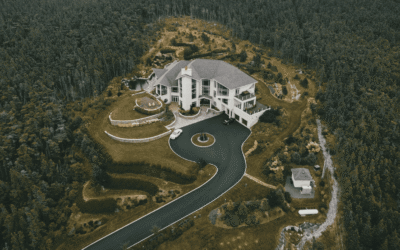
The families I work with who are building autonomous rural platforms embody this mindset. They do not wait for regulatory permission or social approval. They identify stable jurisdictions, acquire defensible land, integrate independent power generation, secure water sovereignty, establish regenerative food systems, and harden communications infrastructure; well before the next disruption arrives. When others are scrambling to react, they are already positioned.
And I just wish to repeat that the threat landscape makes this approach rational, not extreme. A regional war involving Iran could choke global energy routes overnight, driving fuel prices beyond what most households can absorb. Weather anomalies be them natural or engineered are shortening growing seasons and destabilizing harvests, pushing food shortages from theoretical to visible. Meanwhile, the U.S. electrical grid faces unprecedented strain, with AI data center demand projected to double within five years while transmission infrastructure remains decades old. A successful cyberattack or EMP event could take large portions of the country offline for months. Severe domestic fracture, once unthinkable, becomes plausible as ideological polarization and resource competition intensify. These are not predictions of doom; they are observable trends that reward proactive agency over reactive dependence.
These pressures reveal the core pain points faced by high-net-worth individuals in an unstable world; and how agency paired with an autonomous platform resolves them.
The first pain point is energy vulnerability. Grid strain, cyberattacks, or EMP events can leave urban estates powerless for extended periods. Agency addresses this by developing the knowledge and systems required to operate independent power generation – solar, battery storage, generators, and redundancy, so energy access is no longer externally controlled.
The second pain point is food insecurity driven by war and climate disruption. Agency solves this by acquiring the skills to oversee regenerative agriculture, adapting methods such as permaculture and hydroponics to ensure reliable food production independent of fragile global supply chains.
The third pain point is restricted mobility during periods of conflict or political instability, when borders close, and transportation networks seize up. Here, agency means designing relocation plans into the platform itself, incorporating off-road access and private air infrastructure so families retain freedom of movement when others cannot.
Agency transforms an autonomous platform from a survival asset into a command center for a self-directed life. When you internalize the habit of acting without permission, you stop waiting for experts to validate decisions and begin experimenting with custom integrations tailored to your family’s needs, such as geothermal backups for silent, year-round power resilience. Viewing life as an ongoing experiment reframes the platform as an evolving system, one that is continuously tested and refined to maintain water sovereignty, food production, and energy reliability as conditions change. This mindset extends to the next generation as well, instilling agency in children by teaching them not just to inherit land, but to manage and adapt it through black-swan events such as prolonged grid failure or EMP disruption.
The good news is that agency is learnable. It begins with a simple decision: stop waiting for the world to define what is possible. Set your own direction. Acquire the necessary knowledge and resources. Iterate relentlessly. Eliminate the distractions that keep most people comfortable inside fragile systems. Those who master agency are not merely surviving the next decade; they are shaping it.
If you are ready to make that shift, if you are ready to move from reacting to the storm to navigating through it with your family intact, the conversation is only one call away.
Secure a confidential consultation.
Important Disclosure.
This publication is for general informational purposes only and reflects the author’s perspective. It is not financial, investment, tax, legal, or professional advice of any kind, nor an offer or solicitation. Calculated Risk Advisors disclaims all liability for actions taken or not taken based on this content. Readers should consult their own qualified advisors before making decisions.
© 2026 Calculated Risk Advisors. All rights reserved.

0 Comments