
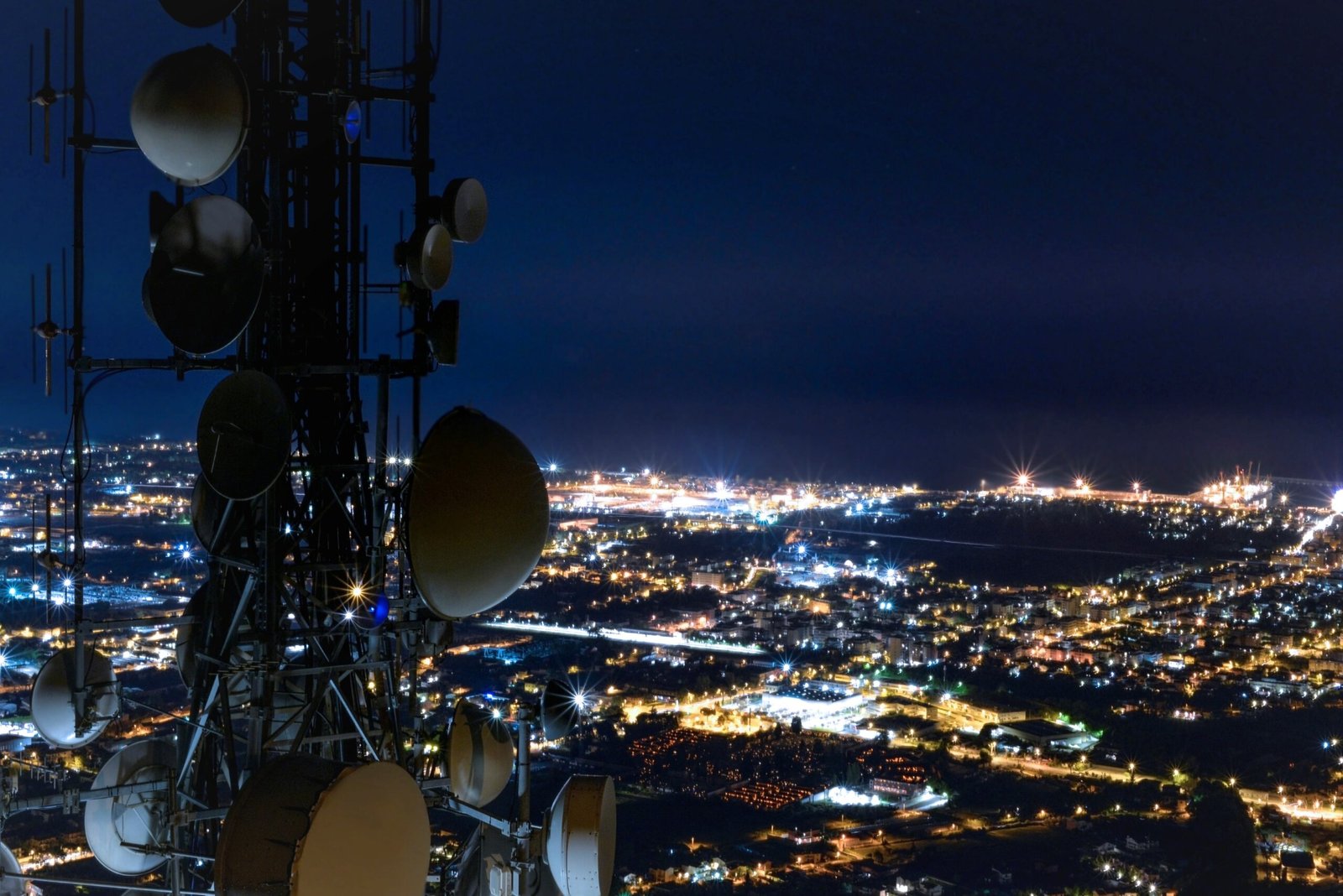

When I sit with families who have invested millions into private compounds or autonomous rural platforms, one of the first questions I ask is simple: “How will you communicate if the outside world goes silent?” The pause that follows is always telling. Many assume their phone will carry them through, or that fiber wired into the estate makes them immune to disruption. But if you’ve ever seen a region lose power, watched cell towers fail, or followed stories of governments throttling networks during unrest, you know how fragile communications really are. Without alternatives, you are cut off from the world.
For high-net-worth families, being cut off is more than an inconvenience. It means loss of control, isolation from advisors, and vulnerability at precisely the wrong time. I experienced this myself not long ago when Verizon rolled out a nationwide update that left my phone and number completely inaccessible. At the same time, I couldn’t access critical platforms on my computer because they required two-factor authentication tied to the same phone. In an instant, I was locked out of everything—banks, communications, even secure work systems. Thousands of others had the same problem, and the lesson was clear: if your lifeline depends on a single channel, it only takes one outage to sever it.
That’s why resilient families treat communication not as a gadget, but as an integrated system. At the global layer, satellite internet is now the standard. Starlink and similar providers bypass local failures, enabling you to maintain video calls with advisors, transfer secure files, or keep a VPN running even in a regional outage.
Voice still matters. When nothing else works, a satellite phone remains irreplaceable. Iridium, Inmarsat, and others each have strengths, which is why many families carry more than one brand for redundancy. Smaller two-way satellite messengers slip into a pocket, send low-bandwidth messages, share positions, or trigger SOS signals connecting directly to emergency coordination centers.
Closer to home, mesh radios and GMRS handhelds create independent networks, allowing security teams, staff, or family members to communicate across valleys, forested acreage, or along access roads. Newer mesh devices even allow phones to text each other over miles, bouncing messages node to node to create a private intranet.
None of this works without power. Every part of the communications stack depends on electricity. Wealthy families don’t ask whether they should invest in backup power; they ask how many layers to fund. Solar generators paired with battery banks can keep a communications rack running for days. Portable panels and compact solar banks keep handheld devices alive during evacuations or at private airfields in blackout conditions. The principle is continuity: no matter how long the outage lasts, your system keeps breathing.
Security is equally critical. Encrypted apps like Signal and SimpleX protect messaging, while secure email platforms, such as StartMail or Tutanota, safeguard correspondence. Discipline in usage is as important as the tools themselves. Hardware security keys protect against compromised passwords or cloned devices, especially during international travel.
Every high-net-worth international traveler should carry a clean burner phone through airports. In the U.S., TSA can inspect, copy, and review the contents of your devices. Burner phones protect sensitive material while keeping you functional in transit. Advanced families also pre-stage burner devices for staff and family members, ensuring secure, compartmentalized communications at every node in the network.
Location data is another subtle but critical vulnerability. Standard GPS trackers broadcast through networks you don’t control. LoRa-based trackers or encrypted Bluetooth devices connected to a private gateway offer visibility without exposing data to the cloud. Controlling location data is as vital as securing messages themselves.
Digital platform access must also be safeguarded. Authenticator apps or hardware keys work without cell service, backup recovery codes stored safely provide emergency access, and keeping trusted devices logged in creates a lifeline to adjust settings. If SMS is your only two-factor authentication method, you are exposed. Diversifying methods eliminates single points of failure.
The rule of redundancy applies everywhere. If you can’t send a message from your main house to your pilot without commercial infrastructure, you have a gap. If staff can’t coordinate across your property when cell service drops, you have a gap. If you rely on a single satellite provider or device, you are living with a point of failure that will eventually reveal itself. As the saying goes, “one is none, two is one.”
Treat communications like finance: diversify, test, and protect. Build multiple layers, power them independently, secure them with discipline, and train those who use them. When networks go dark, wealth alone cannot buy a connection. Only preparation can.
Secure a confidential consultation.
Important Disclosure.
This publication is for general informational purposes only and reflects the author’s perspective. It is not financial, investment, tax, legal, or professional advice of any kind, nor an offer or solicitation. Calculated Risk Advisors disclaims all liability for actions taken or not taken based on this content. Readers should consult their own qualified advisors before making decisions.
© 2026 Calculated Risk Advisors. All rights reserved.



0 Comments