
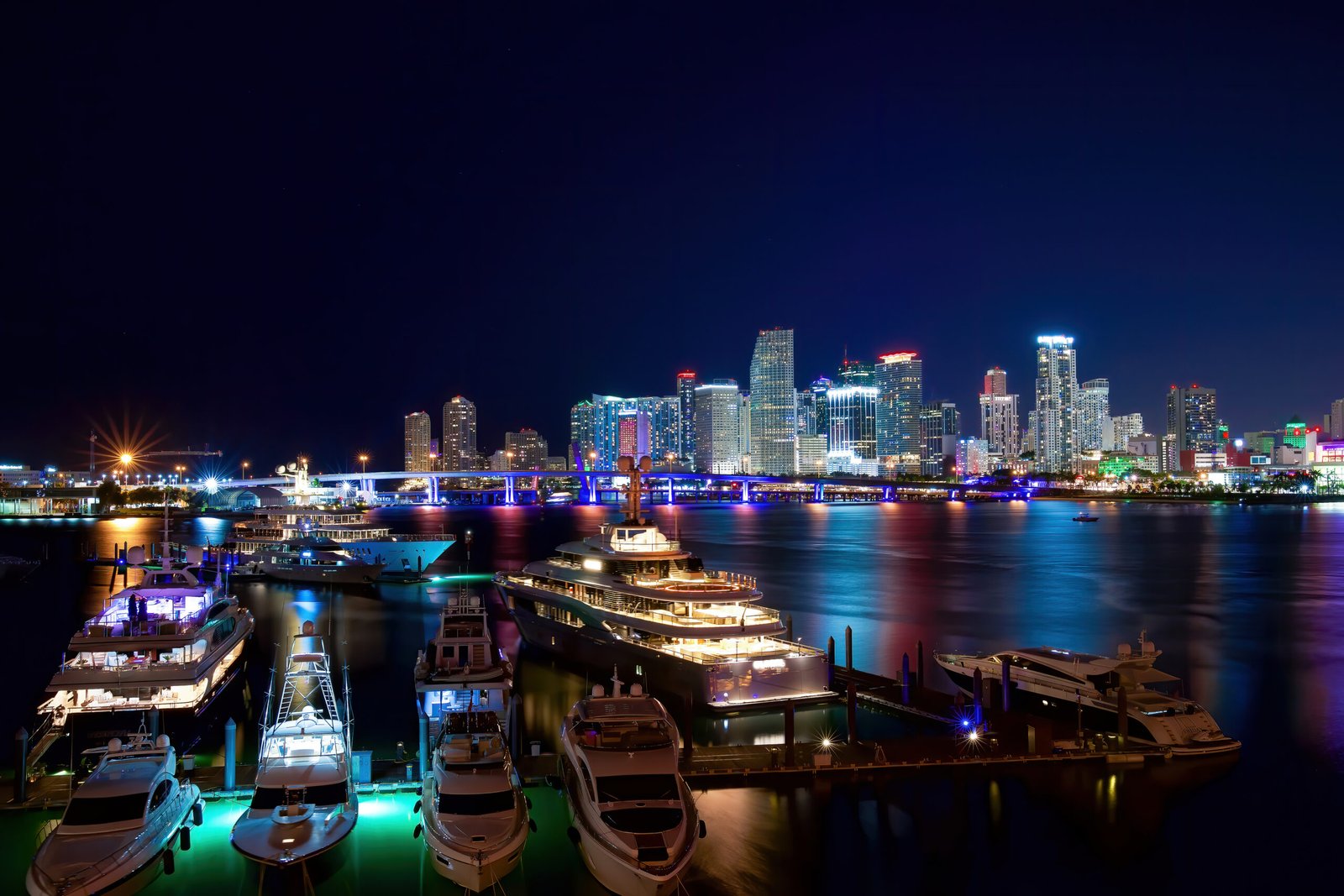

South Florida remains the envy of the nation. Miami’s skyline glitters with luxury towers, Palm Beach estates command pristine ocean frontage, and the region pulses with economic energy that continues to attract investors, retirees, and ambitious newcomers from across the globe. Beneath the surface appeal, however, lies a concentration of risk that few residents fully appreciate until it is too late.
The same population surge and infrastructure density that have made the Gold Coast a magnet for wealth have also transformed it into one of the most exposed regions in the continental United States for legacy-minded families.
The tri-county area now exceeds 6.6 million residents and accounts for nearly thirty percent of Florida’s total population. Miami-Dade alone grew to 2.9 million in 2024, with Broward at 2.1 million and Palm Beach at 1.6 million. International inflows drive much of this expansion, averaging more than three hundred arrivals per day from abroad, while domestic migration from high-tax states adds further pressure. Projections show Miami-Dade approaching 3.1 million, Broward 2.3 million, and Palm Beach 1.8 million by 2045. Schools, hospitals, highways, and emergency services already operate at or beyond capacity, creating a thin margin that any significant disruption can erase overnight.
Legal foreign investment has fueled the luxury real-estate boom, yet the region also carries a large undocumented population that plays an outsized role in construction, hospitality, and agriculture. Many of these residents live outside formal safety nets and remain uninsured because Florida chose not to expand Medicaid. In prolonged crises, whether hurricanes, extended blackouts, or economic collapse, the absence of support can quickly translate into desperation that overrides social norms and turns socioeconomic proximity into a direct security concern for affluent enclaves.
Crime statistics have improved overall, yet concentrated hotspots persist in lower-income corridors immediately adjacent to some of the wealthiest neighborhoods in America. Property crime remains elevated, and during disasters, the distinction between affluent and struggling areas often collapses as shared infrastructure fails simultaneously. History demonstrates that when basic services disappear for more than a few days, the primary threat is rarely the storm itself; it is the human reaction that follows. In Palm Beach County, for instance, hotspots like Riviera Beach and Lake Park see violent crime rates that dwarf the county average, with property thefts spilling into gated communities during peak tourist seasons or storm evacuations, where affluent residents are often targeted for quick gains amid chaos. Extreme traffic congestion restricts movement during emergencies. Competition for resources worsens as everyone in need of supplies converges on central grocery distribution centers and supply hubs. Florida’s three-day just-in-time delivery system puts residents at risk.
Hurricanes remain the most visible risk, with South Florida facing a 16% annual probability of a named storm within 50 miles. Even moderate events now produce flooding that reaches miles inland, while drainage systems designed decades ago struggle to cope with routine king tides. Luxury waterfront holdings that command premium prices today carry increasing exposure to depreciation, uninsurability, and eventual loss of habitable elevation. Palm Beach County, with its low-lying barrier islands and canal systems, has seen repeated inundation, as during the 2024 Milton event that closed sections of A1A for weeks and flooded hundreds of homes in Jupiter and Tequesta.
Energy dependence compounds every other vulnerability. The regional grid, while modern in parts, has repeatedly failed under stress. Prolonged outages during recent storms left millions without power for days or weeks, and the growing concentration of data centers only heightens demand on an already strained system. A single successful cyber or physical attack on critical nodes could cascade across the entire corridor.
For families whose primary operating base remains in South Florida, these converging pressures transform what was once an asset into a growing liability. Geographic diversification through an autonomous rural platform in a stable, low-density jurisdiction is no longer a theoretical hedge; it has become a practical imperative for preserving agency, protecting wealth, and ensuring multi-generational continuity when urban systems can no longer be relied upon.
The window to establish that independence thoughtfully, privately, and at reasonable cost remains open, but it will not stay open indefinitely.
Secure a confidential consultation.
Important Disclosure
This publication is for general informational purposes only and reflects the author’s perspective. It is not financial, investment, tax, legal, or professional advice of any kind, nor an offer or solicitation. Calculated Risk Advisors disclaims all liability for actions taken or not taken based on this content. Readers should consult their own qualified advisors before making decisions.
© 2025 Calculated Risk Advisors. All rights reserved.



0 Comments