


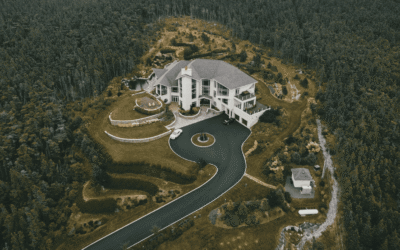
The autonomous rural platform is designed with precision, built with layered redundancy, and structured for multi-decade continuity. It operates independently, with secure water sovereignty, regenerative agricultural yields, diversified power generation, documented governance frameworks, clarified succession pathways, and defined vectors for expansion. On paper, it reflects institutional-grade excellence. Yet most of the year, it is quiet.
The principal remains in the city to maintain board presence and capital access. The children resist leaving established academic and social ecosystems. A spouse values metropolitan healthcare and cultural proximity. The next generation experiences the estate as an elegant weekend property rather than the gravitational center of family continuity.
This divide is rarely addressed in private-bank memoranda or family-office strategy sessions. The discussion centers on tax efficiency, appreciation, and diversification. The harder question is behavioral. An autonomous rural estate is not a passive allocation. It is a re-centering of family life, and that shift is far more demanding than engineering a microgrid. The infrastructure may be complete, but the habits often remain unchanged.
When that happens, the estate becomes partially activated. Power systems support periodic occupancy rather than full sovereignty. Agricultural output exceeds family integration. Governance occurs over encrypted video rather than around the estate’s central table. The balance sheet reflects a substantial rural holding, but the culture remains urban. Optionality without integration is not protection; it is potential left idle.
The gap emerges for understandable reasons. Relocation disrupts educational continuity and social capital. Moving family-office functions away from established advisory clusters introduces friction. Training the next generation to steward land and infrastructure competes with professional trajectories already underway. Without deliberate activation, the estate stabilizes into a secondary residence. Maintenance budgets expand. Staffing complexity increases. Operational familiarity stagnates. The platform appreciates, but it does not compound its intended strategic value. The underlying issue is alignment.
I confronted the same divide in my own life. Our rural platform was complete by every technical measure, yet we still lived primarily in the city. I realized I was advising families on sovereignty while remaining dependent on centralized water and energy and on fragile supply chains. We had engineered resilience. We had not inhabited it.
So we moved, not as an experiment, but as a commitment.
The first months in the mountains were operational rather than romantic. I immersed myself in food systems management, including soil health, rotational grazing, yield forecasting, storage strategies, and livestock stewardship. Water sovereignty became tangible. We drink from a protected natural spring rising on our land, mineral-balanced and independently tested. I learned flow rates, seasonal variability, storage capacity, and purification contingencies. Water shifted from a utility bill to a managed asset.
Energy independence requires fluency in load sequencing, storage optimization, and weather modeling. I began thinking in kilowatt-hours the way I once thought in capital allocation. Sanitation and waste systems demanded the same accountability. In a city, waste disappears. In a sovereign environment, you account for it. Sovereignty is not engineered on paper; it is practiced in daily life.
We live without visible neighbors. Wildlife patterns replace traffic patterns. Coyotes establish their perimeter at dusk. Our children understand where protein comes from and where water comes from. Nature draws us inward, sharpening reflection and restoring a calm clarity that settles deeply into the spirit. When your family drinks from a source you can walk to, resilience ceases to be conceptual. It becomes embodied.
The move did not isolate us from opportunity; it anchored us. It shifted our risk profile from centralized dependency to layered autonomy and forced operational literacy across generations. The estate was never meant to impress visitors; it was built to anchor a family’s continuity.
An autonomous rural platform requires a phased behavioral transition rather than an abrupt relocation. Families who close the activation gap treat lived integration as core infrastructure. They conduct readiness audits to clarify residency targets and surface resistance early. They design twelve- to thirty-six-month activation roadmaps that increase presence while preserving professional continuity. Governance occurs on-site with increasing frequency. Stewardship responsibility rotates across generations to build competence before inheritance. Education in power systems, water management, and agricultural operations becomes embedded rather than optional.
When the estate becomes the habitual center of decision-making, governance cohesion strengthens, and next-generation fluency deepens. Redundancy becomes practiced rather than theoretical—the property transitions from lifestyle allocation to dynastic platform. The objective is not isolation from metropolitan life, but balanced decentralization. Families who treat their rural operating platform as an intergenerational continuity estate rather than a discretionary residence gain measurable strategic flexibility. During prolonged infrastructure volatility, they do not relocate reactively. They operate seamlessly.
Suppose there is tension between the rural vision already engineered and the urban routines that remain dominant; that tension signals that the next phase is behavioral rather than structural. The platform may already be complete. The question is whether the family is prepared to allow it to become the center of continuity it was designed to be.
If you are building for generational continuity rather than seasonal escape, this conversation cannot remain theoretical. At Calculated Risk Advisors, we align infrastructure with behavior, capital with geography, and intention with execution. Our recommendation is disciplined: reduce relocation friction through phased activation, operational education, and governance realignment so the estate transitions from asset to active stronghold. The platform is only as powerful as the family willing to inhabit it. When you are ready to close that gap, we guide the transition with discretion and precision.
Secure a confidential consultation.
Important Disclosure.
This publication is for general informational purposes only and reflects the author’s perspective. It is not financial, investment, tax, legal, or professional advice of any kind, nor an offer or solicitation. Calculated Risk Advisors disclaims all liability for actions taken or not taken based on this content. Readers should consult their own qualified advisors before making decisions.
© 2026 Calculated Risk Advisors. All rights reserved.

0 Comments