
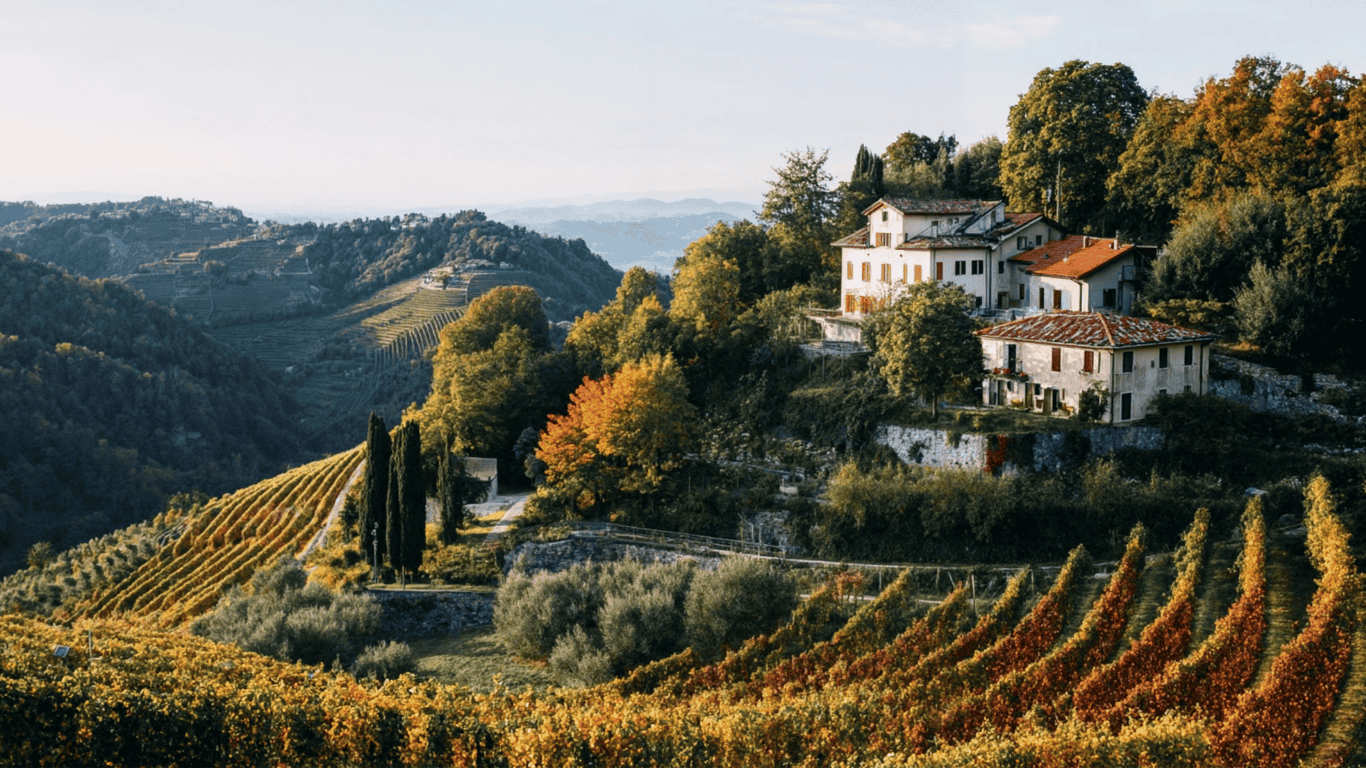

When Legacy Planning Expands Beyond Financial Capital
Families who steward multi-generational wealth rarely measure success only through portfolio performance. They measure it through continuity, stability, and the preservation of shared purpose across generations. Many families quietly reach a moment when they recognize that traditional diversification strategies, while essential, no longer fully address the breadth of structural risks shaping the global landscape.
In private family meetings and family-office strategy sessions, discussions increasingly extend beyond balance-sheet allocation and into geographic positioning, infrastructure independence, and long-term family cohesion.
The conversation is shifting toward how families can maintain agency and stability while global systems grow more complex and interconnected.
Within these discussions, autonomous rural estates are emerging as a central element of forward-looking family-office strategy. These estates serve as diversified geographic platforms that integrate sovereign infrastructure, regenerative land stewardship, and operational independence while strengthening intergenerational continuity.
They are not lifestyle indulgences or contingency planning measures. They represent deliberate, institution-grade continuity platforms designed to support family stability for generations to come.
The Expanding Influence of Geopolitical Fragmentation on Long-Term Family Planning
Many families operate across multiple jurisdictions, investment environments, and regulatory frameworks. Over the past several years, geopolitical relationships have become increasingly fluid, introducing variables that can influence capital mobility, residency flexibility, and operational oversight.
Global family-office research continues to reflect this shift.
A 2026 private banking survey reported that nearly three-quarters of family offices now rank geopolitical volatility among their primary long-term concerns, particularly related to trade policies, regulatory divergence, and regional instability.
Families are responding by exploring strategic rural residencies and diversified geographic platforms that provide optionality without disrupting global engagement. Autonomous rural estates offer stable jurisdictional anchors located in low-density environments where long-term planning can occur without excessive exposure to urban concentration risk or shifting regulatory environments.
These estates frequently incorporate redundant communication infrastructure that ensures uninterrupted oversight of global assets. Cross-jurisdictional governance structures allow families to maintain flexibility in succession planning, tax structuring, and residency positioning. Some families integrate education centers within their rural operating platforms where future generations develop multilingual and globally adaptive leadership capabilities.
Regenerative agricultural programs have also become increasingly relevant. Families who integrate environmental stewardship with operational autonomy often discover that geopolitical diversification and sustainable capital deployment can reinforce one another.
By positioning these estates as continuity platforms rather than isolated holdings, families strengthen their ability to adapt to global shifts while preserving long-term legacy stability.
Navigating Persistent Economic Volatility Through Tangible Continuity Assets
Inflationary cycles, shifting interest-rate environments, and evolving monetary policies continue to shape wealth-management strategy. Even diversified global portfolios can experience erosion in real purchasing power during prolonged economic transitions.
Recent global family-office reporting shows that more than sixty percent of family offices identify inflation and interest-rate volatility as primary planning concerns, reinforcing the importance of incorporating tangible, income-capable assets into portfolio-construction discipline.
Autonomous rural estates provide a rare combination of wealth preservation and operational utility. By anchoring capital within productive land and sovereign infrastructure systems, families can reduce exposure to external cost volatility while generating sustainable long-term appreciation.
Independent power generation has become one of the most widely adopted components of infrastructure independence. Hybrid renewable energy systems combined with advanced storage solutions provide predictable operating costs while supporting grid-independent operation during prolonged grid interruption scenarios. It is worth noting, the introduction of Sodium-ion battery systems will provide long term solutions and ability to operate in colder climates without reduced performance.
Many families are also integrating estate-based production capabilities that localize essential goods and specialized materials. While these capabilities rarely replace global supply relationships, they provide redundancy and reduce exposure to cost inflation and transportation volatility.
Regenerative agriculture programs are gaining strong momentum as both lifestyle and balance-sheet allocations. Early 2026 private-bank data previews indicate that allocations toward regenerative agricultural assets continue to grow at a rate exceeding thirty percent year over year, driven by demand for sustainable food production, soil restoration, and ESG-aligned commodity markets.
Some estates have evolved into wellness-oriented working environments that attract specialized global talent, creating opportunities for research collaboration, entrepreneurship incubation, and diversified estate income streams. These environments strengthen family engagement while expanding the estate’s functional value beyond traditional real-estate ownership.
Reducing Exposure to Global Supply-Chain Restructuring Through Estate-Level Sovereignty
The global supply-chain disruptions of recent years have demonstrated how quickly interconnected logistics networks can become strained. Trade realignment, tariff escalation, and transportation disruptions have accelerated the decentralization of manufacturing and resource sourcing.
Global wealth-advisory reporting has increasingly identified prolonged supply-chain decoupling as a structural concern for family offices managing multi-jurisdictional holdings.
Autonomous rural estates address this challenge by establishing decentralized utility ecosystems that allow families to maintain operational continuity even during global disruptions.
Secure water sovereignty systems have become a priority for many estates. Advanced watershed management, atmospheric water harvesting technologies, and closed-loop recycling systems allow families to maintain stable water resources regardless of regional infrastructure limitations.
On-site automated fabrication and advanced manufacturing capabilities are emerging as valuable estate components. Robotic production technologies enable localized fabrication of replacement parts, specialized equipment, and building components, reducing dependency on external suppliers.
Nutritional security systems built through precision agronomy and controlled-environment agriculture provide reliable food production while allowing estates to participate in premium agricultural markets. Diversified seed preservation and livestock genetics programs further reinforce agricultural continuity across generations.
Some families also establish cooperative micro-trade networks with regional producers and neighboring estates, creating decentralized sourcing ecosystems that reinforce community resilience while reducing reliance on global logistics networks.
Strengthening Long-Term Family Stability Through Climate-Resilient Geographic Diversification
Environmental transformation is reshaping asset valuation, land productivity, and infrastructure planning. Increasing weather variability and resource-availability shifts are influencing how families evaluate real-estate holdings and geographic diversification.
Recent family-office research indicates that climate-related risk remains a top planning priority, with approximately half of global family offices reporting moderate to high concern regarding environmental volatility and long-term asset durability.
Infrastructure engineering is also evolving to support continuity under environmental stress. Flood-resistant architecture, wildfire-mitigation landscaping, and subterranean climate-controlled asset vaults provide additional protection for both physical assets and operational continuity planning.
Hybrid hospitality and wellness environments are emerging as complementary estate components that align experiential luxury with regenerative land stewardship, creating additional revenue opportunities while reinforcing family cohesion.
The Role of Autonomous Rural Estates in Intergenerational Governance
Beyond infrastructure and economics, many families view their rural operating platforms as central gathering environments where long-term governance and succession planning naturally unfold. These estates provide neutral, reflective environments where family values, strategic direction, and leadership transition can be addressed collaboratively.
Dedicated education and leadership development programs located within family compounds encourage younger generations to engage with both family legacy and future stewardship responsibilities. Entrepreneurial incubators, philanthropic planning sessions, and family-office training initiatives often occur within these environments, strengthening continuity across generations.
When governance development occurs within physical environments designed for reflection and collaboration, families frequently experience stronger cohesion and smoother leadership transitions.
Building Resilient Legacy Platforms for Future Generations
The traditional country estate is evolving into something far more strategic. Autonomous rural estates are becoming resilient legacy platforms that combine geographic diversification, infrastructure independence, and income-capable land stewardship into a unified continuity strategy.
Families who embrace this model are not reacting to instability. They are positioning themselves to operate confidently within a rapidly evolving global environment while preserving long-term optionality for future generations.
Every family approaches this journey differently. Jurisdictional considerations, climate analysis, governance alignment, infrastructure design, and environmental integration must all be tailored to the family’s long-term vision.
Calculated Risk Advisors works alongside families to translate continuity goals into precision-engineered autonomous rural platforms that align with dynastic wealth-preservation strategies, infrastructure independence, and intergenerational governance objectives.
Families who begin this process early often discover that these estates become more than diversified assets. They become anchors of stability, identity, and continuity that strengthen family cohesion while protecting legacy across generations.
Secure a confidential consultation.
Important Disclosure.
This publication is for general informational purposes only and reflects the author’s perspective. It is not financial, investment, tax, legal, or professional advice of any kind, nor an offer or solicitation. Calculated Risk Advisors disclaims all liability for actions taken or not taken based on this content. Readers should consult their own qualified advisors before making decisions.
© 2026 Calculated Risk Advisors. All rights reserved.

0 Comments