


You already know the feeling. The city that once felt like your kingdom still delivers everything it always has. The skyline glows, access remains effortless, and the symbols of success still surround you. Yet if you are honest with yourself, something has shifted. There is a quiet tension that settles in even on clear, calm evenings. You notice it in small moments. A delayed shipment that would have arrived overnight a few years ago. A flight cancelled for reasons no one can fully explain. A favorite restaurant quietly changing menus because certain ingredients are suddenly inconsistent. Conversations drift toward contingency more often than celebration. You are not imagining this shift. You are sensing how fragile the systems around modern life have quietly become.
I spend much of my time working with families who operate at your level of responsibility, and I hear a consistent realization beginning to surface. The concern is rarely dramatic collapse. It is the gradual weakening of the transportation and supply infrastructure that supports nearly every comfort, convenience, and security urban living provides. The modern city is a masterpiece of coordination, but it is also an ecosystem built on constant movement. When movement slows or becomes unpredictable, everything built on top of it begins to wobble.
The first reality I ask clients to examine is supply chain dependency. Nearly everything that enters your home or supports your business travels through an intricate global logistics web that relies on synchronized shipping lanes, functioning ports, stable rail corridors, open highways, and uninterrupted digital tracking networks. That web was designed for efficiency, not resilience. Over the last several years, I have watched how easily that efficiency can unravel. Port congestion has delayed goods for weeks. Labor disruptions have halted container flow with little warning. Cyber incidents have frozen freight rail systems across entire regions. None of these events lasted forever, but they exposed how quickly shelves empty, how rapidly replacement parts disappear, and how fragile just in time delivery truly is.
What concerns me most is not any single disruption. It is how layered disruptions compound one another. When ports slow, trucking networks absorb pressure. When highways clog, rail becomes overloaded. When rail falters, air freight demand surges. Each system depends on the next, and none were designed to operate independently. The result is a chain reaction where delays cascade across industries that appear unrelated. Families with global business interests often feel this first through operational slowdowns. Eventually it reaches daily life in ways that are quieter but far more personal.
The second reality is the vulnerability of travel itself. For decades, mobility has been one of the quiet assurances of wealth. If something changes, you can leave. If opportunity appears, you can reach it. Increasingly, I am watching travel become conditional rather than guaranteed. Aviation relies on a tightly coordinated network of fuel supply, air traffic management, maintenance logistics, and regulatory oversight. Any strain in one area quickly spreads through the entire system. Flights ground because of fuel shortages, weather congestion, cyber interruptions, or staffing gaps that ripple across national airspace. Private aviation offers greater flexibility, but it still depends on the same infrastructure layers. Aircraft cannot depart without fuel. Airspace closures do not distinguish between commercial and private flight. Even helicopter travel depends on regulatory clearance and functioning air traffic coordination.
Ground transportation faces similar pressures. Urban highways already operate beyond design capacity in many regions. In crisis scenarios, evacuation routes transform into gridlock corridors within hours. Security checkpoints, infrastructure damage, or civil disruptions can freeze entire transportation arteries.
I often remind clients that luxury vehicles provide comfort and protection, but they cannot create open roads where none exist.
The third reality is delivery infrastructure, which most people never think about until it fails. Cities rely on continuous inbound flow for food, medical supplies, construction materials, pharmaceuticals, and everyday goods. Very little is stored locally anymore. Inventory models have shifted toward rapid turnover, which increases profitability but reduces buffering capacity. When logistics corridors tighten, cities feel the effect quickly. Restaurants change supply sources. Pharmacies face shortages. Building maintenance slows because specialized components are delayed. These inconveniences appear minor until they begin stacking together. Over time they signal a deeper structural issue. Urban life functions on continuous replenishment, and replenishment depends entirely on transportation stability.
None of these vulnerabilities exist independently. What I observe, and what thoughtful families are beginning to recognize, is how quickly mobility disruption, delivery instability, and supply chain breakdown can intersect. When transportation falters, resupply falters. When resupply falters, infrastructure maintenance falters. When infrastructure falters, movement becomes even more difficult. It is a circular pressure that amplifies itself.
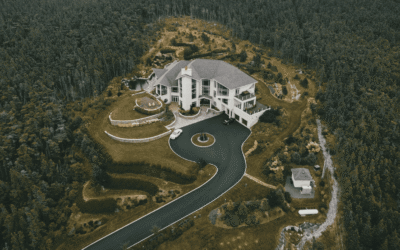
The families I advise are not responding from fear. They are responding from pattern recognition. They understand that continuity is strongest when it is diversified geographically and logistically. That understanding often leads them to explore the creation of an autonomous rural platform or multi generational family compound. I present this not as a departure from urban life, but as an expansion of operational freedom.
The process begins with site intelligence that prioritizes transportation independence as much as natural resources. I evaluate proximity to multiple access routes, private air capability, fuel storage logistics, and regional infrastructure stability alongside water, soil, and climate considerations. Independence requires layered redundancy. A property that cannot be reached or supplied under stress cannot function as a continuity platform.
Once a location is validated, the design integrates systems intended to reduce reliance on external delivery and travel networks. Independent power generation removes dependence on regional grids. Water sovereignty eliminates reliance on municipal distribution. Regenerative agriculture and livestock integration provide long term food continuity. On site storage and logistics planning reduce reliance on external resupply during disruptions. Hardened communication systems allow coordination when traditional digital networks experience failure. Transportation infrastructure such as private landing capability, secure access roads, and fuel redundancy provide mobility options that remain functional when public corridors are strained.
I always emphasize that this is not about isolation. It is about preserving choice. The city remains a center of connection, commerce, and culture. The difference is that it no longer controls your ability to operate. When transportation systems tighten, you maintain access. When supply chains stutter, your resources remain stable. When travel becomes restricted, your family retains autonomy over movement and timing.
Over time, I have watched these platforms produce benefits that extend beyond logistics. Children raised in environments where supply, transportation, and production are visible develop a grounded understanding of interdependence and responsibility. They learn that continuity requires stewardship. For parents, there is often a deeper emotional shift. Knowing that your family is not fully dependent on fragile external infrastructure creates a calm that no urban convenience can replicate.
I do not view these properties as retreats or emergency shelters. I view them as legacy infrastructure. They are second homes designed to sustain family continuity across uncertain cycles. They represent the understanding that wealth achieves its highest purpose when it protects stability across generations.
The opportunity to develop these platforms thoughtfully and discreetly still exists. Suitable regions remain accessible. Skilled expertise remains available. Infrastructure pressures and land competition are increasing, but they have not yet reached their peak. They rarely remain static for long.
When readers begin to recognize their own concerns reflected in these patterns, the next step is usually uncomplicated. It begins with exploring how transportation resilience, supply continuity, and geographic independence could realistically align with the life and legacy you are building for your family.
Secure a confidential consultation.
Important Disclosure.
This publication is for general informational purposes only and reflects the author’s perspective. It is not financial, investment, tax, legal, or professional advice of any kind, nor an offer or solicitation. Calculated Risk Advisors disclaims all liability for actions taken or not taken based on this content. Readers should consult their own qualified advisors before making decisions.
© 2026 Calculated Risk Advisors. All rights reserved.

0 Comments